The Global Sport of Tai Chi Ch’uan: History, Practice, and Cultural Significance
Tai Chi Ch’uan stands as one of the most respected martial arts in the world. The graceful yet powerful movements of Tai Chi Ch’uan have captured the attention of millions. More than just a form of exercise, it is a sport, a philosophy, and a cultural treasure. Its roots run deep in Chinese history, while its influence now reaches every continent. Practiced by people of all ages, it bridges the gap between tradition and modern athletic competition. To understand its enduring appeal, one must explore its origins, global presence, amateur and professional play, social meaning, and detailed rules.
Origin and History of Tai Chi Ch’uan
Tai Chi Ch’uan, often shortened to Tai Chi, traces its beginnings to ancient China. Scholars believe the art developed during the 16th and 17th centuries. The Chen family of Chen Village in Henan Province is credited with creating the earliest form of Tai Chi Ch’uan. Chen Wangting, a retired Ming dynasty military officer, is often named as its founder. He combined elements of traditional Chinese martial arts, Taoist philosophy, and classical Chinese medicine to create a complete system of movement and meditation.
The philosophy behind Tai Chi Ch’uan is rooted in Taoism, particularly the concept of Yin and Yang. These opposites symbolize balance—softness and hardness, motion and stillness, internal and external energy. Every movement in Tai Chi Ch’uan embodies this harmony. Chen’s early practice aimed not only for combat readiness but also for health, self-awareness, and longevity.
Over time, Tai Chi Ch’uan spread beyond Chen Village. Several distinct styles emerged, including Yang, Wu, Sun, and Wu Hao. Each style preserved the essence of Chen’s original teachings but adapted movements to new interpretations. The Yang style, founded by Yang Luchan in the 19th century, became the most widely practiced form. Its smooth, open movements made it accessible to people of all ages. By the late Qing dynasty, Tai Chi Ch’uan had moved from secret family practice to public instruction across China.
In the 20th century, Tai Chi Ch’uan underwent another transformation. It became formalized as both a health exercise and a competitive sport. The Chinese government began promoting Tai Chi Ch’uan as a national physical education activity during the 1950s. Standardized forms were created to teach large groups. This effort not only preserved traditional culture but also improved public health. From there, Tai Chi Ch’uan reached global recognition.
Global Popularity and Where Tai Chi Ch’uan Is Played
Tai Chi Ch’uan has achieved worldwide popularity. Its appeal lies in its versatility and inclusiveness. The sport can be practiced almost anywhere—parks, gyms, schools, or homes. People from all walks of life, regardless of age or fitness level, can participate. Today, Tai Chi Ch’uan is practiced in more than 150 countries.
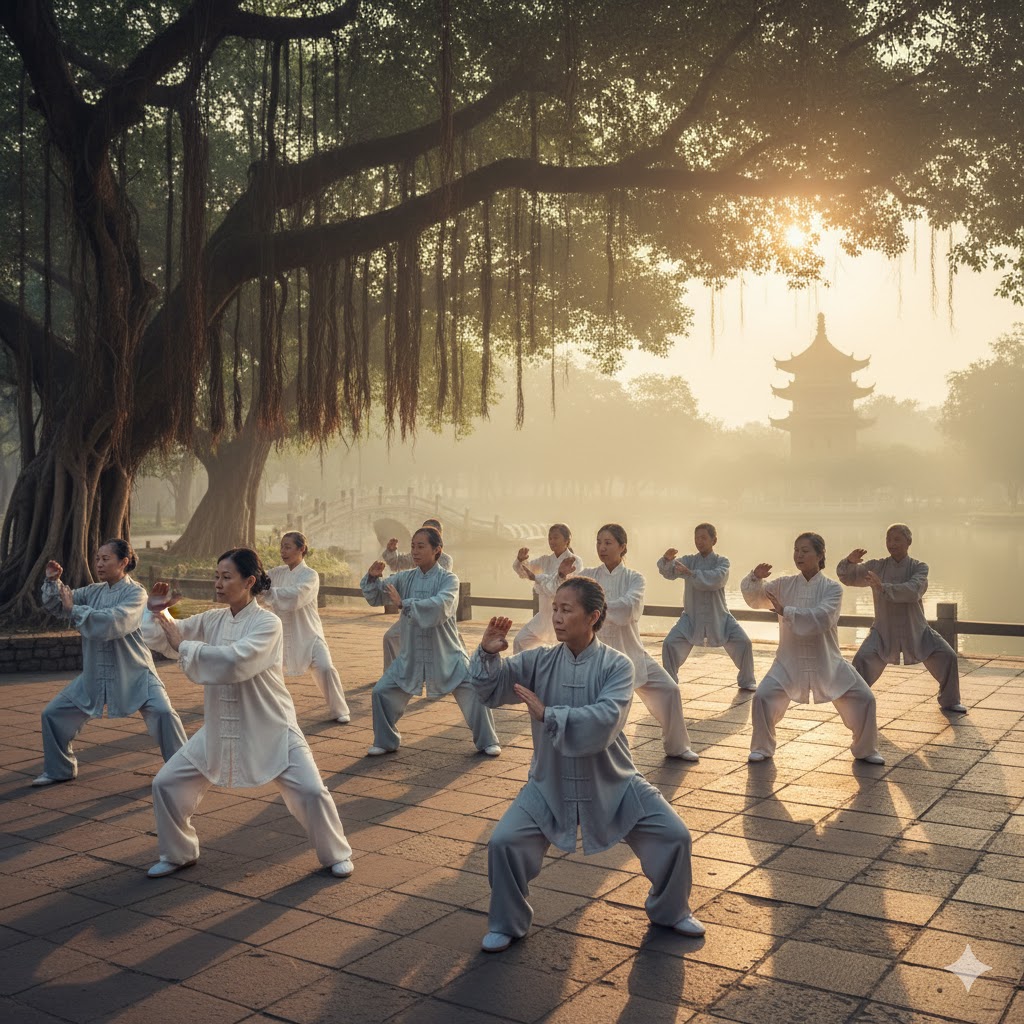
It remains deeply ingrained in daily life in China. Early mornings often reveal groups of practitioners moving in harmony in public squares. Cities like Beijing, Shanghai, and Guangzhou feature Tai Chi Ch’uan clubs, university programs, and professional associations. Tai Chi Ch’uan forms a key part of wellness culture in Hong Kong and Taiwan.
In Japan, South Korea, and Southeast Asia, Tai Chi Ch’uan has blended with local martial traditions. In these countries, competitions attract both young and veteran athletes. Across Europe, the art grew during the 1970s and 1980s, particularly in the United Kingdom, France, and Germany. Organizations such as the European Tai Chi Chuan Federation promote regular tournaments and workshops.
The United States has embraced Tai Chi Ch’uan as both sport and therapy. Universities offer Tai Chi programs under kinesiology and physical education departments. Many medical institutions recognize its health benefits, recommending it for stress reduction and balance improvement. Canada, Australia, and New Zealand also support large Tai Chi communities, often hosting world championship events.
African nations have begun integrating Tai Chi Ch’uan into fitness and cultural programs. South Africa and Nigeria, for example, host annual Tai Chi festivals. In South America, Brazil and Argentina lead the movement, combining traditional Chinese training with local enthusiasm for martial sports. The global expansion of Tai Chi Ch’uan illustrates its universal message of harmony and discipline.
Amateur Tai Chi Ch’uan: Youth and School Participation
Amateur Tai Chi Ch’uan thrives in schools, community centers, and universities. In China, students often learn the basics as part of physical education. Tai Chi forms are introduced alongside other martial arts. The focus is on control, balance, and self-awareness rather than combat. Many schools even hold local competitions to build confidence and teamwork.
Outside China, Tai Chi Ch’uan has become a cornerstone of youth development programs. In Europe, after-school Tai Chi clubs teach children concentration, respect, and patience. Teachers emphasize mindfulness and smooth transitions between movements. These values translate to better academic performance and emotional health.
In North America, Tai Chi Ch’uan is taught at various levels, from elementary to college. Some high schools integrate it into wellness or physical education curriculums. University martial arts clubs often include Tai Chi divisions, allowing students to compete in collegiate tournaments. Amateur leagues operate independently or under the guidance of national Tai Chi federations.
Community centers also play a major role. Local amateur groups provide affordable lessons and public demonstrations. These sessions often attract families and retirees alike. Amateur Tai Chi Ch’uan is not restricted by age or background. It brings together generations, creating a shared experience of physical and mental balance.
Tai Chi camps and workshops around the world offer immersive training. Participants practice breathing techniques, push-hands exercises, and weapon forms. The goal is continuous improvement rather than rivalry. Amateur tournaments usually focus on form execution, fluidity, and internal energy control rather than direct combat.
Professional Leagues and Global Competitions
Professional Tai Chi Ch’uan has evolved into a structured sport with organized leagues and championships. The International Wushu Federation (IWUF) plays a significant role in regulating competitive Tai Chi Ch’uan events worldwide. Since the 1990s, the IWUF has included Tai Chi in international Wushu competitions, highlighting both traditional and modern routines.
China hosts several major Tai Chi Ch’uan tournaments each year. The National Traditional Wushu Championships feature multiple Tai Chi categories. Competitors are judged on precision, strength, expression, and balance. In these professional contests, mastery of both empty-hand and weapon forms—such as sword or fan—is essential.
The World Tai Chi Championships attract participants from over 50 nations. Events include individual forms, team performances, and push-hands matches. Push-hands, or “tui shou,” tests two athletes’ ability to maintain balance while sensing the opponent’s energy. It combines strategy, timing, and body mechanics, making it a highlight of professional Tai Chi Ch’uan competition.
In Europe, the European Tai Chi Ch’uan Championships are held biennially. Competitors represent national federations, performing standardized routines. The Pan-American Tai Chi Championships serve a similar role in North and South America. Professional leagues in Japan, Korea, and Singapore maintain high technical standards, blending artistry with athleticism.
Some elite athletes train under masters in China for years before competing internationally. Professional Tai Chi Ch’uan requires not only physical skill but also philosophical understanding. Judges evaluate rhythm, spirit, and internal energy as much as technical accuracy. This fusion of art and sport sets Tai Chi Ch’uan apart from other martial disciplines.
Political and Social Significance of Tai Chi Ch’uan
Tai Chi Ch’uan carries deep political and social meaning. It represents Chinese cultural identity and soft power. Since the mid-20th century, China has promoted Tai Chi Ch’uan as a symbol of national pride. It embodies traditional wisdom and health values that align with modern wellness goals. Through cultural diplomacy, China has sponsored Tai Chi teachers abroad to strengthen global connections.
Politically, Tai Chi Ch’uan has been used as a unifying tool. After decades of turmoil in the early 1900s, it became a source of stability. By encouraging public participation, the government reinforced community cohesion. Tai Chi Ch’uan groups served as spaces for intergenerational bonding and social harmony.
Internationally, Tai Chi Ch’uan contributes to cross-cultural exchange. Festivals and exhibitions showcase Chinese heritage in peaceful, non-political settings. In cities like New York, Paris, and London, annual World Tai Chi Day events bring together thousands of practitioners. These gatherings promote global peace and mutual respect through movement and meditation.
Socially, Tai Chi Ch’uan has also improved public health worldwide. Medical research links regular practice to better balance, reduced anxiety, and improved cardiovascular health. Senior citizens find it especially beneficial. Communities that promote Tai Chi experience stronger social ties and reduced isolation among older adults. Its influence extends beyond sport—it improves the quality of life for millions.
Moreover, Tai Chi Ch’uan has become a gender-inclusive practice. Women and men compete equally, and many of the most respected masters are female. The sport’s emphasis on softness over brute strength empowers participants from all backgrounds. It offers both mental calmness and physical resilience, aligning perfectly with modern values of wellness and equality.
Rules and Structure of Tai Chi Ch’uan Competition
Competitive Tai Chi Ch’uan follows strict rules to maintain fairness and consistency. Competitions typically fall into two main categories: forms (taolu) and push-hands (tui shou).
In forms competition, athletes perform a sequence of movements. These routines may be traditional or modern standardized forms. Performers are judged on several criteria—accuracy, grace, control, energy expression, and breathing coordination. Each competitor has a limited time to complete the routine, usually between three and five minutes. Points are deducted for losing balance, incorrect stances, or inconsistent rhythm.
Weapon forms are also part of the sport. The Tai Chi sword (jian) and fan routines test coordination, timing, and artistic presentation. Judges expect athletes to display both strength and subtlety. Precision in each cut, thrust, or rotation demonstrates mastery of the weapon’s spirit.
Push-hands competition is more interactive. Two competitors stand facing each other, with one foot in a designated circle. The goal is to unbalance the opponent using controlled movements, leverage, and energy redirection. Strikes are not allowed. Points are awarded for clean techniques and maintaining composure. Excessive force or aggression results in penalties.
Each match begins with a bow, showing respect between opponents. Judges watch closely for posture, intent, and flow. Victory comes from skillful redirection, not overpowering strength. This principle mirrors Tai Chi philosophy—yielding leads to control.
Professional tournaments use standard scoring systems set by organizations like the IWUF. A head judge oversees technical accuracy, while side judges evaluate artistic quality. In team events, synchronization and unity play major roles in scoring. Music often accompanies routines to emphasize rhythm and harmony.
Athletes must also adhere to dress codes. Competitors wear traditional silk uniforms that allow free movement. Barefoot performance is common, though soft martial arts shoes are sometimes used for traction. Equipment, including swords or fans, must meet safety and size regulations.
Referees enforce etiquette rules strictly. Disrespectful gestures, verbal aggression, or rule violations lead to disqualification. Tai Chi Ch’uan values discipline and mutual respect above all else.
Modern Adaptations and Innovations
While rooted in tradition, Tai Chi Ch’uan continues to evolve. Modern training incorporates scientific understanding of biomechanics and kinesiology. Coaches use video analysis and slow-motion review to refine technique. Electronic scoring systems ensure transparency in competitions.
Virtual Tai Chi competitions gained popularity during recent years. Participants record performances and submit them online for judging. This innovation has expanded access for athletes unable to travel. It also helped maintain global participation during pandemic restrictions.
Technology has also influenced teaching. Apps and online platforms allow students to learn Tai Chi Ch’uan from certified masters worldwide. Virtual classes include step-by-step instruction and real-time feedback. These tools ensure the art remains relevant in the digital era.
Tai Chi Ch’uan as a Lifestyle and Global Movement
Beyond competition, Tai Chi Ch’uan represents a way of life. Practitioners often follow the principles of mindfulness, compassion, and balance in daily routines. Meditation and breathing exercises accompany physical practice. This holistic approach improves both body and mind.
In many countries, governments support Tai Chi programs to reduce healthcare costs. Hospitals, senior centers, and rehabilitation clinics incorporate it into wellness therapies. Patients recovering from injury or surgery use Tai Chi Ch’uan to regain strength and coordination. The practice encourages slow, deliberate movements, reducing stress on joints.
Workplaces have also embraced Tai Chi. Morning sessions boost employee focus and reduce tension. Corporate wellness programs use it to improve morale and productivity. These practical applications reinforce Tai Chi Ch’uan’s reputation as a sport that heals while it strengthens.
Environmental awareness has become another aspect of Tai Chi Ch’uan’s philosophy. Practitioners often gather outdoors to connect with nature. Parks and gardens serve as ideal spaces for training. The art’s quiet rhythm harmonizes with natural surroundings, reflecting respect for the earth.
Cultural Preservation and the Future of Tai Chi Ch’uan
Preserving Tai Chi Ch’uan’s heritage remains a global priority. UNESCO recognized it as an Intangible Cultural Heritage of Humanity in 2020. This designation highlights its role in promoting peace, health, and cultural understanding. The honor encourages nations to invest in Tai Chi education and research.
Masters and instructors continue to pass on ancient teachings through modern methods. Workshops, cultural exchanges, and teacher-certification programs ensure authenticity. Young practitioners are encouraged to study not only the movements but also the philosophy behind them. The blend of tradition and innovation guarantees Tai Chi Ch’uan’s survival for generations.
As international participation grows, the possibility of Olympic recognition has sparked debate. Supporters believe Tai Chi Ch’uan’s structure, scoring, and global appeal make it suitable for inclusion. Whether it enters the Olympics or not, its influence on world sport is undeniable.
Conclusion
Tai Chi Ch’uan stands as more than a martial art—it is a living expression of balance, discipline, and peace. From its origins in ancient China to its global presence today, it continues to inspire millions. The sport connects cultures, promotes wellness, and strengthens communities. Its amateur and professional forms offer opportunities for growth at every level. Through structured competition, cultural diplomacy, and personal development, Tai Chi Ch’uan remains timeless.
As the world evolves, this ancient sport adapts without losing its soul. The harmony between movement and stillness, strength and softness, tradition and innovation ensures its lasting relevance. Tai Chi Ch’uan is not just practiced—it is lived. Its journey from village courtyards to international arenas demonstrates the enduring power of human balance, both physical and spiritual.