
The Dynamic World of Taido: History, Rules, and Global Significance
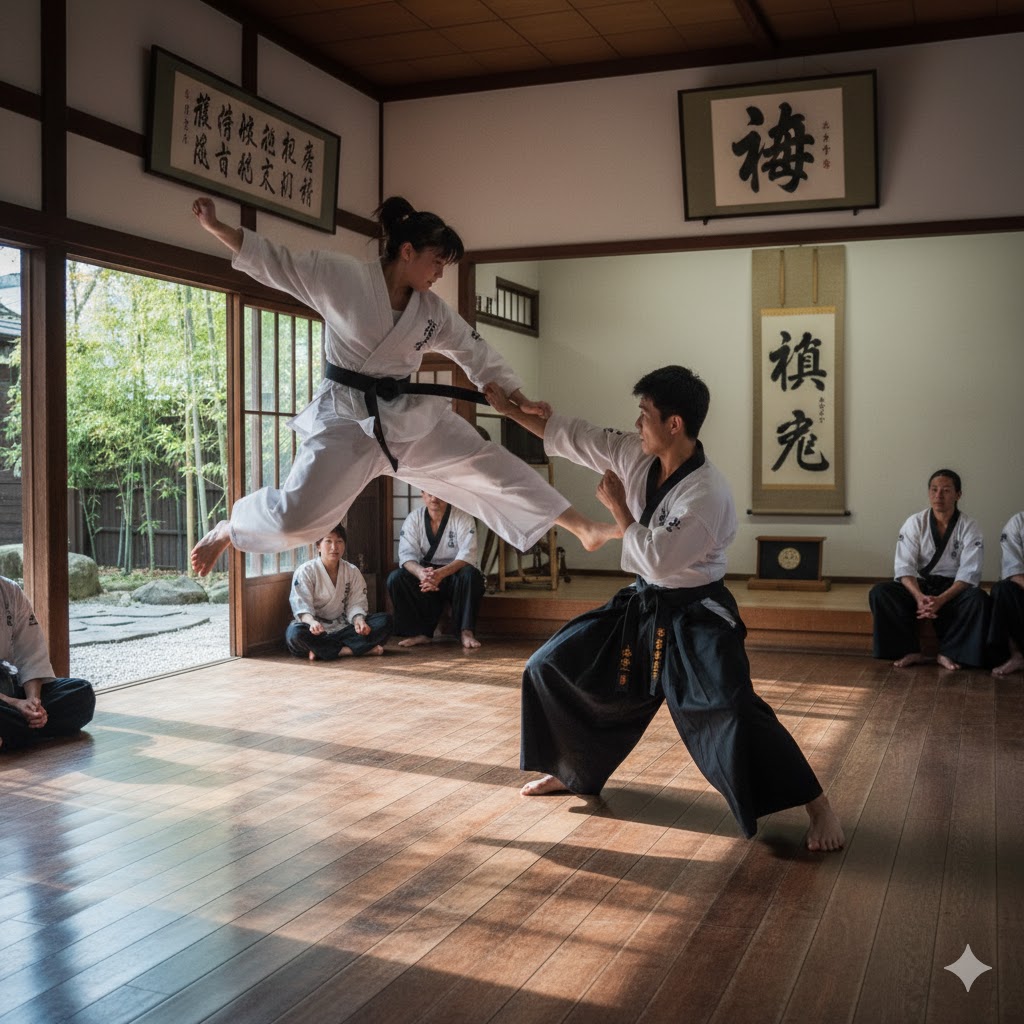
Taido is a modern Japanese martial art that blends movement, strategy, and philosophy into a unique athletic expression. Created in the 20th century, it pushes the boundaries of traditional martial arts by incorporating dynamic motion and acrobatic techniques. The word “Taido” means “Way of the Body,” symbolizing the unity of mind, body, and spirit through controlled movement. In this post, we will explore the detailed origin and history of Taido, its worldwide popularity, how it is played at amateur and professional levels, its political and social influence, and the rules that guide the sport.
The Origin and History of Taido
Taido was developed in Japan in 1965 by Seiken Shukumine, a martial arts innovator and philosopher. Shukumine had been deeply involved in Okinawan karate, particularly the Gensei-Ryu style, before he sought to create a more dynamic and adaptive martial art. He believed that combat should not only focus on strikes and blocks but also incorporate fluid motion, agility, and spatial awareness. His goal was to create a system that mirrored the complexity of real-life movement and modern combat.
Unlike traditional karate, which often emphasizes static stances and linear attacks, Taido encourages spiraling, turning, and jumping techniques. Shukumine believed these movements would better prepare practitioners for unpredictable encounters. His teachings were also influenced by the rapid social changes in post-war Japan. He saw Taido as a way to train individuals not only to fight but to think creatively and move intelligently in a modern world.
Taido evolved as a synthesis of philosophy, science, and art. Shukumine introduced five primary movement principles called sen, un, hen, nen, and ten. Each represents a specific type of movement—forward, vertical, lateral, rotational, and twisting. These concepts revolutionized martial arts by focusing on three-dimensional movement. The idea was to train the body to move in all directions, just as the mind should think flexibly.
Over time, Taido became known as a martial art for the future—a discipline that encouraged physical adaptability and mental awareness. Its techniques were codified into a system that emphasized continuous motion and flow, much like dance combined with combat. In the late 1960s, Shukumine began teaching Taido at universities across Japan, helping to form the foundation for organized practice and competition.
The Global Growth and Popularity of Taido
Taido quickly spread beyond Japan due to its innovative approach and dynamic appeal. During the 1970s and 1980s, Japanese instructors introduced the art to Europe, Australia, and North America. The first international Taido federation was established in 1983, marking a major milestone in its global expansion. Since then, it has continued to gain recognition across Asia and the Western world.
Today, Taido is practiced in countries such as Finland, Sweden, France, Australia, the United States, and the United Kingdom. Among these nations, Finland has emerged as one of the strongest centers of Taido outside Japan. Finnish athletes have consistently performed well in international competitions, helping to elevate the sport’s visibility. European practitioners often describe Taido as both an art form and a sport, appreciating its mix of creativity, athleticism, and tactical strategy.
In Japan, Taido remains an integral part of university martial arts culture. Many schools host dedicated clubs where students train daily and compete in national tournaments. These institutions help preserve the philosophical aspects of Taido while fostering athletic excellence. Outside Japan, Taido’s appeal lies in its combination of traditional discipline and modern physical expression. Its visual dynamism—featuring flips, spins, and rapid directional changes—also makes it appealing to younger generations seeking something more energetic than conventional martial arts.
International championships are held every few years, attracting teams from various continents. The World Taido Federation oversees these events and promotes the standardization of rules, judging systems, and rank certifications. Through these efforts, Taido has continued to evolve into a respected global sport.
Amateur Taido: Training the Next Generation
Amateur Taido plays a vital role in nurturing new talent and spreading the sport’s core philosophy. Around the world, young athletes are introduced to the fundamentals of movement, timing, and control. Many begin training in local dojos or school clubs, learning the five movement principles that define Taido. Training emphasizes coordination, balance, and creativity, which build a strong foundation for both athletic and personal development.
Youth programs are particularly strong in Japan, Finland, and Sweden. These countries have well-organized training systems that guide students from beginner to advanced levels. In Japan, Taido is often part of the physical education curriculum at some universities and schools. This academic integration ensures that Taido remains both a physical discipline and a vehicle for moral education.
Amateur competitions focus on skill development and sportsmanship rather than pure victory. Beginners participate in forms known as hokei, which are choreographed sequences that demonstrate precision and control. As they progress, students compete in jissen, or sparring matches, where they apply techniques dynamically against an opponent. This gradual structure helps practitioners build confidence and understanding of the sport’s strategic dimensions.
In Finland, Taido is often taught through community sports organizations that encourage inclusivity. Programs are available for children, teens, and adults of all skill levels. The emphasis on creativity and movement makes it accessible to individuals who might not thrive in more rigid martial arts styles. Coaches and instructors focus on developing mental resilience, teamwork, and physical expression.
Amateur Taido also contributes to cross-cultural understanding. When young athletes travel for international exchanges or tournaments, they experience not only the sport but also the cultural philosophies behind it. These interactions foster global friendships and strengthen international unity within the Taido community.
Professional Leagues and Competitions
While Taido is less commercialized than sports like judo or taekwondo, it maintains a professional presence through national and international leagues. The Japan Taido Federation and the World Taido Federation serve as the primary governing bodies. They organize structured competitions that range from local tournaments to the prestigious World Taido Championships.
Professional Taido athletes dedicate years to mastering both the physical and philosophical aspects of the art. Their training involves advanced conditioning, technical refinement, and tactical strategy. These competitors are often university graduates who continue to represent their countries at international events. Although professional Taido does not offer large financial rewards, it commands deep respect within the martial arts community.
Competitions are divided into two main categories: hokei and jissen. In hokei events, athletes perform sequences individually, showcasing their precision, flow, and interpretation of movement. Judges score based on technique, rhythm, and creativity. In jissen matches, two competitors face off in a dynamic duel, where points are awarded for clean, controlled strikes and successful use of Taido’s movement principles. The contest is fast-paced and visually stunning, often featuring spins, jumps, and sudden directional shifts.
The World Taido Championships draw competitors from more than a dozen countries. The event highlights the diversity of the sport, with athletes bringing unique interpretations of movement while adhering to unified rules. These competitions have become important cultural gatherings where practitioners exchange ideas and techniques, strengthening the global Taido network.
Political and Social Significance of Taido
Beyond physical competition, Taido holds deep political and social significance. In Japan, it emerged during a period of national rebuilding and modernization. Post-war Japan was searching for ways to balance traditional values with new global realities. Taido symbolized this balance by combining ancient martial philosophy with modern scientific thinking. It represented Japan’s ability to adapt, evolve, and lead through innovation.
Taido promotes harmony between individuals and their environment, echoing political ideals of peace and cooperation. Its philosophical foundation emphasizes adaptability and understanding, qualities that resonate with global diplomatic values. Practicing Taido teaches respect, discipline, and empathy—traits essential for constructive social relationships.
Socially, Taido serves as a bridge between generations and cultures. Dojos often function as community centers where people from different backgrounds train together. This inclusive atmosphere encourages friendship, tolerance, and teamwork. In many countries, Taido organizations engage in cultural exchange programs, sending instructors abroad to teach and learn. These initiatives strengthen global unity and mutual respect.
Moreover, Taido’s focus on movement and mindfulness has made it attractive to educators and therapists. It is sometimes used as a tool for developing focus and body awareness in children. Some rehabilitation programs also integrate Taido-inspired exercises to improve coordination and confidence. These applications demonstrate the art’s broader social relevance beyond competition.
In Finland, for example, Taido clubs collaborate with schools and local governments to promote youth development through sports. The emphasis on discipline and creative movement helps young people channel energy positively and build emotional intelligence. In this way, Taido contributes to stronger communities and healthier societies.
The Rules and Structure of Taido
The rules of Taido are designed to ensure fairness, safety, and creativity in competition. They are divided into two main categories: hokei (form) and jissen (combat).
Hokei Rules
In hokei competitions, each participant performs a prearranged sequence of movements. These routines are evaluated on technique, rhythm, posture, and overall expression. Judges look for mastery of the five movement principles—forward (sen), vertical (un), lateral (hen), rotational (nen), and twisting (ten). Precision and flow are essential, and mistakes such as imbalance or loss of rhythm result in point deductions.
Athletes are also expected to display correct breathing and spirit. A well-executed hokei is both athletic and artistic, revealing the practitioner’s control and understanding of Taido’s philosophy. Scoring is typically done on a scale, with multiple judges providing independent evaluations that are then averaged for a final score.
Jissen Rules
In jissen matches, two athletes face each other in a circular area. The goal is to score points by landing clean, controlled techniques on specific target zones. Strikes, kicks, and sweeps are allowed, but excessive force is penalized. Judges emphasize technical precision, effective movement, and tactical use of the body’s motion principles.
The combat unfolds dynamically, with competitors using spins, jumps, and quick shifts in direction. Unlike many martial arts that rely on head-to-head engagement, Taido encourages fighters to move around their opponent in three dimensions. This constant motion creates a visually striking and unpredictable contest.
Matches are usually timed, and the competitor with the highest score at the end wins. If scores are tied, judges decide based on criteria such as aggressiveness, creativity, and control. Safety gear such as gloves, mouthguards, and protective padding is required during combat events.
Penalties and Judging
Penalties are issued for infractions like illegal strikes, excessive force, or unsportsmanlike behavior. Judges have the authority to issue warnings or deduct points. The judging panel typically includes referees, side judges, and timekeepers, ensuring objectivity and fairness.
The Philosophy Behind the Rules
The rules of Taido are not just about competition; they reflect a deeper philosophy. Every movement in Taido is guided by the concept of shin-tai-iku, meaning the unity of spirit, body, and movement. This principle teaches that victory is not merely physical but mental and emotional as well.
Taido athletes train to develop kokoro, or the heart of understanding. They learn to anticipate an opponent’s moves, stay calm under pressure, and respond with creativity rather than aggression. The emphasis on three-dimensional movement also teaches practitioners to think outside conventional patterns, promoting adaptability in all aspects of life.
Modern Innovations and Media Presence
In recent years, Taido has embraced modern technology to reach wider audiences. Online training programs, virtual competitions, and digital learning platforms have emerged, especially during times when in-person gatherings were limited. Social media platforms showcase stunning highlights of Taido performances, attracting younger fans and potential students.
Documentaries and short films about Taido’s philosophy have also helped spread awareness. Many new practitioners discover the sport through visual media before joining a local club. This digital exposure has helped the art grow steadily among youth, ensuring its continued evolution.
The Future of Taido
The future of Taido looks bright. Its combination of philosophy, physical challenge, and artistic expression continues to attract new generations. As global sports culture becomes more inclusive and creative, Taido’s unique identity gives it a special place. International cooperation remains strong, and countries like Japan, Finland, and Australia continue to nurture top-tier athletes.
Taido’s leadership bodies are also exploring ways to gain broader recognition, possibly including inclusion in international martial arts festivals and multi-sport events. Its emphasis on balance, respect, and creativity aligns with modern values of sportsmanship and global unity.
Conclusion
Taido represents more than a martial art—it is a philosophy of motion, thought, and adaptability. From its origins in post-war Japan to its international presence today, it has inspired thousands to move intelligently and live with purpose. Its global community continues to grow, blending athletic excellence with deep cultural understanding.
Through its dynamic movements and spiritual foundation, Taido challenges both the body and the mind. It promotes harmony, resilience, and innovation in every aspect of life. As the world evolves, Taido stands as a testament to the power of human creativity and the endless potential of movement.