
The Complete Guide to Tie-Down Roping: History, Global Popularity, and Rules
Tie-Down Roping is one of the most dynamic and skillful events in rodeo sports. It combines speed, precision, and teamwork between a cowboy and his horse. This challenging competition has deep roots in ranching traditions and continues to thrive across the globe. In this blog post, we will explore the history, global presence, amateur development, professional leagues, social and political significance, and rules that make Tie-Down Roping an exciting and respected sport.
Origin and History of Tie-Down Roping
The roots of Tie-Down Roping reach back to the 19th century when cattle ranching was an essential part of life in the American West. Cowboys often needed to catch and restrain calves quickly to provide medical treatment, branding, or other care. This necessity created practical roping techniques that evolved into competitive events over time.
Ranch hands would often challenge each other to see who could rope and tie a calf the fastest. These friendly competitions eventually became organized contests, leading to the birth of rodeo as a sport. By the early 1900s, rodeos had formalized Tie-Down Roping as a main event, recognizing the skill and timing it required.
As the sport grew, rules were standardized. The cowboy’s goal became clear: rope the calf, dismount, run to it, and tie three of its legs together in the shortest time possible. Judges ensured fairness and safety for both the cowboy and the animal. This shift from necessity to competition reflected the spirit of the American frontier—tough, independent, and hardworking.
In the mid-20th century, rodeo associations began codifying event structures and timing systems. Tie-Down Roping became a featured event in major rodeos such as the Calgary Stampede and the National Finals Rodeo (NFR). The sport’s mix of cowboy heritage and athletic performance made it both nostalgic and thrilling.
Global Popularity of Tie-Down Roping
Although Tie-Down Roping originated in the United States, its influence has spread worldwide. Today, the sport enjoys popularity in Canada, Australia, Brazil, Mexico, and several European countries. Each region adds its cultural touch, yet the fundamentals remain the same.
In North America, Tie-Down Roping is one of the cornerstone events in professional rodeo circuits. Fans fill arenas in Texas, Oklahoma, and Alberta to watch cowboys display their precision and horsemanship. Television broadcasts and social media exposure have helped introduce new audiences to the sport.
In Australia, rodeo culture mirrors that of the American West. Tie-Down Roping, often referred to as calf roping, is featured in rural festivals and national competitions. Australian cowboys, known as stockmen, have adopted similar techniques and traditions, highlighting the shared ranching history between nations.
Brazil has also embraced the sport. The country’s strong cattle industry and cowboy culture make Tie-Down Roping a natural fit. Brazilian cowboys compete in both local and international rodeos, showing impressive skill and dedication.
Europe’s exposure to the sport has grown through international rodeo tours and cultural festivals. In countries such as France, Germany, and the United Kingdom, Western riding clubs host events that include Tie-Down Roping demonstrations. These efforts help spread awareness and appreciation for the sport’s history and technique.
Amateur Tie-Down Roping: Youth and School Participation
Amateur Tie-Down Roping serves as the foundation for future professional talent. Many young cowboys and cowgirls start training as early as age eight. Junior rodeos, 4-H clubs, and high school rodeo associations play crucial roles in developing skills and confidence.
At the youth level, safety and education come first. Children learn proper horse handling, roping techniques, and sportsmanship. Smaller calves are used in junior divisions to ensure manageable competition. The goal is to build a love for the sport and respect for the animals involved.
High school rodeo associations offer structured competition for teenagers. Events are sanctioned and scored according to national guidelines. Students compete individually and as part of school teams, earning scholarships and recognition. Many universities, especially in the western United States, have rodeo programs that include Tie-Down Roping as a key event.
Amateur rodeos across North America and Australia offer opportunities for non-professional competitors to participate. These local events bring communities together and celebrate cowboy traditions. The camaraderie among participants fosters a family-like atmosphere where mentorship and friendship thrive.
Training programs and rodeo camps have also become popular. Experienced ropers coach newcomers on timing, coordination, and rope control. They emphasize the importance of trust between rider and horse. This partnership remains at the heart of successful Tie-Down Roping performances.
Professional Tie-Down Roping Leagues and Organizations
The professional side of Tie-Down Roping features some of the best athletes in rodeo. The Professional Rodeo Cowboys Association (PRCA) is the primary governing body in the United States. It sanctions hundreds of events yearly, culminating in the National Finals Rodeo, where world champions are crowned.
In Canada, the Canadian Professional Rodeo Association (CPRA) manages professional rodeo events. Tie-Down Roping is a major category, with Canadian ropers often competing internationally. The partnership between PRCA and CPRA allows athletes to cross borders and compete for larger purses.
Australia’s professional rodeo scene is managed by the Australian Professional Rodeo Association (APRA). Their championship series highlights Tie-Down Roping as a premier event. Riders from across the country compete for national titles, maintaining high standards of skill and animal care.
Brazil’s rodeo federation, known as the Confederação Nacional de Rodeio, also promotes the sport at professional levels. Brazilian ropers participate in both national and international competitions, showing exceptional horsemanship and precision.
Additionally, several independent rodeo tours and invitation-only events have emerged worldwide. These smaller organizations provide platforms for talented athletes who may not yet be part of major associations. Prize money, sponsorships, and media exposure have made professional Tie-Down Roping a viable career for many.
Social and Political Significance of Tie-Down Roping
Tie-Down Roping carries both social and political weight within the context of modern sports and animal welfare discussions. The sport represents the cowboy ethos—self-reliance, respect for livestock, and mastery of essential ranching skills. For many rural communities, rodeo events serve as social hubs that preserve regional culture and traditions.
Economically, rodeos contribute significantly to local economies. They generate revenue through ticket sales, tourism, and sponsorships. Towns hosting major rodeos experience boosts in business for hotels, restaurants, and local vendors. This economic impact highlights the sport’s value beyond the arena.
Socially, the sport bridges generations. Older cowboys pass down their knowledge to younger participants, ensuring the continuity of rodeo heritage. Families often travel together to competitions, creating strong community bonds.
However, Tie-Down Roping has also been subject to animal rights debates. Critics question the treatment of calves during events, while supporters emphasize strict welfare rules and humane handling standards. Modern rodeo organizations enforce regulations to minimize stress and ensure safety for animals. Veterinarians and officials are present at all sanctioned events to monitor conditions.
Politically, rodeo associations work with governments to maintain animal welfare compliance and public support. These efforts help preserve the sport’s legitimacy and cultural importance. In some countries, such as Australia and Canada, rodeo has faced scrutiny but continues to thrive under regulated conditions that prioritize animal care.
Tie-Down Roping also plays a role in shaping rural identity. It reinforces the importance of agriculture, ranching, and hard work in national narratives. For many participants, the sport symbolizes pride in their heritage and a connection to the land.
Rules of Tie-Down Roping
Understanding the rules of Tie-Down Roping reveals the precision and discipline required to succeed. Each round, or “run,” begins with the cowboy and horse positioned in a roping box adjacent to the chute containing the calf. A barrier rope connects the horse to the chute gate, ensuring the calf receives a fair head start.
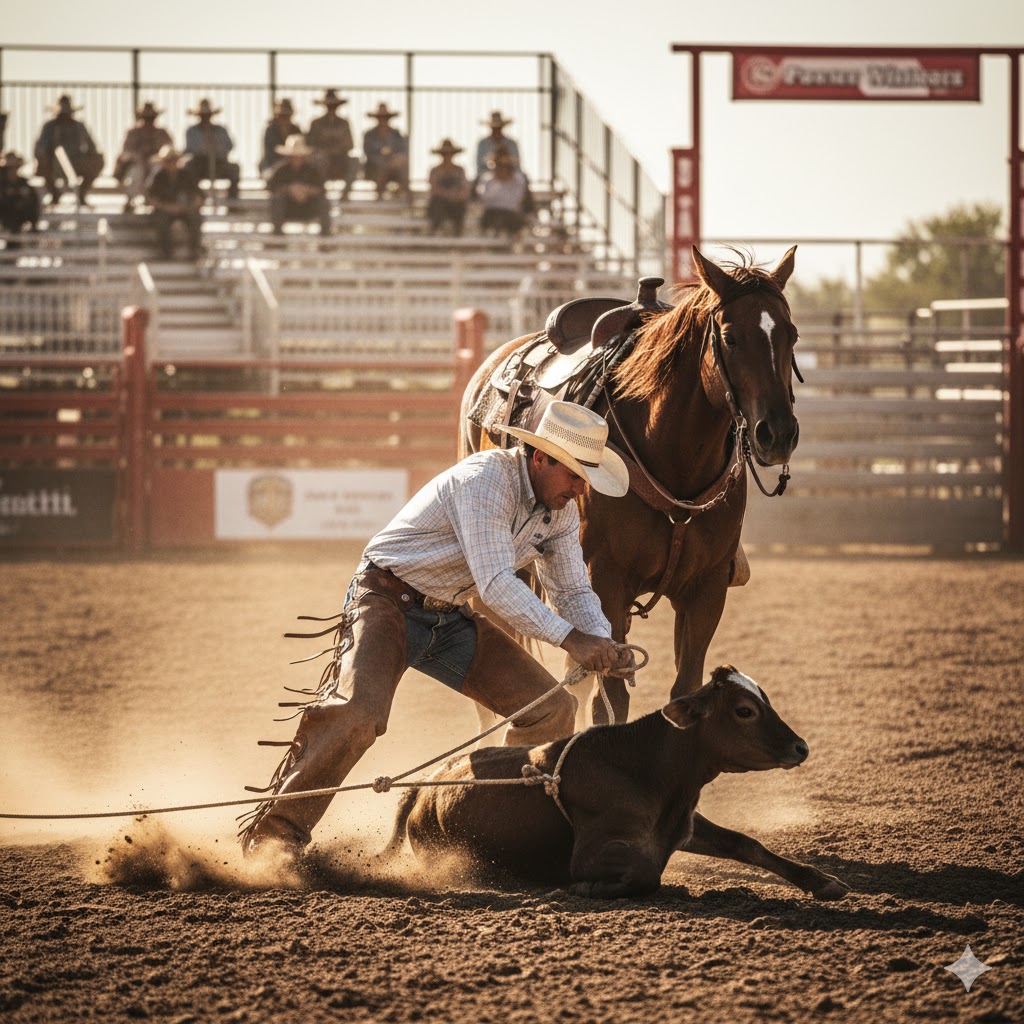
Once the calf is released, the cowboy must break the barrier correctly. If he leaves too early, a ten-second penalty is added to his total time. The cowboy swings his lariat, aiming to loop it cleanly around the calf’s neck. After the rope catches, the cowboy dismounts swiftly while his horse stops and pulls back slightly to maintain tension on the rope.
The cowboy runs down the rope to reach the calf, flips it onto its side, and ties three of its legs together using a short rope called a piggin’ string. Timing and efficiency are critical. Once the tie is complete, the cowboy raises his hands to signal the judge.
The calf must remain tied for six seconds after the rope is slackened. If the tie comes undone, the contestant receives no score. The winner is determined by the fastest time with all rules correctly followed. In major competitions, times often fall between seven and ten seconds.
Judges evaluate not only speed but also technique and control. The horse’s behavior is also considered, as calm, well-trained horses contribute to clean, effective runs. Penalties are applied for breaking barriers, rough handling, or unsafe practices.
Safety and fairness are central to the sport. Equipment inspections, standardized timing systems, and strict rule enforcement ensure that each competitor faces equal conditions. These measures maintain the sport’s integrity and its appeal to both participants and spectators.
Modern Developments and Technology in Tie-Down Roping
The evolution of Tie-Down Roping continues as technology improves training and performance. High-speed cameras and digital timers allow for more precise scoring. Video review systems ensure accurate results and help contestants analyze their runs afterward.
Training tools such as mechanical calves and roping dummies enable year-round practice without live animals. These devices mimic calf movement and speed, helping ropers refine their accuracy. Horse training has also become more sophisticated, using specialized conditioning programs and veterinary care to keep animals in peak shape.
Media coverage has expanded through online streaming platforms. Fans worldwide can now watch live rodeo events from their homes. This accessibility has introduced Tie-Down Roping to younger audiences, strengthening its fan base and securing its future.
Sponsorship deals and endorsements have elevated professional ropers into recognized athletes. Their visibility on social media has helped promote rodeo culture globally. Brands related to western wear, livestock care, and equine products often support competitors, creating a thriving ecosystem around the sport.
Cultural Legacy and Future of Tie-Down Roping
Tie-Down Roping remains a powerful symbol of cowboy heritage. Its emphasis on discipline, partnership, and respect for animals reflects timeless values. Communities that embrace the sport keep a vital part of history alive while adapting to modern expectations.
Educational programs and rodeo schools continue to attract new participants. The inclusion of women and youth in roping events demonstrates growing diversity within the sport. This inclusivity strengthens its relevance and appeal to broader audiences.
Looking forward, Tie-Down Roping faces opportunities and challenges. Balancing tradition with evolving animal welfare standards will shape its trajectory. Continued innovation, transparency, and cultural pride will ensure that the sport thrives for generations to come.
As new countries adopt rodeo culture, the global family of ropers expands. Competitions in South America, Europe, and Asia will likely grow, promoting cultural exchange and friendly rivalry. These international ties reinforce the universal appeal of horsemanship, athleticism, and respect for nature.
Conclusion
Tie-Down Roping has evolved from a ranching necessity into a respected international sport. Its history captures the essence of cowboy culture—strength, skill, and honor. The sport’s growth across continents reflects its universal themes of discipline and teamwork.
From youth rodeos to professional leagues, Tie-Down Roping connects people through tradition and competition. It fosters community pride, supports local economies, and celebrates the enduring bond between humans and horses. As technology, culture, and society progress, this time-honored event continues to rope in hearts around the world.