
Why Fan Engagement Drives Every League’s Growth
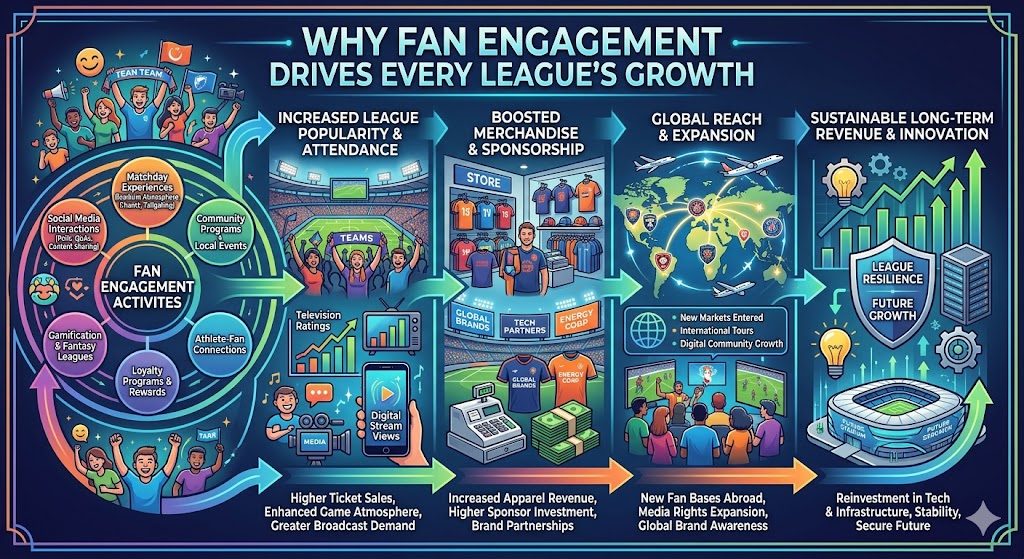
Why Fan Engagement Drives Every League’s Growth
Fan engagement is no longer just a “nice bonus” for sports leagues. It is the engine that powers everything—from revenue and visibility to long-term sustainability. In today’s fast-moving, digital-first world, leagues that actively connect with their fans are the ones that grow, thrive, and dominate.
On the other hand, leagues that fail to engage their audience often struggle to stay relevant.
So, what makes fan engagement so important? And why does it drive growth across every level of sport?
Let’s break it down.
What Is Fan Engagement?
Fan engagement refers to the interaction between a sports league (or team) and its audience. It goes far beyond simply watching a game.
Engaged fans:
- Follow teams on social media
- Attend games regularly
- Buy merchandise
- Participate in discussions and communities
- Watch highlights, interviews, and behind-the-scenes content
In short, engaged fans are active participants—not passive viewers.
That distinction matters more than ever.
Engagement Builds Loyal Fan Bases
First and foremost, engagement creates loyalty.
A casual viewer might watch a game occasionally. However, an engaged fan feels emotionally connected to a team or league. That emotional connection keeps them coming back.
Loyal fans:
- Watch more games
- Stick with teams during losing seasons
- Bring in new fans through word of mouth
This consistency provides leagues with a stable foundation for growth.
Without loyalty, growth becomes unpredictable.
More Engagement Means More Revenue
Fan engagement directly impacts revenue in several ways.
When fans are engaged, they spend more money. It’s that simple.
Revenue streams tied to engagement include:
- Ticket sales
- Merchandise purchases
- Streaming subscriptions
- Sponsorship value
Advertisers and sponsors look for engaged audiences. A league with passionate, active fans becomes far more attractive to brands.
As engagement rises, so does financial opportunity.
Social Media Has Changed Everything
Social media has revolutionized fan engagement.
Platforms like Twitter, Instagram, TikTok, and YouTube allow leagues to connect with fans instantly. Content is no longer limited to game day.
Now, leagues can share:
- Highlights in real time
- Player interactions
- Behind-the-scenes moments
- Fan-generated content
This constant connection keeps fans involved year-round.
Additionally, social media allows smaller or emerging leagues to grow quickly. A single viral moment can introduce millions of new fans overnight.
Younger Audiences Demand Interaction
Today’s younger fans expect more than just watching games.
They want interaction.
This includes:
- Live chats during games
- Fantasy sports participation
- Interactive apps and second-screen experiences
- Direct engagement with players
Leagues that adapt to these expectations grow faster among younger demographics.
Those that don’t risk losing the next generation of fans.
Content Is the New Currency
Modern fan engagement is driven by content.
Games are still the centerpiece. However, content keeps fans connected between games.
Popular content types include:
- Short-form highlight clips
- Player interviews
- Mic’d-up segments
- Documentary-style series
This content deepens the fan experience. It helps fans feel closer to players and teams.
As a result, engagement becomes continuous rather than occasional.
Star Power Fuels Engagement
Players are no longer just athletes. They are personal brands.
When fans connect with players, they become more invested in the league as a whole.
Star athletes drive engagement by:
- Sharing personal stories
- Interacting with fans online
- Building large social followings
This creates a powerful ripple effect. Fans who follow players often become fans of the league.
Leagues that promote their stars effectively see stronger growth.
Live Experiences Still Matter
Despite digital growth, live experiences remain critical.
Attending a game creates a unique emotional connection. The atmosphere, the crowd, and the energy cannot be replicated.
Leagues are enhancing these experiences through:
- In-game entertainment
- Fan zones and interactive areas
- Technology like mobile apps and instant replays
A great live experience turns casual attendees into lifelong fans.
Data Helps Personalize the Experience
Leagues now use data to improve fan engagement.
By analyzing behavior, they can deliver personalized experiences such as:
- Customized content recommendations
- Targeted promotions
- Tailored notifications
This makes fans feel understood and valued.
Personalization increases satisfaction—and satisfied fans stay engaged.
Global Reach Expands Fan Bases
Engagement allows leagues to grow beyond their local markets.
Through digital platforms, fans from around the world can follow teams and players.
This global reach leads to:
- International fan bases
- Increased merchandise sales
- Expanded media rights deals
Leagues like the NFL, NBA, and Premier League have all benefited from global engagement strategies.
As engagement grows globally, so does overall league value.
Community Building Strengthens Connection
Fan engagement is not just about content. It is about community.
Communities form around teams and leagues through:
- Online forums
- Social media groups
- Local fan clubs
These communities keep fans connected even when games are not being played.
They also create a sense of belonging.
That emotional connection is a powerful driver of long-term growth.
Technology Is Creating New Opportunities
Emerging technologies are opening new doors for fan engagement.
Some examples include:
- Virtual reality experiences
- Augmented reality features in apps
- Interactive broadcasts with multiple viewing options
These innovations make the fan experience more immersive.
As technology evolves, engagement opportunities will continue to expand.
Fan Feedback Shapes the Future
Engaged fans do more than consume content. They provide feedback.
Leagues can use this feedback to improve:
- Game formats
- Broadcast styles
- Rules and regulations
Listening to fans creates a better product.
A better product attracts more fans.
This feedback loop is essential for sustained growth.
Sponsorship Value Depends on Engagement
Sponsors care about one thing above all—attention.
Engaged fans provide exactly that.
When fans interact with content, share posts, and attend events, they create more visibility for sponsors.
This increases the value of sponsorship deals.
Leagues with higher engagement can command larger partnerships and long-term contracts.
Smaller Leagues Can Compete Through Engagement
Fan engagement has leveled the playing field.
Smaller or emerging leagues can now compete with larger organizations by focusing on engagement strategies.
They can:
- Build strong online communities
- Create unique and shareable content
- Interact directly with fans
This approach allows them to grow without massive budgets.
In many cases, authenticity becomes their biggest advantage.
The Role of Storytelling
Storytelling is one of the most powerful engagement tools.
Fans connect with stories, not just scores.
Compelling narratives include:
- Underdog journeys
- Comeback stories
- Rivalries
- Personal struggles and triumphs
These stories make sports more meaningful.
When fans feel emotionally invested, engagement naturally increases.
Consistency Drives Long-Term Growth
Engagement is not a one-time effort. It requires consistency.
Leagues must continuously:
- Produce content
- Interact with fans
- Innovate new experiences
Consistency builds trust.
Over time, that trust turns into loyalty and sustained growth.
The Future of Fan Engagement
Fan engagement will only become more important moving forward.
Key trends include:
- Increased use of AI and personalization
- More interactive viewing experiences
- Deeper integration of social media and live sports
- Continued global expansion
Leagues that embrace these trends will lead the industry.
Those that don’t, will fall behind.
Final Thoughts
Fan engagement drives every aspect of a league’s growth. It builds loyalty, increases revenue, expands global reach, and strengthens community.
More importantly, it transforms fans from passive viewers into active participants.
In today’s sports landscape, that transformation is everything.
Leagues that prioritize fan engagement are not just growing—they are shaping the future of sports.