
Why Sports Podcasts Outperform Traditional Media
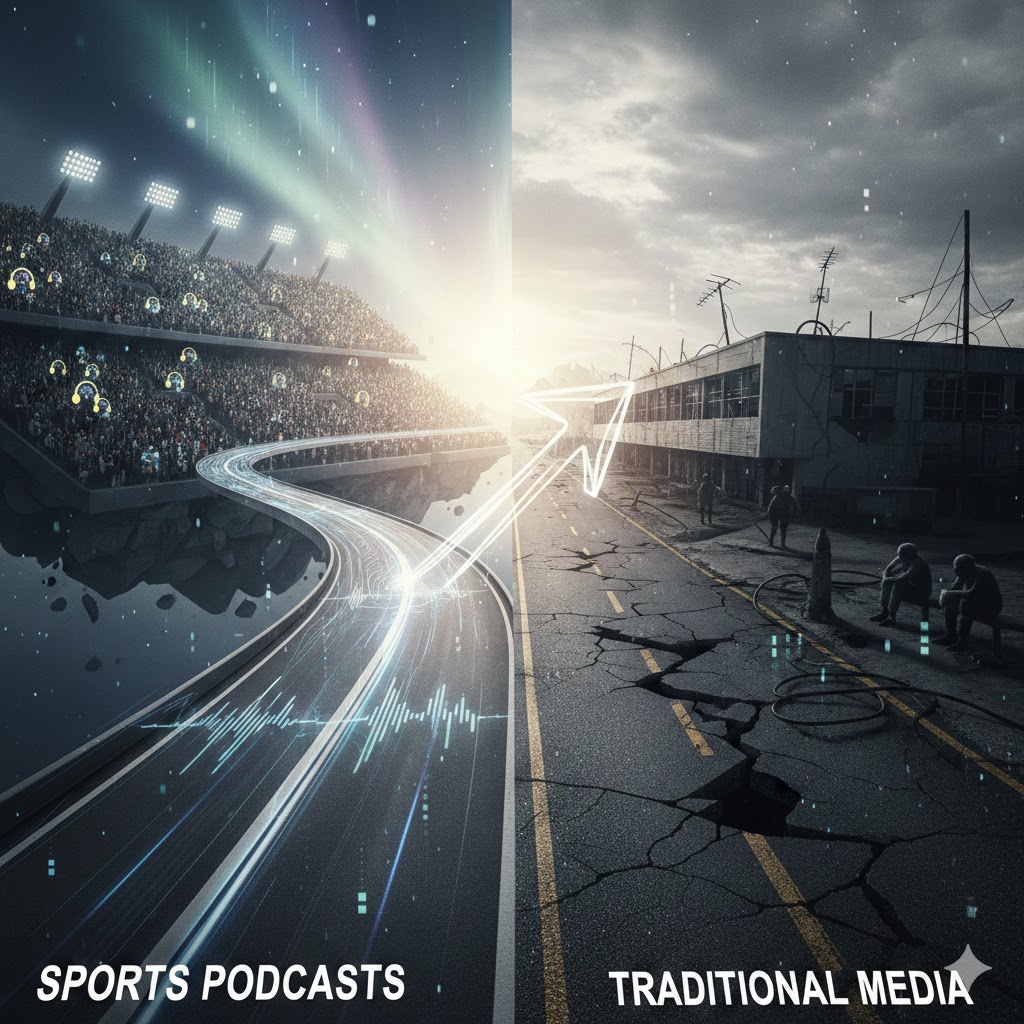
Why Sports Podcasts Outperform Traditional Media
Not long ago, if you wanted serious sports coverage, you turned on the television or picked up a newspaper.
That was the gatekeeper era.
A handful of networks decided what stories mattered. A few columnists shaped the conversation. Fans consumed what was offered.
Now? A former backup quarterback with a microphone can influence the national debate.
And in many cases, sports podcasts aren’t just competing with traditional media — they’re outperforming it.
Why?
Because the way fans consume sports has changed.
Podcasts Feel Personal, Not Programmed
Traditional media often feels structured and timed down to the second. Segment breaks. Commercial cuts. Pre-approved talking points.
Podcasts feel different.
They’re longer. Looser. More conversational.
Listeners hear tone shifts, laughter, disagreement, storytelling. The conversation feels unscripted — even when it isn’t entirely.
In my opinion, that authenticity is the biggest advantage. Fans don’t just want information. They want perspective. They want to feel like they’re part of the conversation.
Podcasts create that illusion beautifully.
Long-Form Content Builds Trust
Television segments often run 5–8 minutes.
Podcast episodes? An hour. Sometimes two.
That extra time changes everything.
Hosts can:
- Break down strategy in detail
- Tell behind-the-scenes stories
- Admit uncertainty
- Explore nuance instead of forcing hot takes
When audiences spend hours each week listening to the same voices, something powerful happens:
Trust builds.
And trust is the real currency in sports media today.
Athletes Control Their Own Narratives
One of the biggest disruptions podcasts created is this:
Athletes no longer need traditional media to tell their stories.
Current and former players now launch their own shows. They speak directly to fans. They explain decisions, locker room dynamics, contract negotiations, even controversies — without a reporter filtering the message.
That changes power dynamics.
Instead of reacting to headlines, athletes shape them.
And fans are drawn to that access. Hearing strategy discussions or personal experiences from someone who actually lived it carries a weight traditional commentary sometimes lacks.
It feels less like analysis from the outside — and more like insight from the inside.
Depth Beats Debate
Traditional sports television increasingly leans into debate formats.
Fast opinions. Strong stances. Sharp soundbites.
It works for entertainment. But it can also feel repetitive.
Podcasts, on the other hand, allow space for depth. Hosts can disagree without shouting. They can explore gray areas. They can change their minds mid-discussion.
That kind of intellectual flexibility feels refreshing.
In my view, fans are getting smarter about the difference between performance debate and real analysis. And they’re gravitating toward substance.
Convenience Fits Modern Lifestyles
This might be the simplest reason podcasts outperform traditional media:
They fit real life.
Fans can listen:
- While driving
- At the gym
- On a walk
- During work
- While traveling
You don’t have to sit in front of a screen. You don’t have to schedule your evening around a broadcast time.
The flexibility makes podcasts feel personal and accessible — like sports analysis that moves with you instead of requiring your full attention.
That convenience factor shouldn’t be underestimated.
Niche Coverage Wins Loyalty
Traditional media has to appeal to broad audiences. That means covering major leagues, top teams, and headline stories.
Podcasts can go deep into niches:
- A single college program
- A specific fantasy sports strategy
- Minor league development systems
- Advanced analytics breakdowns
- Historical deep dives
When a fan finds a podcast that matches their exact interest, loyalty becomes intense.
That kind of targeted engagement is difficult for traditional outlets to replicate at scale.
Advertising Models Reward Engagement
From a business perspective, podcasts also benefit from highly engaged audiences.
Host-read advertisements feel less intrusive and more conversational. Listeners often trust the host enough to consider recommendations seriously.
Traditional commercials interrupt.
Podcast ads integrate.
That difference translates to measurable marketing effectiveness — and brands are noticing.
Traditional Media Isn’t Dead — It’s Evolving
This isn’t a declaration that television and print are obsolete.
Major networks still:
- Break news
- Provide live game coverage
- Deliver large-scale production value
But podcasts complement — and sometimes outperform — them in analysis, storytelling, and connection.
The smartest traditional outlets have adapted by launching their own podcast networks, recognizing that the format isn’t a threat.
It’s an evolution.
The Emotional Factor
Here’s something harder to measure but easy to feel:
Podcasts create companionship.
Listeners often describe their favorite hosts as if they know them personally. Spending hours each week with familiar voices builds a connection that scripted studio shows rarely achieve.
That emotional familiarity turns listeners into communities.
And communities outperform audiences.
Final Thoughts
Sports media has changed because fans have changed.
They want depth over noise.
Access over gatekeeping.
Conversation over confrontation.
Podcasts deliver all three.
Traditional media still plays a vital role in sports culture. But when it comes to building loyalty, trust, and long-form engagement, podcasts currently hold the edge.
And judging by listening trends, that edge isn’t disappearing anytime soon.