
The Rise of Dual-Threat Quarterbacks in the NFL
The Rise of Dual-Threat Quarterbacks in the NFL
The rise of dual-threat quarterbacks in the NFL has transformed the league in ways few analysts predicted. Fans once expected their quarterback to stand tall, remain in the pocket, and methodically wait for routes to open. That era is fading fast. Today’s game rewards mobility, creativity, and improvisation. Young fans crave excitement. Coaches crave versatility. Defenders dread quarterbacks who can escape the rush and rip off explosive gains at any moment. Because of these changes, many observers believe the dual-threat quarterback is not only here to stay but ready to dominate the league for decades.
Although traditional pocket passers will always have a place in football, mobility now gives quarterbacks a clear advantage. The modern NFL is built on speed and adaptability. Offenses move quickly. Defenders close space instantly. Therefore, a quarterback who can run, scramble, evade, and create becomes a force that defenses must respect on every snap. That combination has changed the way teams evaluate talent, build offenses, and design strategies.
This shift has sparked passionate discussion. Some people worry about durability. Others believe mobility can revolutionize offenses. Many argue that the evolution is simply a response to the speed of today’s defenders. Whatever someone believes, one fact remains: the game is changing fast, and mobile quarterbacks are driving the transformation.
A New Definition of Dual-Threat Excellence
A true dual-threat quarterback must master several skills. First, they need polished pocket-passing ability. When protection holds, they must deliver accurate throws on time. However, their skill set cannot end there. They must also excel at scrambling, throwing on the move, and running designed plays with confidence. Breakaway speed or at least the ability to outmaneuver defenders in the open field is mandatory. They must understand when to slide or step out of bounds. Coaches must trust them to protect themselves while also taking calculated risks.
This broader definition shows how demanding the position has become. It’s no longer enough to manage the game. Quarterbacks must create opportunities. They must adapt quickly. They must diagnose defenses while moving. And they must command respect as both passers and runners.
Because the league’s athletes are bigger, stronger, and faster than ever, mobility helps quarterbacks survive and thrive. Pocket integrity collapses faster than it did twenty years ago. Therefore, a quarterback without escape ability faces constant pressure. Mobility now acts as both an offensive weapon and a defensive safety valve.
Modern Stars Leading the Movement
Several current quarterbacks embody the evolution of the position. They combine elite passing traits with explosive mobility. They force defensive coordinators to rewrite entire playbooks. Their influence is reshaping how teams draft, develop, and deploy their most important player.
Below are five standout dual-threat quarterbacks driving this revolution forward.
Lamar Jackson
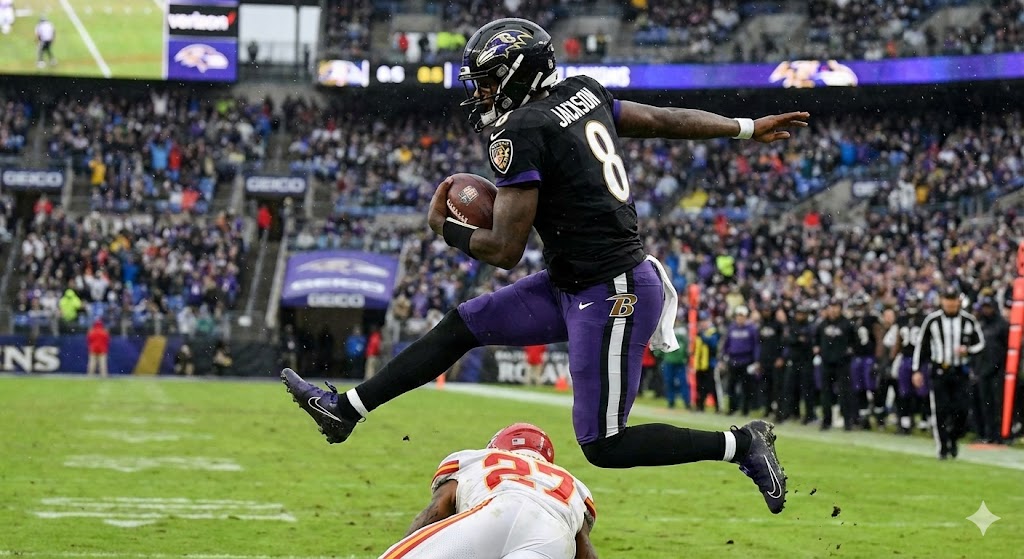
Lamar Jackson stands as one of the most electric players in league history. His acceleration changes games instantly. However, his growth as a passer sometimes gets overlooked. He reads defenses well and anticipates windows. He uses movement to manipulate defenders. His ability to extend plays creates opportunities no coverage scheme can eliminate.
More importantly, the offense built around him highlights his dual-threat abilities without limiting his passing development. His unique combination of speed, vision, and creativity continues to set a standard for future dual-threat quarterbacks.
Jalen Hurts
Jalen Hurts represents a different style of dual-threat excellence. He brings power, intelligence, and discipline to the game. His running ability changes red-zone strategy and his leadership elevates teammates. His steady improvement as a passer proves that dedicated work can take a mobile quarterback to elite status.
Additionally, Hurts thrives in heavy RPO systems. He reads defenders with confidence. He forces defenses to commit early. Then he punishes hesitation with either a sharp throw or a forceful run. His strength and durability make him a nightmare to tackle in short-yardage situations. Few quarterbacks influence defensive alignment as much as Hurts.
Josh Allen
Josh Allen blends size, speed, and raw athleticism into one of the most dangerous profiles in the league. Defenders must account for his running ability on every play. Designed runs, scrambles, and broken plays all become explosive opportunities. However, Allen also possesses one of the strongest arms in football. That combination forces defenses to defend every blade of grass.
His willingness to fight for extra yards shows confidence and toughness. While some fans worry about risk, others appreciate his competitive spirit. His athleticism redefines how big-bodied quarterbacks can function in modern offenses. Because of his unique build, he becomes both a running back and a gunslinger on the same snap.
Kyler Murray
Kyler Murray moves with a level of quickness and agility rarely seen in the league. His ability to change direction instantly helps him evade pressure with ease. His baseball background sharpened his throwing motion, release speed, and ability to make platform-neutral throws. The combination creates a dynamic playmaker who can improvise during broken plays.
When Murray escapes the pocket, defenders panic. The deep-ball accuracy forces safeties to stay disciplined. His lateral movement creates horizontal stress that stretches defenses wide. His ability to deliver accurate throws on the run makes him a complete dual-threat quarterback with rare athletic gifts.
Justin Fields
Justin Fields brings elite long-speed to the quarterback position. His top gear challenges linebackers and safeties. When he finds open field, he outruns defensive backs. His physical running style adds another layer of difficulty for tacklers. However, Fields also throws a tight spiral and excels in structured offense when given protection.
He uses movement to open passing windows. He works well in play-action and bootleg concepts. With proper scheme support and improved offensive line play, Fields possesses the traits to dominate as both a passer and runner. His ability to pressure defenses vertically and horizontally makes him one of the most intriguing talents in the league.
Honoring the Pioneers Who Opened the Door
Today’s stars follow a path carved by legends who brought mobility into the mainstream. These pioneers faced doubt and criticism, yet their vision of quarterback play eventually influenced the entire league.
Below are five iconic dual-threat quarterbacks who reshaped the sport.
Steve Young
Steve Young was ahead of his time. He combined pinpoint accuracy with remarkable mobility. He didn’t rely on running, but used it strategically to extend plays and turn broken protections into big gains. His intelligence and precision made him one of the most complete quarterbacks ever. Many analysts believe Young would thrive even more in today’s systems.
Randall Cunningham
Randall Cunningham remains one of the most gifted natural athletes to play the position. His leaping ability, arm strength, and escape skills dazzled fans and frustrated defensive coordinators. He became a highlight machine long before social media existed. More importantly, he showed that mobility and passing excellence could coexist.
Michael Vick
Michael Vick revolutionized quarterback athletics. His left-handed delivery, lightning speed, and explosive acceleration created plays never seen before. Every defender on the field felt threatened. Every fan in the stadium felt excitement. While his career included ups and downs, his influence remains unmatched. Young mobile quarterbacks often list Vick as their first inspiration.
Steve McNair
Steve McNair brought toughness and strength to the dual-threat archetype. He played through pain and he fought for yards. He threw with force and accuracy. His leadership defined his legacy. McNair showed that a dual-threat quarterback could win in the pocket and punish defenses on the ground without compromising team structure.
Cam Newton
Cam Newton stands as one of the most dominant red-zone runners ever. His power created mismatches and his charisma lifted offenses. His MVP season showcased the full potential of a high-volume running quarterback paired with explosive arm talent. Newton’s style pushed coaches to design more creative run concepts. His impact remains visible in modern offenses.
Coaches Who Embraced the Movement
Coaching drives quarterback success. The evolution of offensive philosophy has shaped the rise of dual-threat quarterbacks. Several coaches played major roles in building systems that highlight mobility.
John Harbaugh
John Harbaugh embraced dual-threat potential more aggressively than most coaches. He reorganized the Ravens offense around Lamar Jackson’s strengths. He integrated option concepts, motion, misdirection, and power-run designs. This empowered Jackson to use both his legs and arm. Because of Harbaugh’s bold choices, the Ravens became a dominant rushing team with elite passing efficiency.
Nick Sirianni
Nick Sirianni crafted a system that maximizes Jalen Hurts’ power and precision. His offense blends RPO concepts, motion, and physical inside runs. He places Hurts in situations where he can read defenders quickly. His willingness to innovate helps the Eagles stay unpredictable. Sirianni’s adaptability demonstrates how coaches can unlock a dual-threat quarterback’s full potential.
Sean McDermott
Sean McDermott built a balanced offense that encourages Josh Allen’s mobility without relying on it excessively. Designed runs complement Allen’s scrambling instincts. Play-action concepts open vertical passing lanes. McDermott understands that mobility adds danger without replacing structure. His approach emphasizes versatility, confidence, and discipline.
Why the Trend Will Strengthen
The rise of dual-threat quarterbacks in the NFL will continue for several key reasons.
First, defenses keep getting faster. Linebackers move like safeties. Edge rushers explode off the snap. Pressure arrives quickly. Therefore, quarterbacks must evade rushers and extend plays. Mobility becomes essential.
Second, high school and college football already lean heavily on dual-threat systems. Spread formations, option concepts, and quarterback movement define most modern offenses. Young quarterbacks enter the NFL with these habits already developed.
Third, fans love excitement. Scrambles, broken plays, and explosive quarterback runs energize stadiums. They become highlight moments that fuel social media buzz. Teams know this and embrace the entertainment value.
Fourth, the backup quarterback landscape is changing. Teams now want their second and third quarterbacks to match the starter’s mobility. This consistency keeps offenses functional during injuries.
Fifth, durability concerns—though real—can be managed. Coaching can emphasize sliding, stepping out of bounds, and choosing smart moments to fight for yards. Quarterbacks who understand risk management stay healthy while remaining dangerous.
Because of these factors, the dual-threat trend won’t slow down. Instead, it will expand across the league.
Why Evaluation Isn’t Harder
Some fans believe dual-threat quarterbacks are difficult to evaluate. However, many observers argue the opposite. Scouts simply need to focus on both passing traits and movement traits. Accuracy, decision-making, and anticipation still matter most. Mobility becomes an asset, not a distraction. Dual-threat quarterbacks bring more tools to the position, not fewer.
Additionally, running ability doesn’t diminish a quarterback’s intelligence or discipline. Many dual-threat players show strong processing skills. Some thrive in complex offenses. Others use movement to simplify coverage reads. The evaluation process remains clear: can the player make throws, read defenses, and use mobility wisely?
Because the evaluation criteria remain consistent, the presence of mobility doesn’t complicate scouting. Instead, it provides more information about a prospect’s ceiling.
An Evolving League Built on Versatility
The rise of dual-threat quarterbacks in the NFL reflects a broader evolution in offensive strategy.
Offenses crave flexibility. Coaches want options. Mobility opens doors to creative schemes. RPO plays, bootlegs, zone reads, and motion-heavy formations all become more effective when the quarterback can run.
Additionally, mobility punishes defenses that rely on man coverage. When defenders turn their backs, quarterbacks find open lanes. When defenses play zone, quarterbacks manipulate defenders with movement. They turn hesitation into opportunity. They apply pressure without throwing a pass.
This flexibility forces defensive coordinators into difficult decisions. They must contain the quarterback while covering explosive receivers. They must pressure without creating escape lanes and must defend the pass while respecting designed runs.
That balancing act becomes nearly impossible against elite dual-threat quarterbacks.
What the Future Holds
Mobile quarterbacks will define the next generation of football. Young players understand this. Coaches encourage it. Scouts embrace it. College programs develop it. Therefore, the NFL will see even more dual-threat quarterbacks enter the league each year.
The rise of dual-threat quarterbacks in the NFL represents a long-term shift, not a temporary wave.
Over the next decade, mobility will become a baseline expectation. Quarterbacks who lack movement skills may struggle unless surrounded by perfect conditions. Teams will prioritize athleticism during the draft. Offensive lines will adapt to more movement-based blocking concepts. Receivers will adjust routes to match extended plays.
Backup quarterbacks will also reflect this trend. Teams want depth players who can replicate the starter’s mobility. Because of this, second and third quarterbacks will be trained to run, escape, and improvise.
The league will continue evolving. Mobility will remain crucial. Creativity will become essential. The quarterback position will never return to the rigid structure of decades past.
Why the Movement Matters
The rise of dual-threat quarterbacks in the NFL symbolizes more than a change in style.
It reflects the growing demand for innovation in sports and highlights the importance of adaptability. It showcases the evolution of athletic training. In addition, it reveals how coaches adjust to modern challenges and it demonstrates how players reinvent themselves to stay competitive.
Most importantly, it inspires young athletes to embrace versatility. They learn to throw, run, adapt, and expand their skill sets. They grow into complete threats and redefine what the quarterback position can become.
Conclusion
Dual-threat quarterbacks represent the future of the NFL. They excite fans, challenge defenses, and reshape offensive strategy. The movement began with pioneers such as Steve Young, Randall Cunningham, Michael Vick, Steve McNair, and Cam Newton. It continues today with stars like Lamar Jackson, Jalen Hurts, Josh Allen, Kyler Murray, and Justin Fields. Their influence shapes coaching, scouting, and development across the league.
Coaches such as John Harbaugh, Nick Sirianni, and Sean McDermott prove that embracing mobility leads to explosive offenses. Their success shows that bold ideas generate big results. Because of this mindset shift, the league now values quarterbacks who can pass with precision and run with purpose.
The future belongs to those who can do both.