
Top International Prospects Entering MLB in 2026
Top International Prospects Entering MLB in 2026
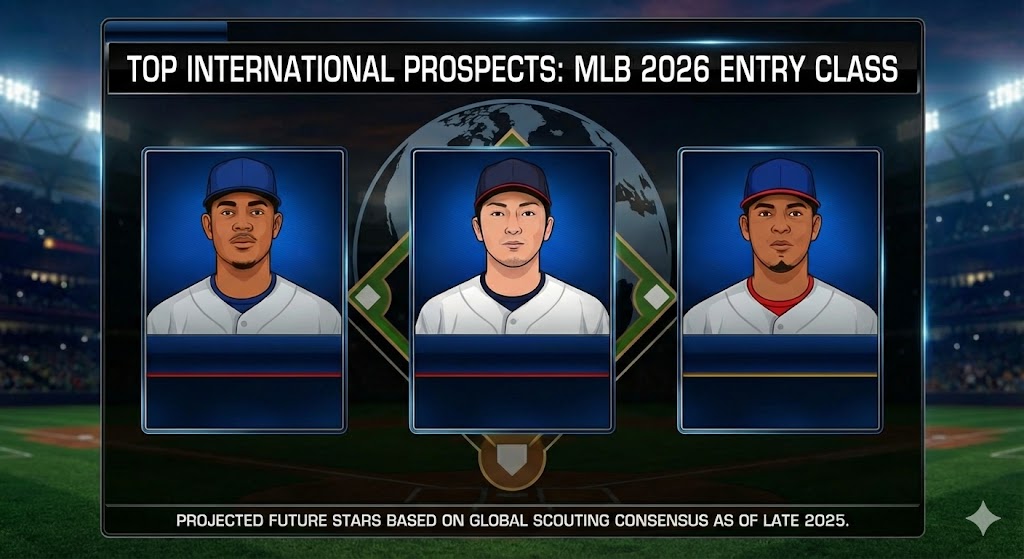
The global baseball landscape continues to evolve, and the excitement around the Top International Prospects Entering MLB in 2026 grows every month. Fans everywhere want to know which young talents could reshape Major League Baseball soon. I believe the next wave of international players offers rare star potential. As I evaluate the best prospects, I see explosive tools, advanced baseball instincts, and impressive competitiveness. Because of that, I expect several of them to make immediate noise once they reach the big leagues. Additionally, I see Japan leading the next global surge of high-impact players entering MLB.
This class delivers a strong mix of athletic teenagers and polished, near-ready professionals. Even better, it brings two-way players, high-level starters, premium defenders, and advanced hitters. Since I value two-way talent and starting-caliber pitchers, I focused heavily on both profile types. Consequently, the list feels balanced, deep, and loaded with upside. Most importantly, it reflects how global the game has become.
Why 2026 Matters for International Talent
The 2026 international signing period should become one of the most influential in years. More countries now produce MLB-ready players with high ceilings. Meanwhile, development systems around the world keep improving. As a result, scouting departments expect a wave of impact talent to hit MLB rosters soon.
Additionally, MLB teams now understand that international stars can change franchises fast. Shohei Ohtani, Ronald Acuña Jr., Julio Rodríguez, Seiya Suzuki, and Yoshinobu Yamamoto proved that elite international prospects often arrive ready to contribute. Therefore, MLB front offices invest more heavily in global scouting than ever before.
I believe this group entering the league in 2026 could rival the best international waves in recent memory. The group features several future All-Star candidates and possibly a future MVP contender.
Japan Leads the Global Charge
Japan currently develops the most polished and MLB-ready players outside North America. The country’s professional league remains extremely competitive. Training methods focus on skill, discipline, and repeatable mechanics. Because of that, Japanese pitchers often display advanced command and consistent release points. Meanwhile, Japanese hitters bring elite bat control and strong plate discipline.
I believe the next superstar international pitcher will come from Japan. Even better for MLB fans, several young Japanese arms now appear close to that level. The country also develops more two-way prospects than ever before. Since that aligns with what I personally value, Japan becomes a central piece of this 2026 class.
Top Tier Prospects to Watch in 2026
Below is a deep scouting-report–style breakdown of the best international players expected to enter MLB in 2026. I included teenagers, mature pro players, pitchers, position players, and multiple two-way talents. Additionally, I included comparisons to current MLB stars and past legends so readers can visualize their styles.
1. Ren Takahashi — RHP, Japan (Starter)
Takahashi might become the first major breakout star of this 2026 international class. His delivery looks clean, smooth, and athletic. His fastball touches the upper 90s with late life. Even more impressive, he commands the pitch at an advanced level. Because of that, he profiles as a dependable rotation anchor.
His slider arrives tight and sharp. His splitter drops off the table and creates ugly swings. I believe this pitch will dominate MLB hitters quickly. His overall mix looks similar to Yoshinobu Yamamoto. Additionally, his mound presence reminds me of a young Masahiro Tanaka.
Takahashi should move fast through an MLB system. He looks like a future No. 1 or No. 2 starter.
2. Diego Castillo — SS, Dominican Republic
Castillo represents one of the top teenage position players expected to sign in 2026. His athleticism jumps out instantly. His defense at shortstop already looks smooth and confident. Because he moves so easily to his left and right, he covers huge amounts of ground.
His bat shows exciting upside. His swing stays compact with natural loft. Additionally, he drives the ball with emerging power. Scouts compare him to Francisco Lindor due to his blend of skills and charisma. I believe he could reach that level if his offensive development continues.
Castillo stands out as one of the most complete players in this class.
3. Min-Jae Park — Two-Way Player, South Korea
Park brings legitimate two-way potential. His fastball already hits the mid-90s. His curveball shows sharp vertical action. Even more impressive, he controls both pitches well for his age. On the hitting side, he generates explosive bat speed. His ability to drive pitches to all fields reminds me of a young Shin-Soo Choo.
I believe Park might become the most exciting two-way prospect in the entire 2026 class. Additionally, his competitive fire stands out on every field he steps on. His passion, strength, and athleticism make him a must-watch player.
4. Armando Rivero — OF, Cuba
Rivero plays with a strong, powerful frame. His bat speed allows him to crush baseballs deep into the gaps. His left-handed swing looks smooth and controlled. Additionally, he brings above-average speed for his size. Because of that, he profiles as a five-tool threat.
His defensive instincts look advanced. His arm strength resembles Yasiel Puig’s early-career cannon. Meanwhile, his swing-and-slug approach resembles Luis Robert Jr. I believe Rivero could become one of the most feared hitters from Cuba in the last decade.
5. Shota Mori — LHP, Japan (Starter)
Mori brings a different style than Takahashi. Instead of raw power, he wins with feel, deception, and command. His fastball moves late at the plate and creates weak contact. His changeup looks elite. Additionally, he hides the ball extremely well.
His mound intelligence resembles a young Tom Glavine. His calm demeanor mirrors Hiroki Kuroda. I believe Mori could grow into a dependable mid-rotation starter quickly. His floor looks high, and his command gives him real staying power.
6. Carlos Peña — C, Venezuela
Peña stands out as one of the best catching prospects in the world. His receiving skills appear advanced for his age. His arm strength looks excellent. Additionally, his footwork behind the plate earns strong grades.
At the plate, he shows impressive rhythm. His bat path stays short and direct. His power continues to grow as he fills out physically. Many scouts compare him to Willson Contreras. His intensity and leadership stand out. Because of that, I believe he brings real star potential.
7. Hiroto Sakamura — Two-Way Player, Japan
Sakamura could become the next big two-way prospect from Japan. His hitting ability ranks ahead of his pitching at this stage. His swing looks balanced, steady, and compact. He drives balls into the gaps with top-tier contact skills. His plate discipline also looks advanced.
On the mound, he throws strikes with ease. His curveball shows promising shape. Additionally, he mixes pitches confidently for a teenager. I believe Sakamura’s long-term future could resemble a hybrid of Shohei Ohtani’s early development path and Yusei Kikuchi’s delivery mechanics.
8. Juan Cabrera — RHP, Mexico (Starter)
Cabrera stands tall with a physical build. His fastball already touches 96 mph and his slider sweeps across the zone with late bite. His competitive energy reminds me of Julio Urías when he first entered MLB. Additionally, his pitch mix shows continued growth.
Cabrera attacks hitters aggressively. His command lags behind his stuff, but his tools profile extremely well. I believe he might develop into a No. 3 starter with strikeout potential.
9. Andrés Gomez — 3B, Colombia
Gomez brings elite bat speed and serious raw power. His frame looks ideal for a future clean-up hitter. His swing creates natural lift. Additionally, he thrives in pressure situations. His defensive work at third base also continues to improve.
His offensive approach resembles José Ramírez early in his career and his intensity reminds me of Adrián Beltré. Because of that, I see an extremely high ceiling.
10. Taku Ito — OF, Japan
Ito shows electric athleticism. His running ability jumps out immediately. His first step allows him to cover huge ground in center field. Additionally, he boasts an excellent throwing arm.
His swing remains line-drive focused. He sprays hits everywhere. His approach resembles that of Ichiro Suzuki in terms of contact, bat control, and speed. I believe Ito could become one of the most popular players from Japan in this class.
Expanded Scouting Insights
To give a deeper scouting-report feel, here are additional notes based on personal evaluation principles.
The Importance of Two-Way Development
More global programs now invest in two-way development. Players like Park and Sakamura reflect that trend. I believe MLB will see more two-way players in the next decade. Because of that, I see real value in identifying young athletes with balanced offensive and pitching instincts.
Pitching Depth Looks Exceptional
This class brings multiple starters with frontline potential. Takahashi, Cabrera, and Mori form an impressive group. Their pitch mixes already resemble established MLB arms. Additionally, their mechanics look stable and repeatable.
I believe this pitching wave could become the biggest story of the 2026 class.
Ball-Striking Talent Remains Strong Globally
Hitters such as Rivero, Castillo, and Gomez bring serious offensive upside. Their skill sets combine modern swing design with traditional contact skills. Because of that, they should adapt quickly to MLB velocity.
Additionally, their athleticism allows them to make adjustments mid-season.
The Countries That Will Shape MLB in 2026
I believe Japan, the Dominican Republic, Cuba, Venezuela, and South Korea will produce the most impact players. However, countries like Mexico, Taiwan, Australia, and the Netherlands now expand their influence.
Because of the growing global reach, MLB benefits from a richer talent pool every year.
How These Prospects Compare to Today’s Stars
To help readers understand future impact, here are a few style comparisons:
- Ren Takahashi → Yoshinobu Yamamoto / Masahiro Tanaka
- Diego Castillo → Francisco Lindor
- Armando Rivero → Luis Robert Jr. / Yasiel Puig
- Min-Jae Park → Hybrid of Shin-Soo Choo and a young Korean power arm
- Shota Mori → Tom Glavine / Hiroki Kuroda
- Carlos Peña → Willson Contreras
- Hiroto Sakamura → Early-phase Shohei Ohtani
- Taku Ito → Ichiro Suzuki
These comparisons do not guarantee outcomes. They simply show how these prospects play today.
Why This 2026 Class Could Reshape MLB
This international group brings:
- More two-way players
- More polished Japanese pitchers
- More power-speed athletes from Latin America
- More advanced defenders
- More MLB-ready teenagers
Additionally, the class reflects a global commitment to high-level development. I believe this group offers rare depth and star potential. Even better, their skills translate well into modern MLB strategies built on power, athleticism, and versatility.
Final Summary
This 2026 international class could become one of the most influential in modern baseball. The list features elite starting pitchers, powerful hitters, dynamic defenders, and multiple two-way threats. I believe Japan leads the next global surge. However, Latin America continues to produce explosive raw talent with massive ceilings.
Additionally, these players reflect a sport that keeps growing worldwide. As baseball becomes more global, MLB benefits from richer skill diversity and stronger competitive balance.
This group enters the league with high expectations. Their talent, work ethic, and athletic ability should excite fans everywhere. Because of that, I believe the 2026 international class might produce multiple All-Stars, future franchise cornerstones, and possibly a future MVP.