
How College Basketball Coaches Build Winning Cultures
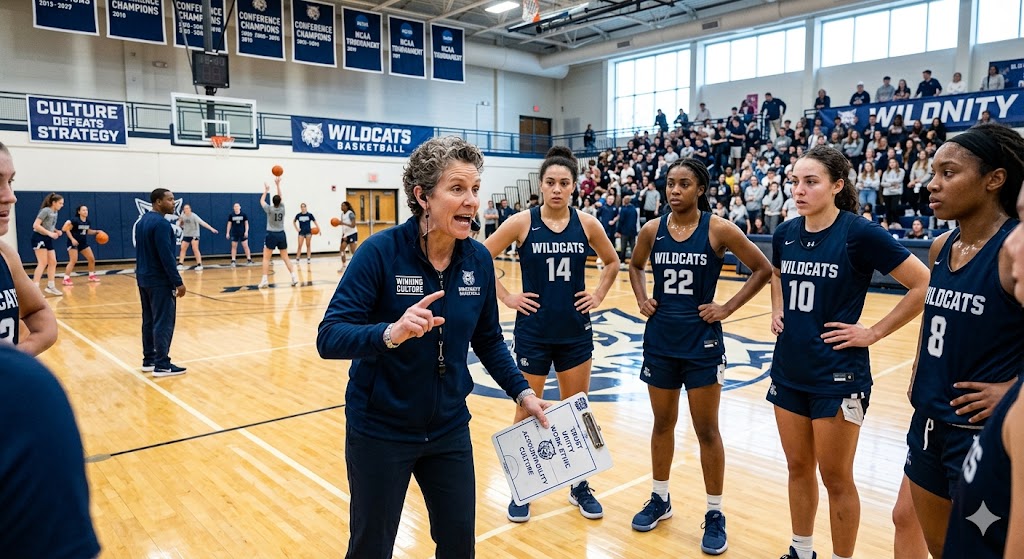
How College Basketball Coaches Build Winning Cultures That Last
Winning a few games in college basketball isn’t that hard.
Building a program that wins year after year is much harder.
The best coaches in NCAA Division I Men’s Basketball understand that talent alone doesn’t sustain success. Great recruiting classes can produce a strong season, but long-term dominance usually comes from something deeper.
It comes from culture.
The most successful programs in college basketball build identities that shape how players practice, compete, and represent the school. Over time, that identity becomes self-sustaining. New players arrive and quickly learn what the program expects.
That’s how winning cultures are built.
It Starts With a Clear Identity
Every elite college basketball program has a recognizable identity.
Some teams emphasize relentless defense. Others rely on fast-paced offense or disciplined half-court execution. But whatever the style, the philosophy is clear.
Legendary coaches like Mike Krzyzewski at Duke University and Tom Izzo at Michigan State University built programs where players immediately understood the standard.
Every drill, practice session, and game decision reinforces that identity.
When the philosophy stays consistent, players buy in faster.
Recruiting Players Who Fit the Culture
Talent matters in college basketball, but cultural fit matters just as much.
Great coaches don’t simply recruit the highest-ranked athletes. They recruit players who match the program’s mentality.
They look for athletes who demonstrate:
- Strong work ethic
- Competitive toughness
- Coachability
- Leadership potential
Many successful programs have turned overlooked recruits into stars because those players fit the system.
The right attitude often matters more than recruiting rankings.
Veteran Leadership Drives Consistency
A strong culture depends on leadership inside the locker room.
Experienced players often become the bridge between coaching expectations and younger teammates. They reinforce habits during practice, hold teammates accountable, and demonstrate what daily preparation should look like.
Programs that consistently win usually have veteran players who understand the system.
Those players help maintain continuity even when new recruiting classes arrive every year.
Practice Habits Define the Program
Ask almost any successful college coach where culture really forms, and they’ll give the same answer: practice.
Games reveal a team’s talent, but practices shape a team’s discipline.
Winning programs emphasize:
- High-intensity drills
- Defensive communication
- Competitive scrimmages
- Situational awareness
Players quickly learn that practice effort translates directly into playing time.
Over time, that expectation becomes part of the program’s DNA.
Accountability Is Non-Negotiable
One trait almost every championship program shares is accountability.
Players must meet expectations both on and off the court. That includes academic responsibilities, team behavior, and competitive effort.
Coaches who build lasting cultures enforce those standards consistently.
No player is above the program.
When players understand that everyone follows the same rules, trust inside the team grows stronger.
Player Development Keeps the Program Competitive
Recruiting brings talent into the program, but development turns potential into production.
Successful coaches invest heavily in player development through:
- Skill training
- Strength and conditioning
- Film study
- Position-specific coaching
Players who improve year after year help sustain program success.
When recruits see athletes developing into professional prospects, the program becomes even more attractive.
That creates a powerful recruiting cycle.
Stability at the Coaching Position Matters
Programs rarely build strong cultures without coaching stability.
When leadership constantly changes, systems change too. Recruiting strategies shift. Expectations become unclear.
But when a coach stays in place for years, the culture deepens.
Players, assistants, and recruits all understand the program identity. That stability allows the culture to evolve rather than reset every few seasons.
Many of the most respected college programs benefited from decades of consistent leadership.
Fans and Communities Reinforce the Culture
College basketball programs are deeply tied to their communities.
Strong fan support often reinforces team identity and expectations. Packed arenas, passionate student sections, and engaged alumni networks create environments where winning matters.
Players feel that energy.
Programs with strong community support often develop deeper pride and stronger traditions.
Those traditions become part of the culture future players inherit.
The Transfer Portal Changed the Challenge
The modern NCAA Transfer Portal has created new challenges for coaches building culture.
Roster turnover can happen faster than ever. Players now have more freedom to move between programs.
As a result, coaches must integrate new players quickly while maintaining program identity.
The best programs manage this by clearly communicating expectations from day one.
If players understand the culture early, transitions happen more smoothly.
Final Thoughts
Building a winning culture in college basketball takes years of consistency.
It requires strong leadership, disciplined practices, smart recruiting, and unwavering accountability. Talent may start the process, but culture sustains it.
The programs that win year after year rarely rely on luck.
Instead, they create environments where players know exactly what the standard is—and where every new player is expected to uphold it.
That’s the foundation of championship-level college basketball.