
How Merchandise Sales Reflect Team Popularity
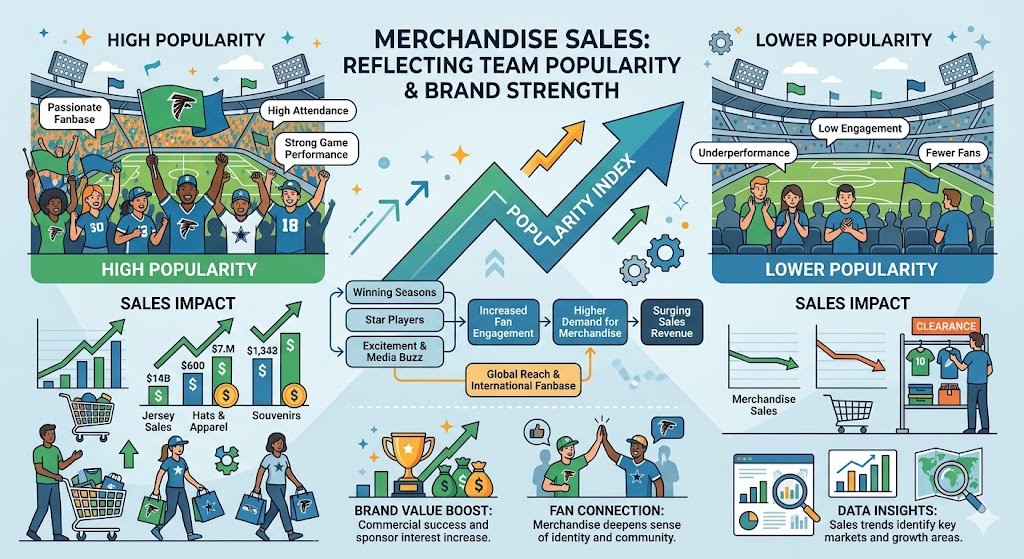
How Merchandise Sales Reflect Team Popularity
In modern sports, success is measured in more than just wins and losses. One of the clearest indicators of a team’s reach and influence is something fans wear every day—merchandise.
From jerseys and hats to collectibles and apparel, merchandise sales provide a powerful window into team popularity. They reveal not only who is winning on the field, but also who is winning in the hearts of fans.
So, how exactly do merchandise sales reflect team popularity?
Let’s break it down.
What Counts as Sports Merchandise?
Sports merchandise includes any officially licensed product tied to a team, league, or player.
This includes:
- Jerseys and uniforms
- Hats and caps
- T-shirts and hoodies
- Memorabilia and collectibles
Leagues like the NFL, NBA, and MLB generate billions of dollars annually through merchandise sales.
These products are more than items—they are symbols of identity and loyalty.
Merchandise Is a Direct Measure of Fan Support
When fans buy merchandise, they are making a clear statement:
“I support this team.”
Unlike TV ratings or social media follows, merchandise requires a financial commitment. That makes it one of the most reliable indicators of true fan engagement.
High merchandise sales typically mean:
- A large fan base
- Strong emotional connection
- High levels of loyalty
In other words, fans are willing to invest in the team.
Winning Drives Sales—But It’s Not Everything
Success on the field often boosts merchandise sales.
Championship teams usually see:
- Increased jersey purchases
- Higher demand for branded gear
- Global visibility
However, winning is not the only factor.
Some teams maintain high merchandise sales even during losing seasons. This is often due to:
- Strong historical identity
- Loyal fan bases
- Iconic branding
Popularity goes beyond performance.
Star Players Boost Merchandise Revenue
Individual athletes can significantly impact merchandise sales.
When a star player rises, so do jersey sales.
For example, when players like LeBron James or Patrick Mahomes perform at a high level, their jerseys often become top sellers.
Star power drives:
- Global recognition
- Fan excitement
- Increased brand visibility
Fans connect with players just as much as teams.
Global Reach Expands Merchandise Markets
Merchandise sales are no longer limited to local markets.
Thanks to globalization, teams now have international fan bases.
For example:
- NBA teams have strong followings in Asia and Europe
- Soccer clubs sell merchandise worldwide
- NFL teams are expanding internationally
Global fans may never attend a game, but they still buy merchandise to show support.
This expands both popularity and revenue.
Branding and Identity Matter
A team’s brand plays a huge role in merchandise sales.
This includes:
- Team colors
- Logos
- Uniform design
- Historical identity
Iconic branding leads to consistent sales.
Some teams are instantly recognizable, even to casual fans. That recognition translates into merchandise demand.
Social Media and Marketing Influence Sales
Modern marketing has transformed how merchandise is sold.
Teams and players use platforms like:
- TikTok
- YouTube
to promote merchandise directly to fans.
Viral moments, highlight plays, and behind-the-scenes content all drive interest.
The more visible a team is, the more merchandise they sell.
Limited Editions and Special Releases
Teams often release special merchandise to boost sales.
Examples include:
- Alternate jerseys
- Throwback designs
- Championship gear
These limited releases create urgency and excitement.
Fans want exclusive items, and that demand increases sales quickly.
Merchandise Reflects Cultural Impact
Some teams go beyond sports and become cultural icons.
Their merchandise is worn not just by fans, but by the general public.
This happens when teams:
- Influence fashion trends
- Appear in music and media
- Build strong cultural identities
At that point, merchandise becomes part of everyday culture.
Local vs. National vs. Global Popularity
Merchandise sales can reveal different levels of popularity.
Local Popularity
Strong sales within a specific region.
National Popularity
Recognition and sales across a country.
Global Popularity
International demand and brand recognition.
The most successful teams operate at all three levels.
E-Commerce Has Changed Everything
Online shopping has made merchandise more accessible than ever.
Fans can now:
- Order products instantly
- Access global inventory
- Support teams from anywhere
This has significantly increased overall sales and expanded fan reach.
Merchandise and Fan Identity
Wearing team gear is a form of identity.
Fans use merchandise to:
- Show loyalty
- Connect with other fans
- Express pride
This emotional connection drives repeat purchases.
It’s not just about buying once—it’s about ongoing engagement.
Sponsorship and Brand Partnerships
Merchandise often includes partnerships with major brands.
These collaborations:
- Increase product quality
- Expand distribution
- Enhance brand image
For example, apparel companies partner with leagues to produce official gear.
This adds credibility and visibility.
Youth and Future Fans
Merchandise plays a key role in building future fan bases.
Young fans who wear team gear are more likely to:
- Follow the team long-term
- Develop strong loyalty
- Influence peers
Early exposure leads to lifelong fandom.
Merchandise Sales as a Business Metric
Teams and leagues track merchandise sales closely.
It helps them understand:
- Fan engagement levels
- Market trends
- Popular players and teams
This data influences:
- Marketing strategies
- Player promotions
- Brand development
Merchandise is both a revenue stream and a feedback tool.
Economic Impact on Teams and Leagues
Merchandise sales contribute significantly to overall revenue.
This income supports:
- Team operations
- Player salaries
- League growth
High merchandise sales strengthen financial stability.
The Role of Championships
Winning a championship often leads to a surge in merchandise sales.
Fans want:
- Championship apparel
- Commemorative items
- Limited-edition gear
These spikes can be massive and long-lasting.
Trends and Changing Consumer Behavior
Fan preferences evolve over time.
Recent trends include:
- Athleisure apparel
- Sustainable products
- Customized merchandise
Teams that adapt to these trends maintain strong sales.
Final Thoughts
Merchandise sales are one of the clearest reflections of team popularity.
They show who fans support, how deeply they connect, and how far a team’s influence reaches.
While winning helps, true popularity comes from a combination of performance, branding, star power, and cultural impact.
In today’s sports world, merchandise is more than just gear.
It’s a statement of identity—and a powerful measure of success.