
How MMA Gyms Develop Complete Fighters
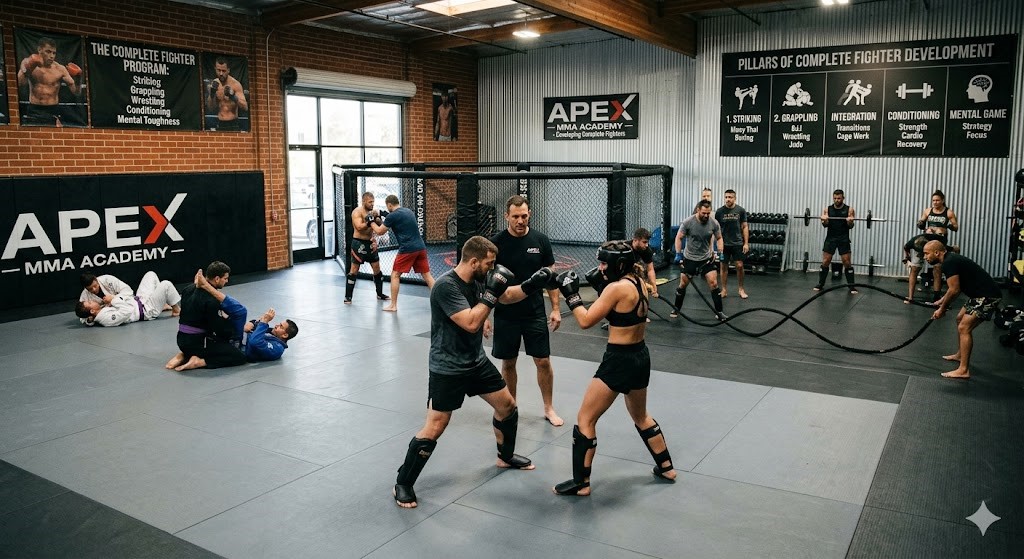
How MMA Gyms Develop Complete Fighters
Mixed Martial Arts has evolved into one of the most demanding and complex sports in the world. Early fighters often specialized in a single discipline. Today, that approach no longer works.
Modern fighters must be complete.
They need striking, grappling, conditioning, fight IQ, and mental toughness—all working together. And the place where all of that comes together is inside a well-structured MMA gym.
So how do MMA gyms actually develop complete fighters?
Let’s break it down.
The Evolution of the Complete Fighter
In the early days of MMA, specialists could dominate.
- Wrestlers controlled fights
- Strikers knocked opponents out
- Submission experts finished fights on the ground
However, the sport quickly evolved. Fighters began cross-training, and gaps in skill became easy to exploit.
Today, every serious fighter must be well-rounded.
That evolution has completely changed how gyms train athletes.
Building a Strong Foundation
Every fighter starts with a base.
Most athletes enter MMA with experience in one discipline:
- Boxing or kickboxing
- Wrestling
- Brazilian Jiu-Jitsu
Gyms build on that foundation rather than replacing it.
For example:
- A wrestler learns striking and submissions
- A striker develops takedown defense and ground skills
- A grappler improves stand-up and conditioning
This layered development creates balance.
Striking Development
Striking is a core component of MMA.
Gyms focus on:
- Boxing fundamentals (jab, cross, defense)
- Kickboxing techniques (kicks, knees, elbows)
- Footwork and movement
- Distance control
Fighters learn not just how to hit—but when and why.
Striking sessions often include:
- Pad work
- Bag work
- Controlled sparring
Precision and timing matter more than raw power.
Grappling and Ground Game
No fighter can succeed without strong grappling.
This includes:
- Takedowns and takedown defense
- Clinch work
- Ground control
- Submissions and escapes
Training often blends:
- Wrestling for control
- Brazilian Jiu-Jitsu for submissions
Fighters must feel comfortable in every position—top, bottom, and transitions.
The Importance of the Clinch
The clinch is where striking and grappling meet.
It’s one of the most overlooked areas by beginners.
In the clinch, fighters:
- Control opponents against the cage
- Deliver knees and short strikes
- Set up takedowns
Gyms dedicate specific sessions to this phase because it often determines control in a fight.
Strength and Conditioning
Physical preparation is critical.
MMA gyms incorporate structured strength and conditioning programs that focus on:
- Explosiveness
- Endurance
- Core strength
- Mobility
Training includes:
- Circuit training
- Sprint intervals
- Functional strength exercises
Fighters must maintain high output across multiple rounds.
Sparring: Controlled but Essential
Sparring is where everything comes together.
However, modern gyms emphasize controlled sparring, not constant full-contact wars.
Types of sparring include:
- Technical sparring (light contact, focus on skills)
- Situational sparring (specific positions)
- Hard sparring (limited and strategic)
This approach reduces injury while maximizing development.
Game Planning and Fight IQ
Physical skills alone are not enough.
Fighters must develop fight intelligence.
This includes:
- Reading opponents
- Adjusting strategies mid-fight
- Understanding scoring criteria
- Managing energy and pace
Coaches work closely with fighters to develop game plans tailored to their strengths.
Mental Toughness and Discipline
MMA is as mental as it is physical.
Gyms help fighters build:
- Confidence
- Focus
- Resilience
- Emotional control
Fighters learn to:
- Handle pressure
- Recover from setbacks
- Stay disciplined during training camps
Mental preparation often separates good fighters from great ones.
The Role of Coaches
A strong coaching staff is essential.
Most MMA gyms have specialized coaches for:
- Striking
- Wrestling
- Brazilian Jiu-Jitsu
- Strength and conditioning
Head coaches bring everything together into a unified system.
They ensure fighters are progressing in all areas—not just their strengths.
Training Camps and Fight Preparation
When a fight is scheduled, training shifts into camp mode.
Fight camps typically include:
- Opponent-specific strategy
- Increased intensity
- Focused sparring
- Weight management
Everything becomes more structured and intentional.
The goal is peak performance on fight night.
Recovery and Injury Prevention
Modern MMA gyms emphasize recovery more than ever.
This includes:
- Rest and sleep
- Stretching and mobility work
- Ice baths and recovery sessions
- Injury management
Fighters cannot improve if they are constantly injured.
Smart recovery is part of long-term success.
Nutrition and Weight Management
Diet plays a major role in performance.
Fighters must:
- Maintain proper nutrition
- Manage weight safely
- Fuel training sessions
Weight cutting is a strategic process and must be handled carefully.
Gyms often provide guidance or access to nutrition experts.
Team Environment and Culture
Great gyms create strong team environments.
Training partners:
- Push each other
- Provide different styles
- Simulate real fight scenarios
A positive culture encourages growth, accountability, and consistency.
Fighters improve faster when surrounded by the right people.
Exposure to Different Styles
No two fighters are the same.
Gyms ensure athletes face a variety of styles:
- Aggressive strikers
- Defensive grapplers
- Pressure fighters
- Counter fighters
This exposure prepares fighters for real competition.
Technology and Film Study
Modern MMA training includes technology.
Fighters and coaches use:
- Fight footage analysis
- Performance tracking
- Video breakdowns
Studying past fights helps identify:
- Strengths
- Weaknesses
- Strategic opportunities
Film study sharpens decision-making.
Gradual Progression Through Competition
Fighters don’t jump straight to the top.
They progress through:
- Amateur fights
- Local promotions
- Regional competition
Each step builds experience and confidence.
Gyms carefully manage this progression to avoid rushing development.
Adapting to the Modern Game
MMA continues to evolve.
Gyms must stay current with:
- New techniques
- Rule changes
- Training methods
The best gyms adapt quickly and continuously refine their approach.
What Separates Elite MMA Gyms
Top gyms stand out because they:
- Develop well-rounded fighters
- Balance intensity with recovery
- Provide expert coaching across disciplines
- Foster strong team culture
They don’t just train fighters—they build complete athletes.
Final Thoughts
Developing a complete MMA fighter is a complex process.
It requires:
- Technical skill across multiple disciplines
- Physical conditioning
- Mental toughness
- Strategic thinking
MMA gyms bring all of these elements together in a structured, evolving system.
The fighters who succeed are the ones who embrace every part of the process.
Because in modern MMA, being good at one thing isn’t enough.
To win consistently, you have to be complete.