
AI in Sports – How Teams Use It for a Competitive Edge
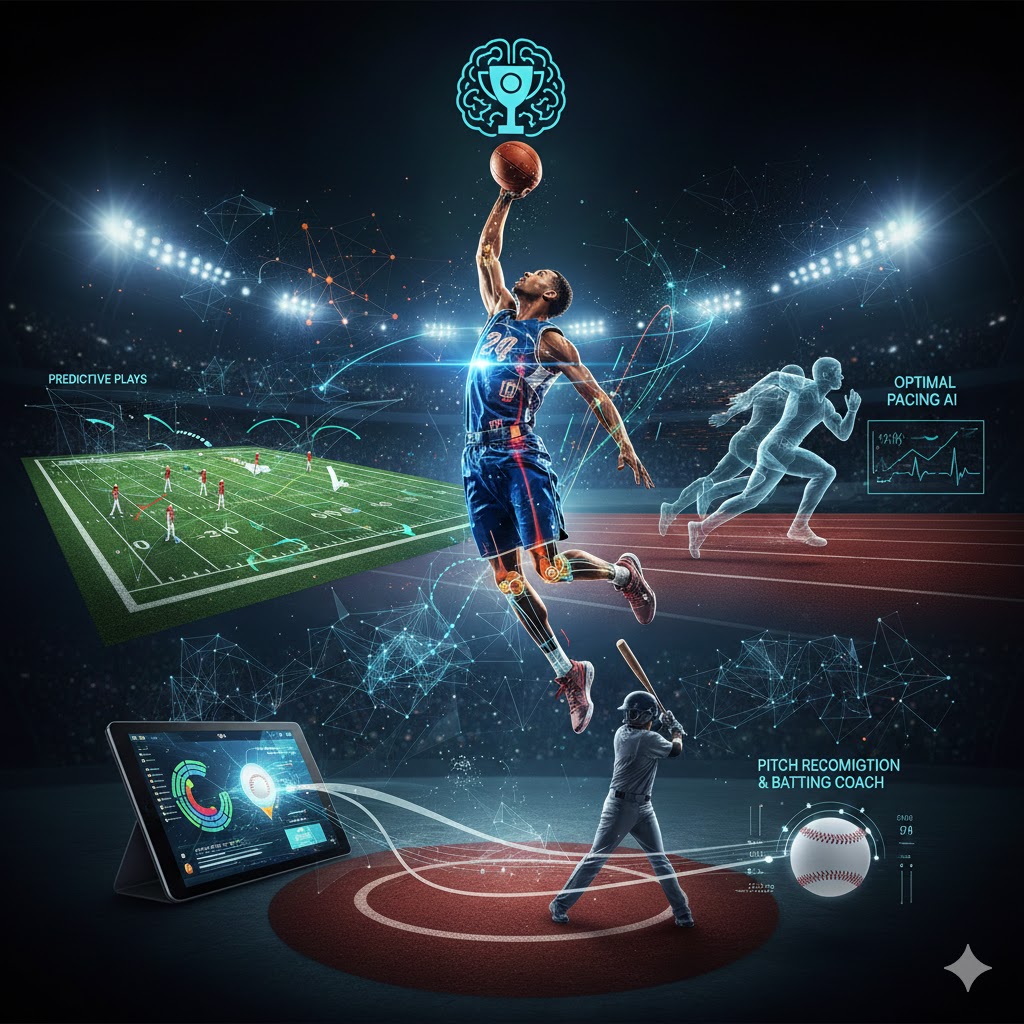
AI in Sports – How Teams Use It for a Competitive Edge
Artificial intelligence is transforming every major sport. The shift has been rapid, and the impact is growing each season. Today, coaches, front offices, medical staffs, and even fan-engagement teams rely on data like never before. Right from the start, it is clear why the topic of “AI in Sports – How Teams Use It for a Competitive Edge” is dominating industry conversations. Teams want every advantage. Players want longer careers. Fans want deeper insight. Because of that, AI has become a central piece of the modern sports landscape.
The technology continues to evolve. It makes analytics smarter and makes training more efficient. It makes game-day decisions more informed. As a result, sports are changing. Yet the human element still matters. Coaches still trust their instincts. Players still rely on experience. AI enhances those instincts rather than replacing them.
This article explores the powerful role AI now plays across major sports. It also highlights public, verified examples of teams using the technology. Additionally, it addresses concerns, touches on coaching philosophy, examines fan-engagement features, and closes with a balanced summary of where the future may lead.
AI Is Reshaping the Sports World
AI tools help teams make faster decisions. They also help organizations solve problems that once seemed impossible to measure. Because of that, every major league is adjusting to a new era. The NFL uses data to study route combinations and injury risk. The NBA analyzes shot selection and defensive matchups. Major League Baseball tracks bat speed, pitch movement, and defensive shifts. Meanwhile, the NHL reviews spacing, puck movement, and fatigue patterns.
AI also strengthens scouting departments. It does this by evaluating players with more depth than traditional methods. Human scouts still hold the keys. Their real-world assessments remain essential. Even so, AI adds another layer that enhances the overall process.
Why AI Is Considered Mostly Positive
Many coaches and executives speak highly of AI tools. They appreciate the efficiency and enjoy getting cleaner insights. They like the ability to model different situations. I believe AI is mostly positive as well, and that perspective aligns with most professionals who use the technology daily.
The reason is simple. AI reduces guesswork. It reveals trends hidden inside millions of data points. When used responsibly, it improves decisions without removing human judgment. Because of that, AI helps teams grow faster, prepare better, and compete smarter.
The Rise of Predictive Analytics
Predictive analytics sits at the center of the AI movement. It allows teams to forecast outcomes with greater accuracy. For example, NFL organizations analyze formations to estimate the likelihood of a specific play. NBA teams evaluate shooting tendencies to predict where the next shot will come from. MLB clubs project pitch sequences based on historical tendencies.
These systems do not replace coaches. They simply support them. Most staffs prefer to use analytics as a supplemental tool. My view is that AI cannot be used solely when making decisions. Coaches still need real-game context. They still need emotional awareness. They still need experience. Together, those elements create the best strategy.
AI in Training and Player Development
Training programs are becoming smarter every year. AI tools measure everything from acceleration to joint angles. Athletes also receive quick feedback after every practice. Because of that, development becomes more efficient.
Real-time Performance Tracking
Wearable devices capture massive amounts of data. These systems track heart rate, sprint metrics, sleep patterns, and workload. NBA and NFL teams use this data to customize practice schedules. MLB and NHL teams do the same to prevent fatigue.
Movement Analysis
Motion-capture cameras study mechanics in slow detail. Pitchers adjust their arm angles within minutes. Golfers correct their swings after reviewing digital models. Tennis players refine footwork through instant playback.
Benefits of AI-Enhanced Development
• Faster skill growth
• Reduced injury risk
• Better conditioning
• Higher consistency
The technology works because it blends science with coaching. It gives staff members better tools without replacing their expertise.
AI in Game Strategy and Decision-Making
AI touches nearly every aspect of game preparation. Teams study tendencies, late-game behavior, and situational pressure. Coaches then use that information during games.
Scouting and Video Analysis
AI systems break down game film in seconds. That saves countless hours. Analysts can review every relevant clip with incredible precision. NBA teams use AI to tag every screen, cut, and defensive switch. NFL teams analyze protections, pressures, and pre-snap motions. MLB teams evaluate sequencing and batter weaknesses.
In-Game Adjustments
Real-time data helps coaching staffs respond faster. They gain insights into mismatches, fatigue, and momentum swings. Coaches still make the final decision. AI simply gives them the information they need.
Major Sports and Their Use of AI
This section focuses entirely on public, widely reported examples.
NFL
Several NFL teams use player-tracking data. The league’s Next Gen Stats system provides speed, direction, separation, coverage type, and more. Teams use that information to refine game plans. Some organizations also use AI-driven platforms to study play tendencies and evaluate performances.
NBA
The NBA’s player-tracking system (originally SportsVU and now advanced via additional AI platforms) analyzes every movement on the court. Teams use the data to study defensive spacing, shot quality, and lineup combinations. Video-analysis tools also help teams prepare for opponents more efficiently.
MLB
Major League Baseball uses Statcast, which relies on radar and AI to track balls, pitches, and player movement. Teams use it to evaluate pitch effectiveness, defensive range, and batting mechanics. Clubs also rely on AI-driven analytics for scouting and development.
NHL
The NHL uses puck-tracking and player-tracking systems to evaluate speed, spacing, and possession trends. Teams use the insights to adjust line changes, defensive schemes, and forechecking strategies.
NCAA Programs
Many college programs use AI for recruiting evaluations, game-film breakdowns, performance tracking, and strength training. These tools are publicly mentioned by several universities during interviews or media releases.
Medical, Health, and Injury Prevention
AI brings major advantages to injury management. Teams track workload patterns to identify potential risks. This data helps medical staffs intervene earlier.
Workload Monitoring
AI systems identify unusual stress levels. Trainers use that information to adjust practice intensity.
Rehabilitation Plans
Athletes recovering from injuries receive personalized rehab plans. These models adjust based on daily progress.
Long-Term Benefits
• Fewer soft-tissue injuries
• Faster returns
• Better longevity
• Improved career management
AI may help prolong careers by protecting athletes from unnecessary strain.
AI and the Fan Experience
Fans also benefit from AI. Stadiums use automated systems to manage traffic, concessions, and entry gates. Broadcasters use AI to enhance video production. Streaming platforms rely on AI to customize viewer recommendations. Sports betting companies use AI to analyze odds and provide real-time updates. Fantasy sports platforms use AI to generate projections and matchup breakdowns.
Additionally, social-media teams use AI to deliver highlights faster than ever. Those clips help fans stay connected even when they cannot watch live.
Ethics, Fairness, and Competitive Balance
AI raises several concerns. These issues deserve thoughtful analysis.
Competitive Imbalance
Teams with bigger budgets gain access to better AI tools. That creates a possible competitive gap. Smaller organizations must find creative ways to keep pace. League policies may eventually need to address this.
Player Privacy
Wearable technology collects sensitive information. Players want to know how that data is used. Some leagues have negotiated privacy rules. Others are still working through the details.
AI Bias
AI systems learn from historical data. Bias can appear if the data contains errors or gaps. Teams need oversight to ensure fairness in evaluations.
Overreliance on Technology
I believe AI cannot be used solely, and that stance reflects a key concern across sports. Coaches must combine AI insights with instinct, emotion, and real-game context. Decisions lose nuance when technology overshadows experience.
Public Acceptance of AI
Players, coaches, and fans are still adjusting to the rise of AI. Acceptance varies by sport. Some athletes appreciate the feedback. Others worry about data misuse. Coaches sometimes embrace AI. Others prefer traditional methods.
Despite differing opinions, the trend is clear. AI is becoming the standard toolset across the sports world.
The Business Side of AI
Teams invest heavily in AI to stay ahead. Front offices use AI to strengthen operations. Ticketing departments rely on dynamic pricing models. Marketing teams analyze fan behavior. Sponsorship teams use AI to measure brand exposure. Stadiums also deploy AI to improve safety and logistics.
These investments reflect long-term planning. Organizations believe AI will shape sports for decades.
Balanced Summary: Where AI in Sports Goes Next
AI continues to impact every layer of the industry. The advantages are clear. Training improves. Scouting sharpens. Strategy becomes smarter. Fan-engagement grows. Health management strengthens. Teams gain measurable benefits by adopting new tools. Those advantages explain why “AI in Sports – How Teams Use It for a Competitive Edge” will remain a dominant topic for years.
Even so, AI cannot replace the human factor. Coaches need intuition. Players need feel. Leaders need emotional intelligence. AI makes sports smarter, but the game still belongs to people. Because of that, the future looks balanced. Technology will keep advancing. Teams will keep adapting. Fans will keep expecting deeper insight. Yet the heart of competition will remain human.
As AI evolves, the challenge becomes finding the right balance. Teams must embrace innovation. They must also protect privacy, maintain fairness, and respect the traditions that make sports special. When AI supports people rather than replacing them, the results can be powerful.
Sports now stand at the crossroads of data and instinct. That combination will define the next generation of competition. The teams that blend both elements most effectively will lead the way. Ultimately, the future of AI in sports looks promising, innovative, and deeply connected to the human spirit that drives every game.