
Why Urban Sports Are Gaining Global Attention
Why Urban Sports Are Gaining Global Attention
Urban sports are gaining global attention at an unprecedented rate. Once viewed as niche activities practiced primarily in city streets, parks, and abandoned industrial spaces, urban sports have evolved into major international competitions with millions of participants and fans. Their rise reflects changing attitudes toward athletics, youth culture, creativity, and accessibility.
Unlike many traditional sports, urban sports often emphasize individuality, self-expression, and innovation. Participants are encouraged to develop unique styles and approaches rather than simply follow established systems. This freedom has helped attract younger generations seeking alternatives to conventional team sports.
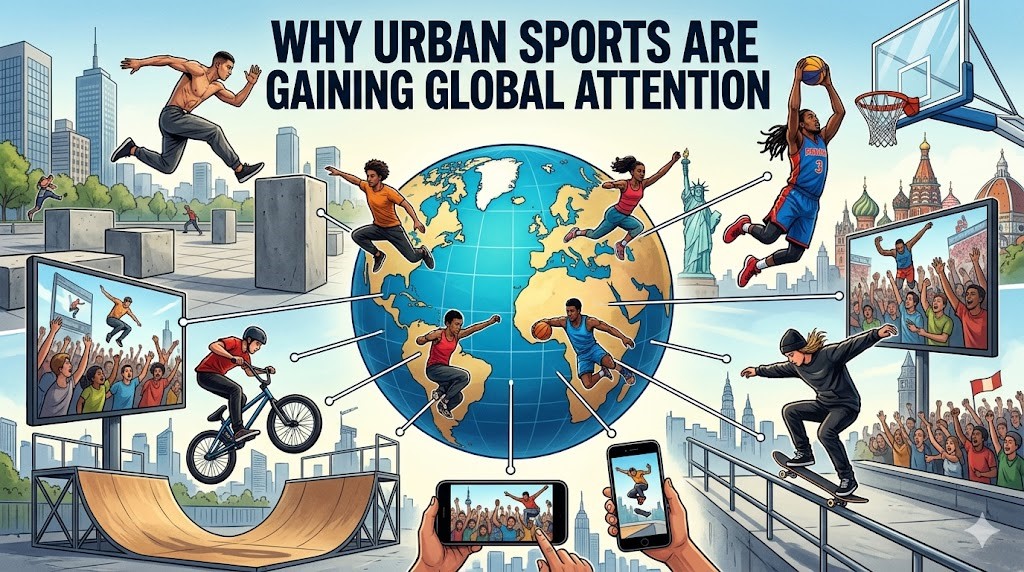
Today, sports such as Skateboarding, BMX, and Parkour enjoy worldwide popularity. Their influence extends far beyond competition, shaping fashion, music, media, and global youth culture.
As cities continue growing and lifestyles evolve, urban sports are becoming one of the most dynamic segments of the sports industry.
What Are Urban Sports?
Urban sports are athletic activities that originated primarily within city environments.
Unlike traditional sports that rely on specialized facilities, many urban sports developed organically in public spaces such as streets, plazas, staircases, rooftops, and parks.
Participants often use the urban landscape itself as part of the activity.
For example, skateboarders transform handrails, stairs, and ledges into obstacles. Parkour athletes navigate walls, railings, and buildings using movement skills that emphasize efficiency and creativity.
This connection to the environment distinguishes urban sports from many traditional athletic activities.
It also contributes to their unique appeal and identity.
Accessibility Drives Participation
One of the biggest reasons urban sports are growing globally is accessibility.
Many traditional sports require expensive equipment, organized leagues, and dedicated facilities.
Urban sports often have lower barriers to entry.
A skateboard, bicycle, pair of running shoes, or basketball can be enough to get started.
Participants can practice independently without needing large teams or formal coaching structures.
This accessibility makes urban sports attractive in cities around the world.
Young people can begin participating immediately without significant financial investment.
As a result, urban sports often thrive in communities where access to traditional sports programs may be limited.
The Influence of Youth Culture
Urban sports are deeply connected to youth culture.
These activities often reflect values that resonate strongly with younger generations, including creativity, independence, authenticity, and self-expression.
Unlike highly structured sports environments, urban sports frequently encourage participants to develop their own identities and styles.
This cultural connection extends beyond athletics.
Fashion, music, art, and social media all play important roles within urban sports communities.
Participants often view these activities as lifestyles rather than simply sports.
This broader cultural appeal helps explain why urban sports continue attracting new participants worldwide.
Social Media Has Accelerated Growth
The rise of social media has transformed urban sports dramatically.
Platforms such as Instagram, TikTok, and YouTube provide ideal environments for showcasing visually exciting content.
Urban sports naturally lend themselves to short videos and highlight clips.
Tricks, stunts, and creative performances can quickly reach global audiences.
Athletes now build international followings without relying on traditional media coverage.
This visibility has helped urban sports grow faster than ever before.
A single viral video can introduce millions of people to a sport overnight.
Social media has effectively become a global marketing platform for urban sports culture.
Inclusion in Major International Competitions
Urban sports gained significant legitimacy through inclusion in major international events.
The addition of Skateboarding and BMX Freestyle to the Olympic Games introduced these activities to massive new audiences.
Olympic inclusion validated years of growth and development within urban sports communities.
It also created additional funding, infrastructure, and development opportunities.
Young athletes now view urban sports as pathways to elite international competition.
This increased visibility continues driving participation globally.
The Olympics helped transform several urban sports from subcultures into mainstream athletic disciplines.
Creativity Sets Urban Sports Apart
Creativity is one of the defining characteristics of urban sports.
Many traditional sports focus primarily on objective outcomes such as scoring goals or crossing finish lines.
Urban sports often reward style, originality, and artistic expression.
Two athletes may perform similar tricks while expressing completely different approaches.
Judging systems frequently consider creativity alongside technical difficulty.
This emphasis on individuality appeals strongly to participants who enjoy personal expression.
The creative element also makes urban sports highly entertaining for spectators.
Fans appreciate not only athletic skill but also innovation and personality.
Urbanization Supports Growth
Global urbanization has created favorable conditions for urban sports.
More people now live in cities than ever before.
As urban populations grow, opportunities for traditional outdoor recreation can become limited.
Urban sports provide solutions that fit naturally within city environments.
Parks, plazas, skateparks, and public spaces offer convenient locations for participation.
Many cities now actively support urban sports development through dedicated facilities and community programs.
This infrastructure investment helps sustain long-term growth.
Urban sports are uniquely positioned to thrive in increasingly urbanized societies.
Community and Social Connection
Urban sports foster strong communities.
Participants often practice together, share knowledge, and support one another’s development.
Unlike some highly competitive environments, many urban sports emphasize collaboration and mutual encouragement.
Experienced athletes frequently mentor newcomers.
This welcoming culture helps attract and retain participants.
Communities form around local skateparks, riding spots, and training areas.
These social connections extend beyond sports and often develop into lasting friendships.
The sense of belonging created by urban sports communities is a major factor in their popularity.
The Rise of Professional Opportunities
Professional opportunities within urban sports have expanded significantly.
Athletes now earn income through competitions, sponsorships, social media partnerships, coaching, and content creation.
Major brands increasingly invest in urban sports because of their appeal to younger demographics.
Corporate sponsorship has helped elevate competition standards and athlete visibility.
Professional tours and international events provide additional career opportunities.
As financial support grows, more athletes can dedicate themselves fully to training and competition.
This professionalization continues attracting talented participants worldwide.
Media and Entertainment Appeal
Urban sports are highly marketable forms of entertainment.
Their fast-paced action, visual creativity, and dramatic performances translate well across digital and broadcast media.
Event organizers design competitions specifically to maximize spectator engagement.
Exciting tricks and unpredictable outcomes create compelling viewing experiences.
Media companies recognize this appeal.
As a result, urban sports receive increasing coverage through television, streaming services, and online platforms.
This exposure further accelerates growth by introducing new audiences to the sports.
Entertainment value has become a significant driver of global popularity.
Breaking Traditional Sports Boundaries
Urban sports challenge traditional ideas about athletics.
Many emerged outside established governing bodies and organized leagues.
Participants often developed rules, techniques, and cultures independently.
This independence appeals to individuals who prefer less structured environments.
Urban sports also blur boundaries between sport, art, and recreation.
Athletes often see themselves as creators as much as competitors.
This flexibility makes urban sports attractive to people who may not connect with conventional athletic models.
As sports culture evolves, these alternative approaches continue gaining recognition.
Technology and Equipment Innovation
Advances in technology have helped urban sports expand.
Equipment has become safer, more durable, and more accessible.
Improved skateboard designs, BMX bikes, protective gear, and training tools allow athletes to push performance levels higher than ever before.
Technology also supports learning.
Online tutorials, training videos, and virtual communities help participants develop skills more efficiently.
This accessibility accelerates growth and increases participation.
Innovation continues driving both performance and popularity.
Economic Impact of Urban Sports
Urban sports contribute increasingly to local and global economies.
Competitions attract tourism, sponsorship investment, and media attention.
Cities hosting major events often benefit from increased economic activity.
The industry also supports equipment manufacturers, apparel companies, event organizers, and content creators.
As participation grows, so does the economic footprint of urban sports.
Many cities now view urban sports infrastructure as valuable investments that support community engagement and tourism development.
Economic growth reinforces long-term sustainability within the sector.
The Role of Diversity and Inclusion
Urban sports tend to be highly inclusive.
Participants come from diverse cultural, social, and economic backgrounds.
Many urban sports communities prioritize openness and accessibility.
This diversity enriches the culture and broadens appeal.
Women’s participation has also increased significantly across many urban sports disciplines.
Greater representation creates more opportunities and inspires future generations.
As inclusivity continues improving, urban sports become even more attractive to global audiences.
Why Urban Sports Resonate With Modern Audiences
Modern audiences increasingly value authenticity, creativity, and individuality.
Urban sports embody these qualities.
Participants are often drawn to the freedom of self-expression and the opportunity to develop unique styles.
Fans appreciate the creativity and unpredictability that urban sports provide.
These characteristics align closely with contemporary cultural trends.
As a result, urban sports connect strongly with younger generations worldwide.
Their appeal extends beyond competition into broader lifestyle and cultural movements.
The Future of Urban Sports
The future of urban sports appears exceptionally bright.
Participation continues increasing across continents.
Major events attract growing audiences, and professional opportunities continue expanding.
Cities are investing in facilities, governing bodies are developing structured pathways, and media coverage is reaching new heights.
Technological innovation will likely create even more opportunities for growth.
At the same time, urban sports will need to balance mainstream success with the authenticity that helped make them popular in the first place.
Maintaining that balance will be critical moving forward.
Final Thoughts
Urban sports are gaining global attention because they combine accessibility, creativity, community, and cultural relevance.
Activities such as Skateboarding, BMX, and Parkour offer experiences that resonate strongly with modern audiences.
Their growth has been fueled by social media, urbanization, Olympic recognition, and expanding professional opportunities.
More importantly, urban sports provide platforms for self-expression, innovation, and connection.
As cities continue evolving and younger generations shape the future of athletics, urban sports are likely to become even more influential.
In the end, their success reflects a broader shift in how people define sports, competition, and community in the modern world.