
Common Padel Mistakes Beginners Make and How to Fix Them
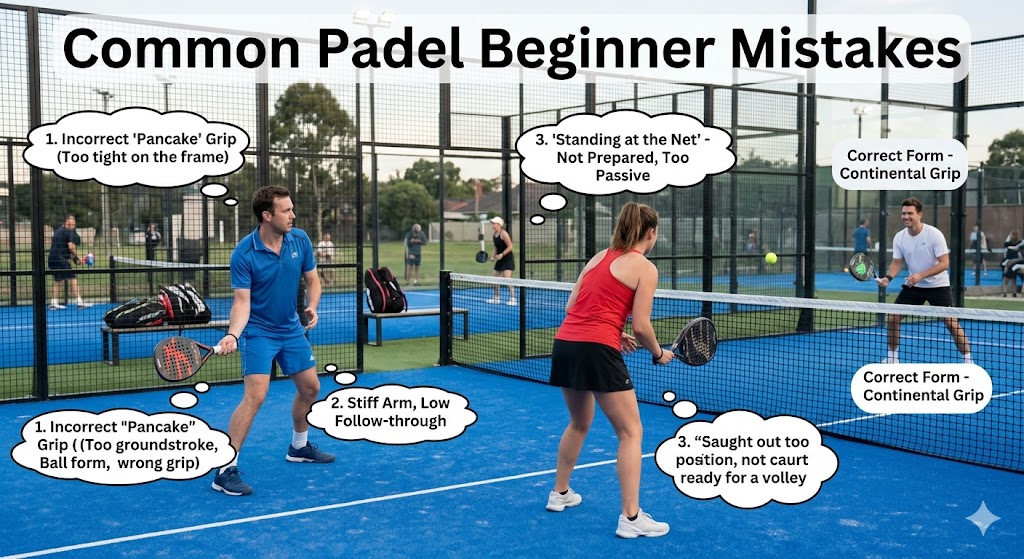
Common Padel Mistakes Beginners Make and How to Fix Them
Padel is one of the most exciting and accessible racket sports in the world. New players often discover that they can enjoy competitive rallies within their very first match. The court is smaller than a tennis court, the serve is underhand, and the equipment is relatively easy to learn.
However, beginners still face a learning curve.
Many players repeat the same mistakes during their early matches. These errors can slow improvement and lead to unnecessary frustration.
The good news is that most beginner mistakes are easy to correct once players recognize them.
Understanding these common issues will help you improve faster and enjoy the game more.
If you are completely new to the sport, begin with The Ultimate Beginner’s Guide to Padel: Rules, Equipment, Strategy, and How to Start Playing. That guide explains the basics of the sport and how players can start developing their skills.
In this article, we will examine the most common padel mistakes beginners make and how to fix them. By avoiding these pitfalls, you can build a strong foundation for long-term improvement.
Mistake #1: Staying at the Baseline Too Long
One of the most common beginner mistakes involves court positioning.
Many new players remain near the baseline throughout the rally.
While this position may feel comfortable, it usually places the team at a disadvantage.
Padel strategy strongly favors players who control the net.
From the net position, players can volley aggressively and force opponents into defensive shots.
When both players remain at the baseline, they surrender this advantage.
How to Fix It
Players should look for opportunities to move toward the net.
The most common method involves using a lob.
A well-placed lob forces opponents to move backward, allowing your team to advance forward.
Once at the net, maintain pressure with controlled volleys.
You can learn more about net positioning in Winning Padel Strategies: Positioning, Teamwork, and Shot Selection.
Mistake #2: Trying to Hit Every Ball Hard
Another frequent mistake involves excessive power.
Many beginners believe that powerful shots will win points quickly.
However, padel courts are enclosed by walls. When players hit the ball too hard, it often rebounds off the back wall and returns to the opponent.
As a result, aggressive shots sometimes backfire.
Successful padel players focus more on placement and control.
How to Fix It
Instead of swinging as hard as possible, aim for consistent and controlled shots.
Place the ball into open areas of the court.
Force opponents to move and defend.
Over time, this approach creates better opportunities to attack.
Many of the fundamental techniques used for controlled play appear in Essential Padel Shots Every Beginner Should Learn.
Mistake #3: Ignoring the Walls
One feature that makes padel unique is the ability to play the ball after it rebounds from the walls.
Beginners often forget this option.
Instead of allowing the ball to reach the back wall, they rush forward and attempt difficult returns.
This reaction frequently leads to errors.
How to Fix It
Learn to use the back wall as a defensive tool.
Allow deep shots to bounce and rebound off the glass.
This extra moment provides more time to position your racket and return the ball effectively.
Understanding how the ball interacts with the walls becomes much easier after studying Padel Court Layout and Dimensions: Understanding the Walls, Net, and Service Boxes.
Mistake #4: Poor Team Positioning
Padel is primarily played as a doubles sport.
Because of this structure, teamwork becomes extremely important.
Many beginners move independently rather than coordinating with their partner.
This mistake often creates large gaps on the court.
Opponents quickly exploit these open spaces.
How to Fix It
Partners should move together as a unit.
When one player moves forward, the partner should also advance.
Similarly, when defending near the baseline, both players should maintain balanced positioning.
Communication helps teams maintain proper alignment.
Strong teamwork dramatically improves court coverage.
Mistake #5: Standing Too Close to the Wall
Beginners sometimes position themselves directly against the back wall while defending.
Although this location may seem logical, it actually limits movement.
When players stand too close to the wall, they struggle to react to rebounds.
How to Fix It
Stand several feet away from the back wall.
This spacing provides room to adjust when the ball rebounds.
Players can then move forward or sideways depending on the bounce.
Developing this spacing awareness improves defensive consistency.
Mistake #6: Attempting Smashes Too Often
The smash is one of the most exciting shots in padel.
However, beginners often attempt smashes in situations where they are not appropriate.
Poorly timed smashes frequently rebound off the back wall and return to the opponent.
This mistake can instantly turn an offensive opportunity into a defensive scramble.
How to Fix It
Use smashes selectively.
When the ball arrives too low or too far behind you, consider using a bandeja instead.
The bandeja allows players to return high balls while maintaining their net position.
Learning the difference between these shots becomes easier after reviewing Essential Padel Shots Every Beginner Should Learn.
Mistake #7: Forgetting About the Middle of the Court
Many beginners focus exclusively on the sidelines when placing their shots.
However, the center of the court often creates confusion between opponents.
When the ball travels between two players, they may hesitate while deciding who should return it.
How to Fix It
Occasionally aim shots toward the center of the court.
This strategy increases the chance of forcing communication errors between opponents.
Teams that control the middle area often win more rallies.
Mistake #8: Weak or Inconsistent Serves
Although the padel serve is underhand, it still plays an important role in the game.
Some beginners rush their serves without focusing on placement.
As a result, they miss the service box or deliver predictable serves.
How to Fix It
Practice serving with consistency.
Focus on placing the ball deep in the opponent’s service box.
A well-placed serve forces opponents into defensive returns.
To review the technical rules of serving, read Official Padel Rules Explained: Court Dimensions, Serving, and Gameplay.
Mistake #9: Using the Wrong Equipment
Equipment choices can affect performance more than many beginners realize.
For example, a racket that is too heavy may reduce control.
Shoes without proper traction can cause slipping on artificial turf courts.
These equipment issues make the game more difficult than necessary.
How to Fix It
Choose equipment designed specifically for padel.
Beginners often perform best with rackets that emphasize control.
Comfortable court shoes also improve balance and movement.
You can learn how to choose the right gear in Padel Equipment Guide: Choosing the Right Racket, Balls, and Shoes.
Mistake #10: Rushing Points
Many beginners feel pressure to end rallies quickly.
As a result, they attempt risky shots too early in the point.
This impatience leads to unnecessary errors.
Padel often rewards patience and smart positioning.
How to Fix It
Focus on building points gradually.
Move opponents around the court.
Wait for clear opportunities before attempting aggressive shots.
Players who remain patient often force their opponents to make mistakes first.
Strategic patience plays a central role in Winning Padel Strategies: Positioning, Teamwork, and Shot Selection.
Mistake #11: Lack of Communication
Communication problems frequently appear in beginner matches.
Two players may both chase the same ball.
Alternatively, neither player may react quickly because each assumes the other will take the shot.
These misunderstandings often lead to lost points.
How to Fix It
Partners should communicate constantly during rallies.
Simple phrases such as “mine,” “yours,” or “lob” help teammates react quickly.
Teams that communicate effectively make fewer mistakes.
Mistake #12: Poor Court Awareness
Padel requires awareness of the entire court environment.
Players must track the ball, opponents, partner, and walls simultaneously.
Beginners sometimes focus only on the ball.
This narrow focus can lead to poor positioning or missed opportunities.
How to Fix It
Practice scanning the court between shots.
Observe where opponents stand.
Notice when the net becomes open.
Improved awareness leads to better shot selection and smarter positioning.
Practice Is the Best Teacher
Correcting mistakes requires practice.
Players should not become discouraged when errors occur.
Instead, treat each mistake as an opportunity to learn.
Regular practice sessions help players develop consistency and confidence.
During practice, focus on specific skills such as:
- controlled groundstrokes
- defensive wall rebounds
- accurate lobs
These exercises strengthen the fundamental skills needed for successful matches.
Playing Matches to Improve
Practice builds technique, but real matches build experience.
Playing against different opponents exposes players to new strategies and playing styles.
These experiences accelerate learning.
Many clubs offer leagues and tournaments for players at all skill levels.
If you are interested in organized competition, explore Padel Tournaments and Leagues: How Competitive Padel Works.
Competitive play helps players apply their skills under pressure.
Finding Courts to Practice
Improvement requires consistent access to a padel court.
Fortunately, the sport continues to grow rapidly worldwide.
Many tennis clubs now include padel courts.
Some communities are also building dedicated padel facilities.
If you want to locate a court or learn how courts are constructed, read How to Build or Find a Padel Court Near You.
Regular practice opportunities accelerate skill development.
Final Thoughts on Avoiding Beginner Mistakes
Every padel player makes mistakes during the learning process.
These errors are a natural part of improvement.
Fortunately, most beginner mistakes share common patterns.
Players often stay at the baseline too long, swing too hard, or ignore the walls.
Others struggle with teamwork or positioning.
By recognizing these habits early, players can correct them quickly.
Focusing on control, communication, and smart positioning leads to rapid improvement.
With practice and patience, beginners soon develop the skills needed to compete confidently on the court.
Continue Learning About Padel
Explore the rest of the padel learning series:
The Ultimate Beginner’s Guide to Padel: Rules, Equipment, Strategy, and How to Start Playing
Official Padel Rules Explained: Court Dimensions, Serving, and Gameplay
Padel Court Layout and Dimensions: Understanding the Walls, Net, and Service Boxes
Padel Equipment Guide: Choosing the Right Racket, Balls, and Shoes
Essential Padel Shots Every Beginner Should Learn
Winning Padel Strategies: Positioning, Teamwork, and Shot Selection
How to Build or Find a Padel Court Near You
Padel Tournaments and Leagues: How Competitive Padel Works