
Winning Padel Strategies
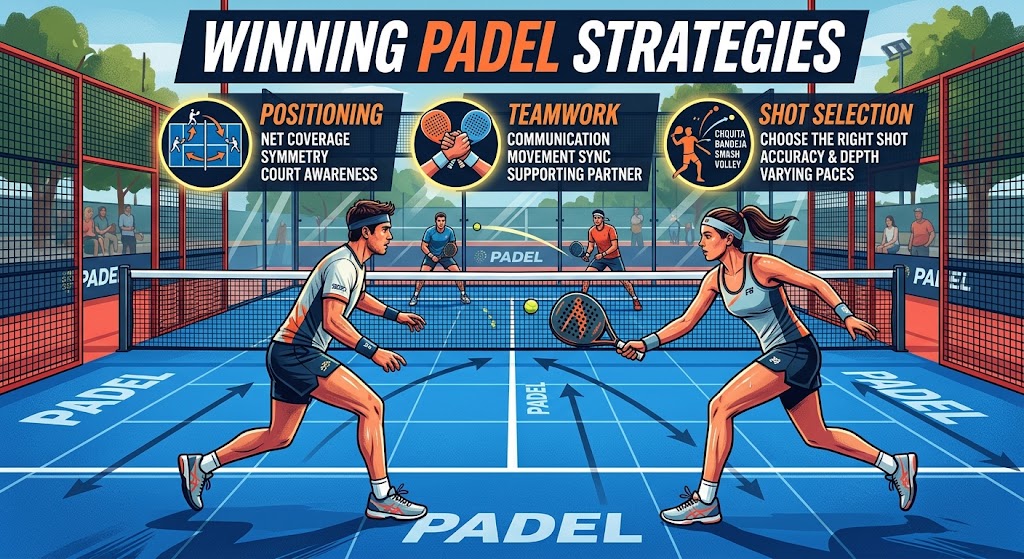
Winning Padel Strategies: Positioning, Teamwork, and Shot Selection
Padel may look simple at first glance. The court is smaller than a tennis court, the serve is underhand, and the equipment is relatively easy to learn.
However, experienced players know that padel is one of the most strategic racket sports in the world.
Matches rarely depend on power alone. Instead, success comes from positioning, teamwork, and smart shot selection.
Because the court is enclosed by walls, the ball can rebound in unpredictable ways. Players must think several shots ahead while constantly adjusting their position.
Fortunately, beginners can learn the fundamentals of padel strategy fairly quickly.
If you are new to the sport, begin with The Ultimate Beginner’s Guide to Padel: Rules, Equipment, Strategy, and How to Start Playing. That article explains how the game works and how players can get started.
In this guide, we will explore the key strategic principles that help padel players win more matches. These principles include court positioning, teamwork between partners, and choosing the right shots during rallies.
Once you understand these ideas, your performance on the court will improve dramatically.
Why Strategy Matters in Padel
Many beginners assume that hitting the ball harder will lead to more points.
In padel, that assumption rarely works.
Because the court is enclosed, powerful shots often rebound off the walls and return to the opponent.
As a result, the most successful players focus on placement, patience, and positioning.
Instead of trying to end every rally quickly, they build points gradually.
They move opponents out of position and then strike when the opportunity appears.
Understanding how the court influences these strategies is essential. You can learn more about the court structure in Padel Court Layout and Dimensions: Understanding the Walls, Net, and Service Boxes.
Once players understand how the court works, they can begin applying more advanced tactics.
The Importance of Net Control
One of the most important strategic goals in padel is controlling the net.
Teams that occupy the net position gain a major advantage.
From this location, players can volley aggressively and apply constant pressure.
Meanwhile, opponents positioned near the baseline must play more defensively.
Because the net position is so valuable, many rallies revolve around gaining or defending this area of the court.
Teams that successfully control the net often dictate the pace of the game.
How Teams Gain the Net Position
Most teams begin rallies near the baseline.
From this position, they exchange groundstrokes and defensive shots.
Eventually, one team attempts to move forward.
A common way to gain the net position is by hitting a lob over the opponents.
The lob forces the opposing team to retreat toward the back wall.
As they move backward, the attacking team advances toward the net.
Once at the net, players can begin using volleys and angled shots to control the rally.
Many of these offensive techniques appear in Essential Padel Shots Every Beginner Should Learn.
Maintaining the Net Advantage
Reaching the net is only the first step.
The next challenge is staying there.
Opponents will often try to push net players back using lobs.
If the lob travels too high, the attacking team may lose control of the net.
To prevent this situation, players use overhead shots such as the bandeja.
The bandeja allows players to return lobs without giving up their position.
Maintaining the net advantage requires patience and discipline.
Players should avoid unnecessary risks while controlling the rally.
Positioning as a Team
Padel is primarily played as a doubles sport.
Because two players share the court, teamwork becomes extremely important.
Partners must move together as a unit.
When one player moves forward, the partner should move forward as well.
Likewise, when one player retreats to defend a lob, the partner must adjust position accordingly.
This coordinated movement ensures that no large gaps appear on the court.
Teams that communicate effectively often perform better than teams with stronger individual players.
Side-to-Side Movement
Teams must also move together side to side.
If one player shifts toward the center, the partner should adjust slightly to maintain balanced coverage.
Good teams rarely leave large spaces open for opponents to attack.
Instead, they maintain a compact formation that protects the middle of the court.
The center area is particularly important because shots played there can create confusion between partners.
By controlling the middle, teams reduce this risk.
Defensive Positioning
Even strong teams occasionally lose the net position.
When that happens, they must switch to defensive positioning near the baseline.
From this location, players often rely on wall rebounds to return difficult shots.
Instead of attempting risky winners, defensive players focus on consistency.
They aim to keep the rally alive until an opportunity appears to regain the net.
Understanding how to use the walls effectively helps players defend more successfully.
These techniques become easier to learn once players understand Official Padel Rules Explained: Court Dimensions, Serving, and Gameplay.
Shot Selection During Rallies
Strategic shot selection plays a major role in padel success.
Every shot should serve a specific purpose.
For example, players may hit a lob to regain the net position.
They may use a soft chiquita shot to force opponents into awkward volleys.
Alternatively, they may strike a powerful smash when the ball arrives at the perfect height.
Choosing the right shot requires awareness of both the opponents’ position and the current rally situation.
Players who think ahead often win more points.
Targeting Weak Areas
Successful padel teams constantly search for weaknesses in their opponents.
Sometimes one opponent has weaker volleys.
Other times one player struggles with backhand shots.
Identifying these weaknesses allows teams to adjust their strategy.
For example, players might direct more shots toward the weaker opponent.
This tactic increases the likelihood of forcing errors.
Strategic targeting becomes easier as players gain experience and confidence.
Using the Walls Strategically
The walls create some of the most interesting tactical opportunities in padel.
Players can intentionally hit shots that rebound off the glass walls at difficult angles.
These rebounds can surprise opponents and create scoring opportunities.
Defensive players also rely on the back wall to return deep shots.
Instead of rushing forward, they allow the ball to bounce and then rebound off the wall.
This technique provides extra time to prepare a controlled return.
Learning how the ball interacts with the walls requires practice and court awareness.
You can learn more about the court’s structure in Padel Court Layout and Dimensions: Understanding the Walls, Net, and Service Boxes.
Patience Wins Points
One of the biggest adjustments beginners must make involves patience.
New players often try to end points too quickly.
However, padel rewards players who stay calm and wait for the right moment.
Long rallies are common in the sport.
Rather than forcing risky shots, experienced players build points slowly.
They move opponents around the court until an opening appears.
Once the opportunity arrives, they strike decisively.
Communication Between Partners
Communication plays a crucial role in doubles padel.
Partners should constantly talk during rallies.
For example, players might call out “mine” when preparing to hit a ball.
They may also warn their partner about approaching lobs.
Clear communication prevents confusion and helps teams react quickly.
Many teams also discuss strategy between points.
These conversations help players adjust tactics during the match.
Adapting to Opponents
Every match presents unique challenges.
Some opponents rely on powerful smashes.
Others prefer defensive play and long rallies.
Successful players adapt their strategies accordingly.
For example, teams facing aggressive opponents may use more lobs to slow the pace.
Meanwhile, teams facing defensive players might apply pressure at the net.
Adapting to different styles keeps opponents off balance.
Avoiding Common Strategic Mistakes
Beginners often repeat several strategic mistakes.
For example, some players stay at the baseline too long instead of advancing to the net.
Others attempt risky smashes when a safer shot would maintain control.
Another common mistake involves poor positioning between partners.
When teammates fail to move together, opponents can easily exploit the open spaces.
Learning to recognize these mistakes helps players improve more quickly.
You can explore additional examples in Common Padel Mistakes Beginners Make and How to Fix Them.
The Role of Equipment in Strategy
Equipment also influences strategy.
For example, rackets with larger sweet spots provide greater control during volleys.
Meanwhile, balanced rackets help players maintain consistency during overhead shots.
Players who choose equipment carefully often execute their strategies more effectively.
You can learn how to select the right gear in Padel Equipment Guide: Choosing the Right Racket, Balls, and Shoes.
Proper equipment supports both technique and strategy.
Practicing Strategic Play
Developing strategic awareness requires practice.
Players should focus not only on hitting the ball but also on observing the court.
During practice sessions, try experimenting with different shot combinations.
Practice lobs that allow you to move toward the net.
Work on volleys that force opponents into defensive positions.
Over time, these habits become automatic during matches.
Competing to Improve Strategy
Competition offers one of the best ways to refine strategy.
Matches against different opponents expose players to new playing styles.
These experiences help players learn when to attack and when to defend.
Many clubs offer recreational leagues and tournaments for players of all skill levels.
If you want to explore competitive play, read Padel Tournaments and Leagues: How Competitive Padel Works.
Competition often accelerates improvement.
Final Thoughts on Winning Padel Strategy
Padel rewards players who think strategically.
While power and technique remain important, positioning and teamwork often determine the outcome of matches.
Teams that control the net gain a major advantage.
Meanwhile, players who communicate and move together create stronger defensive coverage.
Smart shot selection helps teams maintain pressure and exploit weaknesses.
As players practice these concepts, their understanding of the game grows rapidly.
Soon, rallies become less about reacting and more about planning the next move.
This strategic depth is one reason padel continues to attract players around the world.
Continue Learning About Padel
Explore the rest of the padel learning series:
The Ultimate Beginner’s Guide to Padel: Rules, Equipment, Strategy, and How to Start Playing
Official Padel Rules Explained: Court Dimensions, Serving, and Gameplay
Padel Court Layout and Dimensions: Understanding the Walls, Net, and Service Boxes
Padel Equipment Guide: Choosing the Right Racket, Balls, and Shoes
Essential Padel Shots Every Beginner Should Learn
Common Padel Mistakes Beginners Make and How to Fix Them
How to Build or Find a Padel Court Near You
Padel Tournaments and Leagues: How Competitive Padel Works



2 Responses
[…] You can learn more about net positioning in Winning Padel Strategies: Positioning, Teamwork, and Shot Selection. […]
[…] Many of these decisions also depend on court positioning and movement, which you can explore further in Winning Padel Strategies: Positioning, Teamwork, and Shot Selection. […]