
How to Build or Find a Padel Court Near You
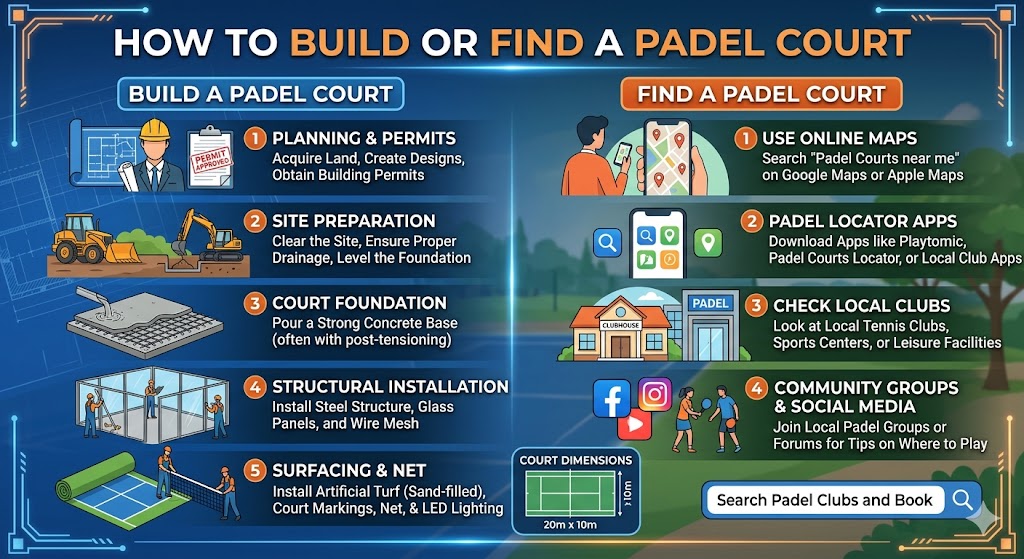
How to Build or Find a Padel Court Near You
Padel has become one of the fastest-growing sports in the world. In Europe and Latin America, the sport already attracts millions of players. Meanwhile, interest in padel continues to expand across North America, the Middle East, and Asia.
As more people discover the sport, the demand for courts continues to increase. Many tennis clubs and recreation centers now add padel courts to their facilities. New clubs dedicated entirely to padel also appear in many cities.
However, beginners often face one challenge when starting the sport.
They simply need a place to play.
Fortunately, there are several ways to locate existing courts or even build a new one.
If you are new to the sport, start with The Ultimate Beginner’s Guide to Padel: Rules, Equipment, Strategy, and How to Start Playing. That guide explains how padel works and why the sport has grown so rapidly.
In this article, we will explore how players can find padel courts near them or build new courts for clubs, communities, and private facilities.
Understanding these options can make it much easier to start playing regularly.
Why Padel Courts Are Unique
Padel courts differ significantly from courts used for other racket sports.
The playing area is smaller than a tennis court. Glass walls surround the court, and metal fencing completes the enclosure. These walls allow the ball to rebound during rallies, which creates longer and more strategic points.
Because of these design features, padel courts require specialized construction.
The standard court size measures:
- 20 meters long
- 10 meters wide
The court includes glass walls, fencing panels, lighting systems, and a synthetic playing surface.
You can learn more about these features in Padel Court Layout and Dimensions: Understanding the Walls, Net, and Service Boxes.
Understanding the structure of a padel court helps players appreciate why building one requires careful planning.
How to Find Padel Courts Near You
The easiest way to start playing padel is by locating an existing court.
Fortunately, new facilities appear every year as the sport grows.
Several methods can help players find courts nearby.
Search Online Padel Court Directories
Many organizations maintain online directories of padel courts.
These directories allow players to search by city or region.
They often include information about:
- club locations
- membership options
- court availability
- contact information
Online searches for “padel courts near me” often reveal nearby facilities.
These directories are especially useful in countries where the sport continues to expand.
Check Local Tennis Clubs
Many tennis clubs now add padel courts to their facilities.
Padel courts require less space than tennis courts, which makes them attractive for clubs looking to expand their offerings.
If your community has an established tennis club, check whether it has recently installed padel courts.
Even if the club does not currently offer padel, management may consider adding courts in the future.
This trend has become common as clubs respond to growing interest in the sport.
Visit Multi-Sport Recreation Centers
Community recreation centers increasingly include padel courts.
These facilities often offer affordable access for local residents.
Recreation centers may also host beginner clinics and social leagues.
These programs provide an excellent opportunity for new players to learn the game.
Many beginners first experience the sport through these community programs.
Understanding the basics of the game becomes easier after reading Official Padel Rules Explained: Court Dimensions, Serving, and Gameplay.
Join a Padel Club
In many cities, dedicated padel clubs now operate year-round.
These clubs often feature multiple courts, coaching programs, and organized competitions.
Membership usually includes access to reserved court time and social events.
Padel clubs also create opportunities to meet other players.
This environment makes it easier to develop skills and find regular playing partners.
Many clubs also host tournaments described in Padel Tournaments and Leagues: How Competitive Padel Works.
Ask Local Sports Communities
Local sports communities can also help players locate padel courts.
Many cities have recreational sports groups or social media communities.
These groups often share information about new facilities and upcoming events.
Connecting with other players can lead to valuable recommendations.
In many cases, word of mouth remains one of the best ways to discover new courts.
Building a Padel Court
In areas where courts are not yet available, building a padel court may become a realistic option.
Although construction requires investment, padel courts have become attractive additions for clubs, resorts, and private properties.
Many organizations view padel as a profitable facility because the sport continues to grow rapidly.
Building a court also helps introduce the sport to new communities.
Planning a Padel Court Project
Building a padel court begins with careful planning.
The first step involves selecting a suitable location.
A standard court requires space for the playing area plus additional room for fencing and walkways.
Ideally, the site should provide:
- level ground
- good drainage
- access to electricity for lighting
Developers must also ensure compliance with local building regulations.
Consulting with experienced court builders can simplify this process.
Understanding Construction Components
Padel courts consist of several key components.
Each element plays an important role in the overall structure.
Major components include:
- foundation
- playing surface
- glass walls
- metal fencing
- net system
- lighting equipment
The foundation provides stability for the court.
Synthetic turf or textured surfaces create the playing area.
Glass panels form the back and corner walls.
Metal fencing encloses the upper sections of the court.
Together, these components create the distinctive padel environment.
Choosing a Court Surface
Most modern padel courts use artificial turf.
This surface provides consistent ball bounce and comfortable traction for players.
Artificial turf also reduces impact on joints during long matches.
Other surfaces may include textured concrete or specialized sports flooring.
However, artificial turf remains the most popular option for recreational and professional play.
Proper footwear helps players move safely on these surfaces.
You can learn more about selecting appropriate gear in Padel Equipment Guide: Choosing the Right Racket, Balls, and Shoes.
Installing Lighting Systems
Lighting plays an important role in modern padel facilities.
Many clubs operate during evening hours when players finish work or school.
Bright, evenly distributed lighting ensures good visibility across the entire court.
Most padel courts include four to eight light poles positioned around the perimeter.
These lights allow players to enjoy matches long after sunset.
Lighting also improves the experience for spectators during tournaments.
Cost of Building a Padel Court
The cost of building a padel court can vary widely depending on location, materials, and installation complexity.
Several factors influence the final price.
For example:
- site preparation requirements
- glass panel quality
- fencing systems
- lighting equipment
- labor costs
In many regions, the cost of constructing a single court ranges from $30,000 to $80,000 or more.
Although this investment may seem significant, many clubs recover the cost through memberships, rentals, and tournaments.
As the sport grows, new facilities often attract strong community interest.
Benefits of Building Padel Courts
Many organizations choose to build padel courts because the sport offers several advantages.
First, padel courts require less space than tennis courts.
This efficiency allows clubs to maximize their facilities.
Second, padel attracts players of many ages and skill levels.
The sport is easy to learn but difficult to master.
Third, padel encourages social interaction because it is usually played in doubles.
These factors make padel an appealing addition for clubs and recreation centers.
Learning the Game Once You Find a Court
Once you locate a court or build one, the next step is learning the game.
Beginners should focus on developing basic skills before attempting advanced strategies.
Practicing fundamental shots helps players gain confidence.
Many of these techniques appear in Essential Padel Shots Every Beginner Should Learn.
Understanding shot selection also improves performance during matches.
Strategic concepts appear in Winning Padel Strategies: Positioning, Teamwork, and Shot Selection.
These skills allow players to enjoy competitive rallies quickly.
Avoiding Beginner Frustration
New players sometimes feel overwhelmed when learning padel.
They may struggle with positioning or timing during early matches.
These challenges are normal.
Fortunately, most beginner mistakes are easy to correct.
Recognizing these patterns helps players improve faster.
You can explore these common issues in Common Padel Mistakes Beginners Make and How to Fix Them.
Learning from these mistakes accelerates progress.
Growing the Padel Community
As more players discover padel, communities often begin building additional courts.
Local interest frequently grows quickly once players experience the sport.
Many clubs report that their courts remain fully booked during peak hours.
This demand encourages additional investment in facilities.
Communities that support padel often see strong participation across many age groups.
The sport’s social nature makes it especially appealing for recreational leagues and family play.
Final Thoughts on Finding or Building Padel Courts
Access to a quality court is the key to enjoying padel regularly.
Fortunately, the sport continues expanding across the world.
Many tennis clubs, recreation centers, and private facilities now offer padel courts.
Online directories and local sports communities can help players locate nearby options.
In areas where courts remain scarce, building a new facility may become a valuable investment.
Padel courts provide an engaging space for exercise, competition, and social interaction.
As more players discover the sport, the global padel community will continue growing.
Continue Learning About Padel
Explore the rest of the padel learning series:
The Ultimate Beginner’s Guide to Padel: Rules, Equipment, Strategy, and How to Start Playing
Official Padel Rules Explained: Court Dimensions, Serving, and Gameplay
Padel Court Layout and Dimensions: Understanding the Walls, Net, and Service Boxes
Padel Equipment Guide: Choosing the Right Racket, Balls, and Shoes
Essential Padel Shots Every Beginner Should Learn
Winning Padel Strategies: Positioning, Teamwork, and Shot Selection
Common Padel Mistakes Beginners Make and How to Fix Them
Padel Tournaments and Leagues: How Competitive Padel Works