
The Mental Game of Tennis Explained
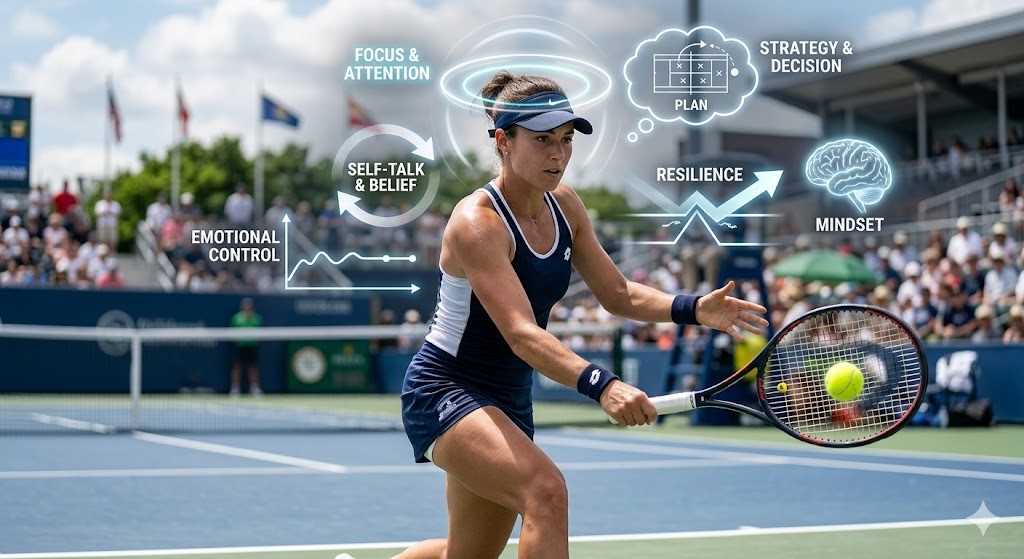
The Mental Game of Tennis Explained
Tennis is often described as one of the most mentally demanding sports in the world. While physical fitness, technical skills, and tactical awareness are essential for success, the mental side of the game frequently determines who wins and who loses. At the highest levels of competition, the differences in physical ability between players are often minimal. What separates champions from the rest is frequently their ability to stay focused, manage pressure, recover from mistakes, and maintain confidence throughout a match.
Unlike many team sports, tennis places athletes in complete control of their own success or failure. Players cannot rely on teammates to rescue them during difficult moments. Every point, every decision, and every emotional response belongs entirely to the individual competitor.
The mental game influences performance from the first serve to the final point. Understanding this aspect of tennis helps explain why some players consistently excel under pressure while others struggle despite possessing tremendous physical talent.
Throughout the history of the sport, champions such as Roger Federer, Rafael Nadal, and Novak Djokovic have demonstrated the extraordinary mental qualities required to succeed at the highest level.
Why Tennis Is Uniquely Mental
Many sports involve significant mental challenges, but tennis presents a unique set of circumstances.
Matches can last several hours.
Players experience constant momentum shifts.
There are numerous breaks between points, creating opportunities for overthinking.
Unlike sports with continuous action, tennis gives athletes time to reflect on mistakes and anticipate future situations.
This structure increases psychological demands.
Players must repeatedly reset their focus and maintain emotional control.
Every point presents a new challenge.
The ability to remain mentally engaged throughout long matches often becomes a decisive advantage.
Confidence Drives Performance
Confidence is one of the most important factors in tennis.
Confident players commit fully to their shots and decisions.
They trust their training and execute aggressively when opportunities arise.
A lack of confidence often produces hesitation.
Hesitant players may become overly cautious, leading to unforced errors and missed opportunities.
Confidence does not mean believing every shot will be successful.
Instead, it means trusting oneself regardless of the outcome.
Elite players maintain confidence even after mistakes.
They understand that occasional failures are part of the game.
This mindset allows them to continue competing effectively.
Handling Pressure Moments
Pressure is unavoidable in tennis.
Break points, tiebreaks, match points, and championship opportunities create intense emotional situations.
Some players thrive under pressure while others struggle.
The difference often comes down to mental preparation.
Elite competitors focus on execution rather than consequences.
They concentrate on the next point rather than potential outcomes.
This process-oriented approach reduces anxiety and improves performance.
Pressure situations reveal mental strength more clearly than almost any other aspect of tennis.
Champions consistently perform well during the sport’s most critical moments.
The Importance of Focus
Focus is essential throughout every tennis match.
Distractions can come from opponents, spectators, weather conditions, officiating decisions, or internal thoughts.
Successful players learn how to direct attention toward relevant information.
They focus on strategy, shot selection, and execution.
Maintaining concentration for extended periods requires discipline and practice.
Even brief lapses can result in lost points or momentum shifts.
Elite players develop routines that help maintain focus regardless of circumstances.
Their ability to remain present often provides significant competitive advantages.
Recovering From Mistakes
Mistakes are inevitable in tennis.
Even the greatest players in history commit unforced errors and lose points.
The critical question is how athletes respond.
Mentally strong players recover quickly.
They acknowledge mistakes without dwelling on them.
Instead of focusing on previous points, they direct attention toward future opportunities.
Average competitors sometimes allow errors to affect subsequent performance.
Elite players avoid this trap.
Their ability to reset mentally after setbacks contributes significantly to consistency and resilience.
Emotional Control Matters
Tennis is an emotional sport.
Momentum swings, difficult opponents, and personal expectations can generate frustration, excitement, or anxiety.
Managing these emotions effectively is a crucial skill.
Emotional control does not mean suppressing feelings entirely.
Rather, it involves preventing emotions from interfering with decision-making and execution.
Players who lose emotional control often make poor tactical choices.
They may rush points or abandon successful strategies.
Elite competitors maintain composure even during difficult situations.
This stability supports better performance throughout matches.
Self-Talk Influences Outcomes
Athletes constantly communicate with themselves internally.
This self-talk can either enhance or undermine performance.
Positive self-talk promotes confidence and focus.
Negative self-talk increases doubt and tension.
Elite tennis players monitor their internal dialogue carefully.
They replace destructive thoughts with constructive ones.
Instead of dwelling on mistakes, they focus on solutions and opportunities.
The quality of self-talk influences emotional state and decision-making.
Strong mental habits often begin with effective internal communication.
Mental Toughness and Resilience
Mental toughness is one of the defining characteristics of great tennis players.
Matches frequently involve adversity.
Players may lose sets, face match points, or encounter difficult conditions.
Resilient competitors continue fighting regardless of circumstances.
They remain committed to their strategies and maintain belief in their abilities.
Mental toughness allows players to handle challenges without becoming discouraged.
This quality often determines success during long tournaments and demanding seasons.
Championship careers are built on resilience as much as talent.
The Role of Routines
Many successful tennis players rely on routines.
These routines help create consistency and focus.
Pre-serve rituals, breathing techniques, and between-point habits provide structure.
Routines reduce distractions and promote mental stability.
They also help athletes regain composure after difficult moments.
The predictability of routines creates a sense of control.
In high-pressure environments, this control can be extremely valuable.
Elite players often develop routines that become integral parts of their competitive identities.
Visualization and Mental Rehearsal
Visualization is widely used in tennis.
Players mentally rehearse successful performances before and during competition.
This technique helps build confidence and reinforce positive habits.
Visualization allows athletes to practice mentally even when physical training is not possible.
Many competitors imagine serving accurately, executing winning shots, or handling pressure situations effectively.
Mental rehearsal strengthens familiarity and preparedness.
When real situations occur, athletes often feel more comfortable because they have already experienced them mentally.
Momentum and Psychological Shifts
Momentum plays a significant role in tennis.
A player who wins several consecutive points often gains confidence and energy.
Conversely, losing momentum can create frustration and doubt.
Mentally strong players understand that momentum changes constantly.
They avoid overreacting to temporary setbacks.
Instead, they focus on maintaining effort and execution.
This perspective helps prevent emotional swings from becoming performance problems.
Understanding momentum allows players to remain composed during changing match dynamics.
Adapting to Different Opponents
The mental game includes strategic flexibility.
Different opponents present different challenges.
Some rely on power. Others emphasize consistency or variety.
Successful players adapt their approaches accordingly.
This adaptability requires concentration and problem-solving skills.
Athletes must evaluate situations continuously and make adjustments.
Mental flexibility is often overlooked but highly important.
Elite competitors recognize patterns quickly and respond effectively.
Their ability to adapt contributes significantly to long-term success.
The Challenge of Playing Alone
Tennis places athletes in unique circumstances.
During matches, players cannot receive continuous coaching assistance.
They must solve problems independently.
This independence increases mental demands.
Competitors must make tactical decisions, manage emotions, and maintain focus without direct support.
The ability to think clearly under pressure becomes critical.
Players who develop strong self-reliance often perform better in challenging situations.
This independence distinguishes tennis from many other sports.
Managing Expectations
Expectations can create significant psychological pressure.
Athletes often place high demands on themselves.
Fans, coaches, and media may contribute additional expectations.
Managing these pressures is essential.
Elite players focus on controllable factors rather than external opinions.
They prioritize effort, preparation, and execution.
This approach helps reduce unnecessary stress.
When expectations become overwhelming, performance often suffers.
Maintaining perspective allows athletes to compete more freely and effectively.
Learning From Defeat
Losses are unavoidable in tennis.
Even the greatest champions experience setbacks.
The way players respond to defeat influences future success.
Mentally strong competitors view losses as learning opportunities.
They analyze performances objectively and identify areas for improvement.
Rather than becoming discouraged, they use setbacks as motivation.
This growth-oriented mindset promotes long-term development.
Many championship careers were shaped by lessons learned through defeat.
The Influence of Physical Fitness on Mental Performance
Physical and mental performance are closely connected.
Fatigue affects concentration, decision-making, and emotional control.
Players who maintain excellent conditioning often perform better mentally during long matches.
Physical fitness supports confidence and resilience.
Athletes who trust their conditioning are more likely to remain composed under pressure.
This connection explains why elite competitors invest heavily in fitness preparation.
Mental strength becomes easier to maintain when the body is prepared for competition.
Breathing and Stress Management
Breathing techniques play important roles in tennis psychology.
Controlled breathing helps regulate emotions and reduce stress.
Many players use breathing exercises between points or during changeovers.
These techniques promote relaxation and focus.
Proper breathing can lower tension levels and improve concentration.
Stress management is essential because excessive anxiety interferes with performance.
Simple breathing strategies often provide valuable tools for maintaining mental control.
The Mental Challenges of Long Matches
Tennis matches can last for hours.
Maintaining focus and emotional stability throughout these contests requires exceptional mental endurance.
Players must manage energy carefully.
They cannot remain emotionally intense for extended periods.
Instead, they learn to regulate effort and concentration.
Mental stamina becomes particularly important in major tournaments where athletes compete repeatedly over several days.
Champions often demonstrate remarkable consistency despite physical and psychological demands.
Why Champions Excel Mentally
Great champions possess numerous physical and technical strengths, but their mental qualities often define their success.
Rafael Nadal became known for relentless competitiveness and resilience.
Roger Federer displayed exceptional composure and confidence.
Novak Djokovic has demonstrated extraordinary focus and emotional control.
These qualities helped them succeed during countless high-pressure situations.
Their achievements illustrate the importance of mental excellence in tennis.
Developing the Mental Game
Mental skills can be developed through practice.
Athletes improve focus, confidence, resilience, and emotional control just as they improve physical skills.
Coaches increasingly incorporate mental training into development programs.
Visualization, mindfulness, journaling, and performance routines are common tools.
The goal is to prepare athletes for the psychological demands of competition.
Consistent mental training often produces significant performance improvements.
Like any skill, mental strength requires deliberate effort.
Why the Mental Game Matters at Every Level
The mental side of tennis affects players of all abilities.
Beginners experience nerves and frustration.
Advanced competitors face pressure and expectations.
Professional athletes encounter intense scrutiny and high-stakes situations.
Regardless of skill level, mental performance influences outcomes.
Players who develop strong psychological habits enjoy greater consistency and satisfaction.
The mental game is therefore relevant throughout every stage of development.
Final Thoughts
The mental game of tennis is one of the most important factors influencing success.
Confidence, focus, emotional control, resilience, and adaptability all contribute to performance on the court.
While technical skills and physical conditioning remain essential, mental strength often determines how effectively those abilities are used under pressure.
Champions such as Roger Federer, Rafael Nadal, and Novak Djokovic have shown that extraordinary mental skills can elevate already exceptional talent.
In the end, tennis is not simply a battle of strokes and athleticism.
It is also a battle of focus, confidence, and resilience.
That is why mastering the mental game remains one of the most important challenges in the sport.