
The Ultimate Beginner’s Guide to Esports
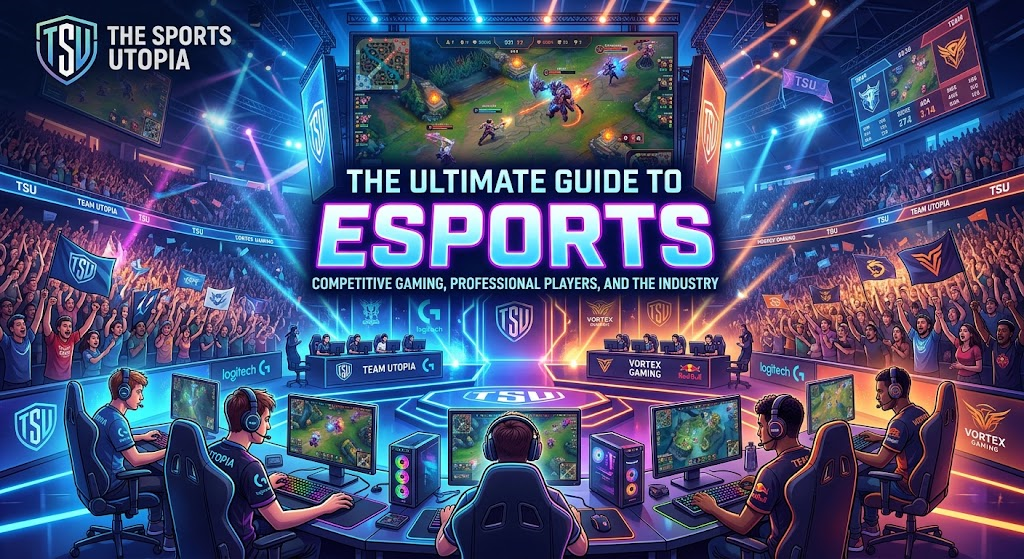
The Ultimate Beginner’s Guide to Esports: Competitive Gaming, Professional Players, and the Industry
Introduction: The Rise of Competitive Gaming
Sports have always provided a platform for competition, entertainment, and the pursuit of excellence. From traditional athletic contests played in stadiums to individual competitions held in local gyms, people have always enjoyed watching talented individuals and teams compete at the highest levels. However, the sporting landscape has expanded considerably over the past several decades. One of the most significant developments has been the emergence of esports, a form of organized competitive gaming that has transformed video games into a global spectator and professional competition industry.
Esports, short for electronic sports, involves organized competition between individuals or teams playing video games. These competitions can range from small community tournaments to professionally operated leagues and international championships featuring substantial prize pools, corporate sponsorships, and millions of viewers. Players compete in a variety of games, including first-person shooters, multiplayer online battle arenas, fighting games, sports simulations, and strategy titles.
Although competitive video gaming has existed for decades, modern esports has developed into something much larger than recreational gaming. Professional players train extensively, organizations recruit and manage competitive rosters, coaches develop strategies, analysts study opponents, and broadcasters deliver live coverage to audiences around the world. Major competitions can fill large arenas, while online tournaments make it possible for fans to follow their favorite players and teams from virtually anywhere.
For newcomers, understanding esports can initially seem complicated. Different games have different rules, competitive formats, terminology, and professional structures. Some competitions emphasize individual performance, while others depend on communication and coordination among teammates. Certain games have established international leagues, while others rely heavily on independent tournaments and community competition.
This guide introduces the fundamentals of esports, explains how the industry operates, examines the people and organizations behind competitive gaming, and explores the opportunities and challenges shaping its future. Whether you are a casual gamer interested in becoming more competitive, a sports fan curious about this expanding industry, or someone looking to understand how professional gaming works, there is plenty to discover.
1. What Is Esports?
Esports refers to organized competitive video gaming in which individuals or teams compete against one another according to established rules. The competitions can be played online or at physical venues, depending on the game, tournament structure, and level of competition.
The most important distinction between casual gaming and esports is the organized competitive environment. Millions of people play video games for entertainment, relaxation, or social interaction. Esports takes gaming a step further by introducing structured competition, rankings, scheduled events, professional organizations, and measurable performance.
A player participating in a casual online match might simply be interested in enjoying the experience. A professional esports player approaches the same activity differently. Every decision, movement, communication exchange, and strategic adjustment can influence the outcome. Preparation and consistency become essential.
Esports also differs from traditional sports in several important ways. Rather than relying primarily on physical athletic performance, competitive gaming emphasizes reaction time, hand-eye coordination, decision-making, tactical awareness, communication, and technical knowledge. Physical conditioning can still be important, particularly because professional players spend considerable time practicing and competing.
Individual and Team Competition
Esports includes both individual and team-based competitions.
Individual competitions generally place responsibility for performance directly on one player. Fighting games are a particularly recognizable example. Competitors face one another in head-to-head matches that require precise timing, knowledge of character abilities, quick reactions, and an understanding of an opponent’s tendencies.
Team competitions introduce another level of complexity. Players must coordinate their actions, communicate effectively, understand individual responsibilities, and work toward shared objectives. A highly talented individual cannot always compensate for poor teamwork.
Multiplayer online battle arena games and many first-person shooters illustrate the importance of team coordination. Players may have specialized roles, and successful teams understand how those responsibilities fit together.
What Makes a Game an Esport?
Not every popular video game automatically becomes an established esport. Competitive games generally need several characteristics:
- Clear rules and measurable outcomes.
- A competitive environment that rewards skill.
- A reasonably balanced playing experience.
- Opportunities for repeated competition.
- An active community of players and spectators.
- Tournament or league structures.
- Reliable systems for organizing and broadcasting matches.
Game developers also play an important role. They may support competitive communities through tournament licensing, updates, spectator tools, official competitions, and partnerships with esports organizations.
The competitive environment must also remain engaging. If a game becomes unbalanced or its developers abandon meaningful competitive support, maintaining an organized esports scene can become considerably more difficult.
2. The History and Evolution of Esports
Competitive video gaming did not begin with today’s enormous tournaments and professional organizations. Its development occurred over several decades as technology improved, internet access expanded, and gaming communities became increasingly connected.
The Early Days of Competitive Gaming
Some of the earliest organized video game competitions took place during the 1970s and 1980s. Arcade games created opportunities for players to compare high scores, challenge one another, and establish reputations within local gaming communities.
High-score competitions were particularly influential because they introduced measurable standards of achievement. Players could demonstrate their abilities through publicly recorded results rather than relying exclusively on personal claims.
During the 1990s, home computers, gaming consoles, and local multiplayer experiences helped expand competitive gaming. Players began organizing competitions around specific titles, and gaming communities became more connected through local events and early online services.
The Internet Changes Everything
The expansion of broadband internet during the late 1990s and early 2000s created new possibilities for competitive gaming.
Players no longer needed to live in the same neighborhood or attend the same gaming venue to compete. Online multiplayer games allowed competitors to challenge opponents from different cities and countries.
This development helped establish more organized competitive communities. Rankings, clans, online leagues, and tournament systems became increasingly common.
Games such as Counter-Strike and StarCraft developed influential competitive scenes. Their communities demonstrated that video games could support organized competition with dedicated players and spectators.
The Professionalization of Esports
As competitive gaming expanded, organizations began treating it more like a professional entertainment industry.
Tournament operators introduced increasingly sophisticated events. Sponsors recognized opportunities to reach gaming audiences. Professional teams recruited talented players, and specialized broadcasters began delivering competitive coverage.
The arrival of major streaming platforms further accelerated esports growth. Fans could watch competitions without attending an event or relying on traditional television broadcasts.
Streaming also changed the relationship between players and audiences. Competitors could build personal followings, interact with fans, and create content outside organized tournaments.
Esports Becomes a Global Industry
Modern esports includes international competitions, professional teams, collegiate programs, independent tournament organizers, streaming personalities, and major commercial partnerships.
Different games have developed their own competitive ecosystems. Some operate through publisher-supported professional leagues, while others depend on tournament circuits, community organizers, or combinations of both.
The industry continues to evolve as technology, audience preferences, and business models change.
3. The Most Popular Esports Games and Competitive Genres
One of the most interesting aspects of esports is the variety of games supporting organized competition. Unlike traditional sports, where different competitions generally share recognizable physical rules and playing environments, esports includes dramatically different styles of gameplay.
A first-person shooter requires a different skill set from a fighting game or a real-time strategy competition. Understanding these distinctions helps newcomers identify the games and competitions they might enjoy following.
First-Person Shooters
First-person shooters, commonly called FPS games, place players in a simulated environment where they control characters from a first-person perspective.
These games frequently emphasize aiming accuracy, reaction time, movement, positioning, communication, and tactical decision-making.
Counter-Strike 2 and VALORANT are prominent examples of competitive FPS titles. Both feature team-based competition, although their mechanics and character abilities differ.
In many FPS competitions, teams alternate between offensive and defensive responsibilities. Players must understand maps, anticipate enemy movements, coordinate attacks, and manage limited resources.
A single mistake can change the outcome of an entire round.
Multiplayer Online Battle Arenas
Multiplayer online battle arena games, or MOBAs, are another major esports category.
These games generally feature two opposing teams competing on a structured map. Players control individual characters with specialized abilities and work together to accomplish objectives.
League of Legends and Dota 2 are two prominent examples.
MOBAs combine individual mechanical skill with strategic planning. Players must understand character matchups, resource management, map control, timing, and team coordination.
A successful team needs to recognize opportunities, anticipate opponents’ decisions, and make adjustments throughout a match.
Fighting Games
Fighting games typically feature one-on-one competition in which players control characters with different attacks, abilities, and defensive options.
Street Fighter 6 and Tekken 8 are examples of games with established competitive communities.
Success requires precise execution, timing, pattern recognition, matchup knowledge, and the ability to anticipate an opponent’s decisions.
Unlike many team-based esports, fighting game competitors must take direct responsibility for nearly every aspect of their performance.
Real-Time Strategy Games
Real-time strategy games require players to manage resources, build units or structures, and make strategic decisions while competition is unfolding.
StarCraft II is a notable example of this genre.
Players must balance long-term planning with immediate reactions. They need to understand their opponent’s strategy while managing their own economy, production, positioning, and attacks.
Sports Simulation Games
Sports simulation esports brings traditional athletic competitions into the digital environment.
Games such as EA SPORTS FC and NBA 2K allow competitors to participate in virtual versions of soccer and basketball.
These games appeal to fans who already understand traditional sports. Familiar rules, teams, players, and competitive situations can make them an accessible introduction to esports.
Other Competitive Gaming Genres
Esports also includes racing simulations, battle royale games, tactical strategy competitions, and other specialized categories.
The variety is one of the industry’s greatest strengths. Different games appeal to different audiences, and new competitive opportunities can emerge when a game develops a sufficiently active community.
For a closer examination of the games and genres driving the industry, see The Most Popular Esports Games and Competitive Gaming Genres Explained.
4. How Esports Tournaments, Leagues, and Championships Work
Organized competition is what transforms individual gaming ability into a structured sporting environment.
Esports tournaments can be relatively simple local events or elaborate international championships. Their formats depend on the game, number of participants, competition level, and tournament organizer.
Single-Elimination Tournaments
Single-elimination tournaments are among the easiest formats to understand.
Players or teams are placed into a bracket. A competitor who loses a match is eliminated, while the winner advances to the next round.
The process continues until only one competitor or team remains.
This format creates excitement because every match can determine whether a competitor continues participating.
However, a single loss can end a team’s tournament, even if that team is among the strongest participants.
Double-Elimination Tournaments
Double-elimination formats provide competitors with an additional opportunity.
A player or team generally must lose twice before being eliminated. After the first loss, competitors move into a lower bracket, where they continue competing for a chance to reach the championship match.
This structure can produce interesting storylines because a team that loses early may still recover and reach the final.
Round-Robin Competition
In a round-robin format, participants compete against multiple opponents, often every other participant in their group.
Standings are determined by match results or points earned under the tournament’s rules.
This format provides more opportunities to evaluate competitors than a single-elimination bracket.
Professional Leagues
Some esports titles operate through professional leagues featuring established teams and recurring seasons.
These leagues may include regular-season matches, standings, playoffs, qualification systems, and championship events.
The structures vary considerably between games. Some leagues have centralized organizations, while others rely on independent tournament circuits.
International Championships
International tournaments bring together competitors from different regions.
These events can provide a stage for national and regional rivalries, established organizations, and emerging teams.
They also demonstrate how esports has developed beyond local gaming communities into an international competitive industry.
For newcomers, understanding tournament formats makes watching esports considerably easier. It helps explain why certain matches are more important than others and how teams qualify for major events.
Our companion article, How Esports Tournaments, Leagues, and Championships Work, takes a deeper look at competitive formats, qualification systems, and championship structures.
5. Professional Esports Players: Training, Skills, and Career Development
Professional esports players are often viewed as individuals who simply spend an extraordinary amount of time playing video games. That description overlooks the preparation and discipline required to compete consistently at a high level.
Professional gaming is a competitive pursuit that requires specialized skills, continuous improvement, and the ability to perform under pressure.
Reaction Time and Hand-Eye Coordination
Many esports games require players to recognize visual information and respond almost immediately.
In a first-person shooter, a competitor might need to identify an opponent, aim accurately, and make a decision within a fraction of a second.
Fighting games demand similarly precise timing. A player may need to recognize an opponent’s attack and respond with the correct defensive action.
Hand-eye coordination is essential because players must translate what they see into accurate physical inputs through a controller, keyboard, or mouse.
Strategic Thinking
Mechanical ability is only one part of competitive success.
Players must also understand game mechanics, recognize patterns, anticipate opponents, and make decisions based on changing circumstances.
A player who understands when to attack, retreat, defend, or conserve resources may outperform an opponent with superior mechanical ability.
Strategic knowledge becomes particularly important in games involving team coordination.
Practice and Preparation
Professional players frequently follow structured practice schedules.
Training can include:
- Individual mechanical skill development.
- Team practice and communication.
- Reviewing previous matches.
- Studying opponents.
- Practicing specific strategies.
- Participating in ranked competition.
- Working with coaches and analysts.
The objective is not simply to accumulate playing hours. Effective practice should identify weaknesses and provide opportunities to improve them.
The Mental Side of Competitive Gaming
Mental toughness is another important component of esports.
Professional competitors must deal with pressure, losing streaks, criticism, demanding schedules, and the possibility of making costly mistakes in front of large audiences.
Remaining focused after a mistake is particularly important. Players who become frustrated or distracted can struggle to execute strategies and communicate effectively.
The ability to manage emotions and maintain concentration can separate successful competitors from those who struggle to perform consistently.
Building a Professional Career
Becoming a professional player is not an easy or guaranteed career path.
Many aspiring competitors begin by participating in ranked online matches, local tournaments, amateur leagues, or community competitions.
Strong performances can attract attention from established teams and provide opportunities to participate in more competitive environments.
However, professional opportunities are limited, and competition for roster positions can be intense.
Players should also recognize that professional careers may be relatively short. Changes in game popularity, competition levels, personal circumstances, and organizational finances can affect long-term opportunities.
Our companion article, How to Become a Professional Esports Player: Training, Tryouts, and Career Paths, explores the process in greater detail.
6. Inside a Professional Esports Team
Team-based esports requires much more than assembling several talented players and allowing them to compete.
Successful organizations recognize that communication, preparation, leadership, and specialized responsibilities are essential to consistent performance.
Player Roles and Responsibilities
Many competitive games assign different responsibilities to players.
Some positions emphasize offensive pressure, while others focus on defense, support, information gathering, or controlling important areas of the playing environment.
Understanding individual roles helps teams operate efficiently.
A player who ignores team responsibilities in an attempt to produce individual statistics can sometimes hurt overall performance.
Coaching
Esports coaches help players prepare for competition and improve their performance.
Responsibilities may include developing strategies, organizing practice sessions, identifying weaknesses, reviewing opponents, and helping players maintain productive team environments.
Coaches can also help manage disagreements and maintain accountability.
Analysts
Analysts study gameplay and identify patterns that can provide competitive advantages.
They may review previous matches, examine statistical information, evaluate opponent tendencies, and identify strategic opportunities.
Their work helps coaching staffs and players make better-informed decisions.
Team Chemistry and Communication
Communication is particularly important when competitors must make rapid decisions together.
Players need to share useful information without creating unnecessary distractions.
Trust also matters. Teammates must believe that others will perform their responsibilities and make decisions that benefit the group.
Teams with exceptional individual talent can struggle if their players cannot work together effectively.
Recruitment and Roster Management
Professional organizations must identify talented players while considering compatibility, experience, game knowledge, and long-term potential.
Recruitment is not always about signing the competitor with the best individual statistics.
A player who fills a specific weakness or improves communication may provide more value than someone with better individual numbers.
For a closer look at these responsibilities, see Inside an Esports Team: Players, Coaches, Analysts, and Team Strategy.
7. How to Watch Esports and Become a Fan
One reason esports has expanded so quickly is its accessibility.
Traditional sporting events often require television subscriptions, travel, or tickets to attend in person. Many esports competitions can be watched through free online broadcasts.
Streaming platforms have made it possible for fans to follow competitions, interact with other viewers, and watch their favorite players outside major tournament events.
Streaming Platforms
Platforms such as Twitch and YouTube have become important destinations for esports audiences.
Fans can watch professional matches, tournament broadcasts, player streams, interviews, and behind-the-scenes content.
Some players also maintain their own channels, allowing audiences to follow their training routines and personalities.
Understanding the Competition
New viewers sometimes struggle to understand what is happening during an esports match.
This is understandable because every game has its own terminology, objectives, and strategies.
The easiest way to become familiar with a game is to start with its basic rules.
Learn how players score points, what determines victory, how teams are organized, and what objectives matter most.
Broadcast commentators can also help explain complicated situations.
Following Teams and Players
Esports fans can follow individual competitors, professional organizations, regional leagues, or specific games.
Some fans enjoy supporting a particular team in the same way they follow traditional professional sports franchises.
Others prefer watching individual players because of their personalities, competitive achievements, or unique playing styles.
Attending Live Events
Although online viewing is convenient, live esports events offer a different experience.
Major competitions can feature large audiences, elaborate production environments, team presentations, merchandise areas, and opportunities to meet other fans.
The excitement of watching a championship match alongside thousands of other spectators can be comparable to attending a major traditional sporting event.
For more information about becoming an esports spectator, explore How to Watch Esports: Streaming Platforms, Live Events, and Understanding the Action.
8. Esports Equipment and Gaming Technology
Competitive gaming depends on technology. The equipment players use can influence comfort, consistency, and performance.
However, expensive equipment does not automatically produce better players. Skill, preparation, and game knowledge remain essential.
Gaming Computers and Consoles
Some esports titles are primarily played on personal computers, while others are associated with gaming consoles.
Competitive players generally need hardware capable of running their chosen game reliably.
For PC players, important considerations include processor performance, graphics capabilities, memory, and system stability.
Console competitors may place greater emphasis on controller preferences, display performance, and reliable online connectivity.
Monitors and Displays
A monitor’s refresh rate and response characteristics can affect the visual experience.
Higher refresh rates allow compatible displays to present more frequent updates, potentially improving motion clarity.
Competitive players often prioritize displays that provide smooth, consistent performance.
Keyboards, Mice, and Controllers
Input devices are important because players interact with games through physical controls.
PC competitors may prefer mechanical keyboards and gaming mice with adjustable sensitivity.
Console competitors often choose controllers based on comfort, button layout, and personal familiarity.
Consistency matters. Players generally benefit from equipment they understand and can use comfortably.
Headsets and Audio
Audio can provide important competitive information.
In certain games, players rely on sound to identify footsteps, weapon activity, environmental changes, and teammate communication.
A comfortable headset with clear audio can help players recognize important information.
Internet Connectivity
Reliable internet connectivity is essential for online competition.
High latency can create delays between player actions and what happens in the game.
Connection instability can also cause interruptions and negatively affect competitive performance.
Ergonomics and Player Health
Gaming equipment should also support comfortable playing conditions.
A properly positioned monitor, supportive chair, appropriate desk height, and regular breaks can help reduce physical strain.
Competitive gaming can involve extended periods of sitting and repetitive movements. Players should recognize the importance of rest, movement, sleep, and general physical well-being.
For additional equipment guidance, see Esports Equipment and Gaming Setups: What Competitive Players Really Need.
9. The Business of Esports: How the Industry Makes Money
Esports is not just a competitive activity. It is also a business involving game publishers, tournament operators, professional organizations, sponsors, broadcasters, advertisers, and content creators.
Understanding the financial side helps explain how professional gaming has developed and why the industry’s commercial success varies between games and organizations.
Sponsorships
Sponsorships are an important source of revenue for many esports organizations and events.
Companies may sponsor individual players, teams, tournaments, or entire competitive leagues.
Sponsors generally want to connect with audiences who are interested in gaming, technology, entertainment, and related products.
Partnerships can involve advertising placements, branded content, event appearances, promotional campaigns, and other marketing arrangements.
Prize Money
Tournament prize pools attract attention because some major competitions offer substantial financial rewards.
However, prize money should not be confused with guaranteed player income.
Only participating competitors who achieve the required results receive prize distributions, and the amount earned depends on the tournament’s rules.
A player cannot necessarily build a stable career by relying exclusively on tournament winnings.
Player Salaries
Some professional organizations pay players salaries.
Compensation varies considerably depending on the game, organization, competitive level, player reputation, and financial resources available.
Top competitors in established esports ecosystems may have opportunities that are unavailable to players in smaller competitive scenes.
Contracts may also include performance incentives, tournament bonuses, and commercial responsibilities.
Streaming and Content Creation
Some professional players generate additional income through streaming, video production, advertising, subscriptions, and sponsorship arrangements.
This creates opportunities beyond tournament competition.
A player who develops a strong personal brand may continue earning through content creation even when not actively participating in major competitions.
Merchandise and Commercial Partnerships
Professional esports organizations may sell clothing, accessories, and other branded merchandise.
Commercial partnerships can also include gaming equipment, technology products, and entertainment-related promotions.
The Financial Challenges
Despite the industry’s visibility, not every esports organization is financially successful.
Teams must manage salaries, travel expenses, equipment, coaching, facilities, marketing, and administrative costs.
Revenue opportunities can fluctuate, and organizations may struggle when sponsorships decline or competitive results disappoint.
The financial structure of esports is therefore more complicated than simply awarding prize money to tournament winners.
For a comprehensive look at the industry’s financial structure, explore The Business of Esports: Player Salaries, Sponsorships, Prize Money, and Revenue.
10. College Esports and Career Opportunities
Esports has also created opportunities within educational institutions.
Many colleges and universities have established competitive gaming programs, organized teams, and gaming facilities.
Some institutions offer scholarships or other forms of financial assistance to qualified esports participants, although opportunities and requirements differ considerably.
Collegiate Competition
College esports allows students to represent their institutions in organized competitions.
These programs can include team-based games, individual competitions, campus leagues, and regional or national tournaments.
Collegiate competition provides an opportunity for students to develop gaming skills while participating in an educational environment.
It can also introduce students to teamwork, leadership, communication, and organized competition.
Beyond Professional Gaming
Not everyone interested in esports needs to become a professional player.
The industry supports numerous careers involving technology, business, entertainment, and event management.
Potential career paths include:
- Esports coaching and analysis.
- Tournament organization.
- Broadcasting and commentary.
- Video production and editing.
- Marketing and sponsorship management.
- Social media and community management.
- Game development and technical support.
- Event operations and administration.
- Journalism and content creation.
These opportunities demonstrate that esports has developed into an industry with responsibilities extending far beyond the players competing on screen.
11. Challenges Facing the Esports Industry
Despite its growth and popularity, esports faces challenges that could influence its long-term development.
Financial Sustainability
One of the industry’s biggest challenges is building sustainable business models.
Some organizations have struggled to generate enough consistent revenue to cover operating expenses.
Dependence on sponsorships, investment funding, and tournament-related income can create financial uncertainty.
Long-term success requires organizations to develop realistic budgets and multiple sources of revenue.
Game Publisher Control
Unlike many traditional sports, esports competitions are built around privately owned video games.
Game publishers generally control the intellectual property, competitive environments, licensing arrangements, and major game updates.
This creates opportunities for organized competition but also introduces uncertainty.
A publisher can change competitive rules, modify a game, discontinue support, or alter its approach to tournaments.
These decisions can significantly affect teams, players, and tournament organizers.
Player Burnout
Professional gaming can involve demanding practice schedules, frequent competition, travel, and public pressure.
Players who struggle to balance competition with rest and personal responsibilities may experience burnout.
Organizations must recognize that long-term performance depends on sustainable preparation rather than simply increasing practice hours.
Cheating and Competitive Integrity
Fair competition is essential to the credibility of esports.
Cheating, unauthorized software, match manipulation, account sharing, and other forms of misconduct can undermine confidence in results.
Tournament organizers and publishers must maintain effective rules, monitoring systems, and disciplinary procedures.
Audience Retention
The popularity of a particular game can change over time.
A competitive title that attracts large audiences today may face declining interest as players move to newer games.
Esports organizations must understand the importance of maintaining strong communities and adapting to changing audience preferences.
Accessibility and Inclusion
Competitive gaming should provide fair opportunities for participation.
Barriers involving equipment costs, internet access, disabilities, discrimination, and community behavior can affect who has opportunities to compete.
Developing welcoming and accessible environments can help strengthen esports communities.
12. The Future of Esports: Technology, Global Competition, and New Opportunities
Esports remains an evolving industry, and several developments could influence its future.
Technology, audience behavior, game design, and the business environment will all help determine which competitive ecosystems thrive.
Improved Gaming Technology
Advancements in computer hardware, graphics, networking, and game development can improve the competitive experience.
More reliable connections and better spectator tools may also make competitions easier to follow.
Virtual and augmented reality technologies could create additional competitive possibilities, although their long-term role remains uncertain.
Mobile Esports
Mobile gaming has created opportunities for competitive gaming audiences who do not rely on traditional gaming computers or consoles.
Smartphones are widely available, and mobile competitive titles have developed organized communities in several regions.
Mobile esports may remain particularly important in markets where smartphones are a primary gaming platform.
International Expansion
Esports already attracts competitors and spectators from around the world.
Continued international expansion could create additional opportunities for regional competitions, professional organizations, sponsors, and broadcasters.
Different countries and regions may develop competitive ecosystems suited to their own gaming communities and audience preferences.
College and Amateur Development
Collegiate programs, high school competitions, and community tournaments can help introduce new players to organized competition.
These environments may also provide opportunities for individuals interested in careers in broadcasting, coaching, event management, and other esports-related fields.
A healthy development system can help create a more sustainable competitive ecosystem.
The Relationship Between Traditional Sports and Esports
Traditional sports organizations have increasingly explored competitive gaming through sports simulations, branded competitions, and partnerships.
This relationship provides opportunities for collaboration.
Traditional sports bring established audiences, marketing experience, and recognizable brands, while esports offers digital entertainment formats and access to gaming communities.
The two industries have different competitive foundations, but they can benefit from shared commercial and promotional opportunities.
Long-Term Sustainability
Ultimately, the future of esports will depend on its ability to create sustainable competitive and business environments.
Successful games will need engaged communities, reliable tournament structures, and meaningful opportunities for players.
Organizations will need realistic financial strategies, and tournament operators will need to provide compelling experiences for spectators.
Esports does not need to replace traditional sports to establish its own lasting position in the entertainment world. Its greatest opportunity may be continuing to develop as a distinct competitive industry.
For a closer examination of what lies ahead, read The Future of Esports: Technology, College Competition, Global Growth, and New Opportunities.
Conclusion: Esports Has Earned Its Place in the Sporting World
Esports has developed from relatively small video game competitions into an international industry involving professional players, teams, tournaments, sponsors, broadcasters, and millions of spectators.
Its appeal comes from the combination of competition, technology, entertainment, and community. Fans can follow talented individuals, support professional organizations, watch international championships, and participate in competitive gaming themselves.
The industry also provides opportunities that extend beyond playing video games professionally. Coaching, broadcasting, marketing, technology, tournament administration, and content creation are just some of the career paths connected to competitive gaming.
However, esports still faces important challenges. Financial sustainability, player welfare, competitive integrity, publisher control, and changing audience preferences will influence its long-term success.
For anyone unfamiliar with competitive gaming, there has never been a better reason to explore what esports has to offer. Start by learning about the games, watch a few tournaments, follow a professional team, or try participating in a local competition.
Esports is more than people playing video games against one another. It is a competitive environment that rewards preparation, skill, teamwork, strategy, and the desire to improve.
And just like traditional sports, the excitement often comes down to one simple question: Who will come out on top when the competition matters most?