
Why Defensemen Are Scoring More Goals in Hockey
Why Defensemen Are Scoring More Goals in Hockey
For generations, hockey defensemen were often judged by a simple question: Could they stop the other team from scoring?
Today, that question is still important, but it is no longer enough.
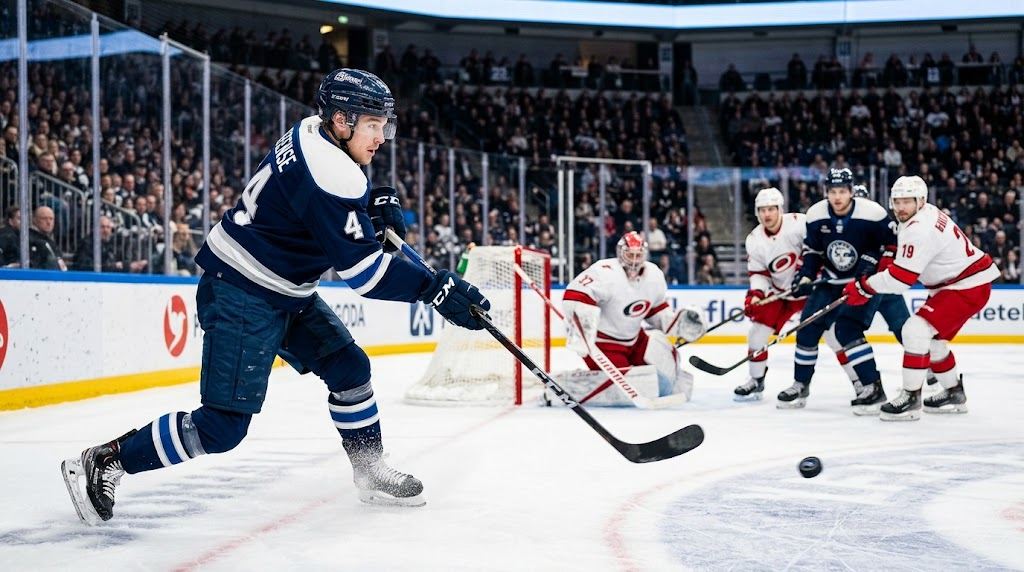
Modern defensemen are expected to defend, skate, move the puck, join the rush, quarterback the power play, create scoring chances, and sometimes finish those chances themselves. The blue line has become one of the most dangerous places on the ice, and the rise of offensive-minded defensemen has changed the way teams attack.
Players such as Cale Makar, Quinn Hughes, Zach Werenski, Adam Fox, Evan Bouchard, Rasmus Dahlin, and other modern puck-moving defensemen have demonstrated that a defenseman can be much more than a player stationed between the forwards and the goaltender. They can become an essential part of a team’s offensive identity.
That evolution raises an interesting question:
Why are defensemen scoring more goals in hockey?
The answer is not simply that defensemen are shooting more. The modern game has created more opportunities for them to attack, and coaches are increasingly comfortable allowing skilled defensemen to take advantage of those opportunities.
Changes in skating, puck movement, offensive-zone systems, power plays, transition hockey, analytics, player development, and coaching philosophy have all contributed to the transformation.
The modern defenseman is increasingly expected to think like an offensive player while still performing the responsibilities of a defender.
And when those responsibilities are balanced correctly, the result can be a defenseman who changes the entire game.
The Traditional Role of the Hockey Defenseman
To understand why defensemen are scoring more goals, it helps to understand what the position used to represent.
Traditionally, defensemen were primarily responsible for protecting their own zone.
They blocked shots.
They cleared the crease.
They battled opposing forwards along the boards.
They protected the front of the net.
They made simple passes to forwards.
They prevented odd-man rushes.
And when they received the puck, the safest decision was often considered the best decision.
There were certainly offensive defensemen throughout hockey history. Players such as Bobby Orr fundamentally changed expectations for the position, while Paul Coffey, Ray Bourque, Denis Potvin, Brian Leetch, and others demonstrated that elite defensemen could become major offensive weapons.
But those players were often considered exceptional.
Today, offensive ability is increasingly part of the job description.
A modern defenseman may be asked to carry the puck through the neutral zone, lead a controlled entry, activate below the faceoff circles, make a play from the slot, or join the rush as the fourth attacker.
The position has not abandoned defense.
Instead, the definition of defense has expanded.
Defense Begins With Puck Possession
One of the biggest changes in modern hockey is the understanding that controlling the puck can be a defensive strategy.
If your team has the puck, the opponent cannot attack.
That sounds obvious, but it has enormous implications for defensemen.
A defenseman who retrieves the puck and simply throws it away may technically complete a defensive assignment. But if the opponent immediately regains possession, the defensive work begins again.
A defenseman who retrieves the puck, identifies an open teammate, and starts a controlled attack can accomplish something much more valuable.
The team escapes pressure.
The opponent has to retreat.
The defenseman becomes part of the offensive sequence.
And the team has a chance to establish possession in the offensive zone.
This is one reason puck-moving defensemen have become so valuable.
Coaches increasingly want defensemen who can make the first pass, skate away from pressure, recognize forechecking patterns, and turn defensive-zone possessions into offensive opportunities.
That process can eventually lead to goals.
Skating Has Changed the Position
Modern defensemen are also better skaters than many defensemen of previous generations.
That does not mean older players could not skate. Hockey has always included exceptional skating defensemen.
The difference is that skating ability is now emphasized throughout player development.
Young defensemen are taught to move laterally.
They are taught to accelerate with the puck.
They are taught to close gaps quickly.
They are taught to join offensive rushes.
They are taught to recover defensively after taking offensive risks.
The result is a generation of defensemen who can cover enormous amounts of ice.
A defenseman who can skate effectively does not necessarily have to choose between offense and defense.
He can attack and still recover.
That ability creates opportunities that simply did not exist for slower players.
Modern NHL tracking data illustrates just how much skating has become part of the position. NHL EDGE data has highlighted elite speed and skating-distance numbers from defensemen such as Evan Bouchard and Jake Sanderson, while younger defensemen continue to enter the league with extraordinary skating ability.
The faster the defenseman, the more aggressively that player can participate in the attack.
The Defenseman Is Becoming the Fourth Forward
Perhaps the clearest explanation for increased defensive scoring is the increasing willingness of teams to use defensemen as attacking players.
Watch a modern offensive-zone possession closely.
The puck may be along the boards.
A forward controls it below the goal line.
Another forward moves toward the slot.
A third forward occupies the weak side.
And suddenly the defenseman at the blue line begins moving toward the faceoff circle.
The defenseman is no longer standing at the blue line waiting for a point shot.
He is becoming part of the attack.
This movement creates another passing option.
It can pull a defender away from the slot.
It can create a passing lane.
It can generate a shot from a better angle.
It can produce a rebound.
And it can force defenders to make decisions.
That uncertainty is extremely valuable.
The NHL has increasingly emphasized active defensemen, particularly defensemen who can join the offensive attack without abandoning defensive structure. Coaches have specifically pointed to aggressive weak-side defensemen, puck movement, and defensemen joining offensive-zone plays as important parts of modern systems.
This is one reason the phrase fourth forward has become increasingly associated with offensive defensemen.
The Blue Line Is No Longer a Dead End
There was a time when the blue line represented the end of the defenseman’s offensive involvement.
The defenseman received the puck.
He took a shot.
Or he passed it back to a forward.
Today, the blue line is more like a launching point.
A defenseman can step down the boards.
He can move laterally across the ice.
He can fake a shot and create a passing lane.
He can walk toward the middle.
He can change shooting angles.
He can attack a penalty-killing box.
He can use a screen in front of the goaltender.
The blue line has become a much more dynamic offensive position.
This has dramatically increased the number of situations in which defensemen can score.
Point Shots Are More Dangerous Than They Look
One of the simplest ways defensemen score is still the traditional point shot.
But the way teams create those shots has changed.
A shot from the blue line may not look especially dangerous when compared with a breakaway or a shot from the slot.
The defenseman may be 50 or 60 feet from the net.
But distance does not tell the entire story.
A point shot can become dangerous when:
- A forward screens the goaltender.
- Another player creates a second screen.
- A teammate redirects the puck.
- The puck produces a rebound.
- A forward battles for position in front.
- The defenseman changes the shooting angle.
- The shot arrives quickly after a pass.
- The defenseman deliberately shoots for a deflection rather than a clean save.
Modern teams understand that the objective is not necessarily to score directly from every defenseman shot.
The objective is to create a scoring event.
That distinction is important.
The NHL has noted that many goals created from point shots come from tips, screens, and rebounds rather than clean shots beating a goaltender from long distance.
So a defenseman’s offensive contribution can be much larger than his goal total suggests.
Defensemen Are Getting Better Shooting Opportunities
Another reason defensemen are scoring is that they are not always shooting from the same locations.
A modern defenseman may begin a possession at the blue line and then move closer to the net.
That movement changes everything.
Instead of taking a low-percentage shot from distance, the defenseman may attack from the high slot.
He may move into the faceoff circle.
He may receive a cross-ice pass.
He may step into a one-timer.
He may arrive late as the second wave of an attack.
Those situations create better scoring opportunities.
Modern tracking technology has made these differences easier to measure.
NHL EDGE data from recent seasons shows that several of the league’s top offensive defensemen rank highly in shot volume and shot locations, including midrange and high-danger opportunities. Zach Werenski, for example, led NHL defensemen in shots during the 2025-26 season and ranked among the position’s leaders in several shooting categories.
The important point is that modern defensemen are not simply shooting more.
They are finding better opportunities to shoot.
The Second Wave of the Attack
One of the most effective tactics in modern hockey is the second wave.
Imagine three forwards entering the offensive zone.
The defense follows them.
The forwards attack the net.
The opposing defense collapses.
The puck gets moved toward the corner.
Then the defenseman arrives.
Suddenly, there is another offensive player attacking an already-disorganized defense.
This is where defensemen can become extremely dangerous.
They have momentum.
The opposing defense may already be focused on the forwards.
The defenseman arrives with space.
That creates opportunities for shots, rebounds, passes, and goals.
The second wave is particularly dangerous because the defenseman is not necessarily the primary focus of the opposing defense.
The first three attackers have already drawn attention.
The defenseman becomes the surprise attacker.
Modern Forechecking Creates Offensive Opportunities
Aggressive forechecking also contributes to defenseman scoring.
Modern teams often want their defensemen to participate in maintaining offensive-zone pressure.
That does not mean recklessly abandoning the blue line.
It means reading the play.
If a defenseman recognizes that an opposing forward is under pressure along the boards, he may pinch down.
If the puck is recovered, the defenseman keeps the play alive.
If the puck moves across the ice, another defender may rotate into position.
The goal is to prevent the opponent from escaping.
This type of aggressive hockey creates more offensive-zone possessions.
And more offensive possessions create more opportunities for defensemen to score.
NHL coaches have specifically described this increased defensive involvement as a major development of the modern game.
Power Plays Are Huge for Defenseman Scoring
If there is one situation that has helped offensive defensemen flourish, it is the power play.
A talented defenseman can become the quarterback of a power-play unit.
He may control the puck at the top of the formation.
He may move laterally across the blue line.
He may distribute the puck.
He may create shooting lanes.
And he may take the shot himself.
A defenseman on the first power-play unit can receive significantly more offensive opportunities than a defenseman who rarely sees the man advantage.
The power play also creates space.
With one fewer defender on the ice, puck movement becomes more important.
Defensive structures have to move.
Penalty killers have to choose whether to pressure the defenseman or protect the middle.
That creates opportunities.
A defenseman with an elite shot can exploit those gaps.
Recent NHL statistics demonstrate just how important the power play can be. In the 2025-26 season, Darren Raddysh led NHL defensemen with 10 power-play goals, while Cale Makar had 12 power-play goals in 2024-25. NHL noted that only a handful of defensemen had reached double digits in power-play goals during the preceding decade.
That is a powerful illustration of how the right role can transform a defenseman’s scoring potential.
The One-Timer Changes Everything
The one-timer is one of the most dangerous weapons available to an offensive defenseman.
A defenseman does not have to carry the puck toward the net.
He does not have to beat a defender one-on-one.
He may simply need to find open ice.
A teammate moves the puck across the ice.
The defenseman receives it and shoots immediately.
The goaltender has very little time to adjust.
The puck is already moving laterally.
The shot can be extremely difficult to stop.
This is why teams work so hard to create passing lanes on the power play.
A defenseman with a powerful one-timer can force penalty killers to respect the point.
That respect opens other areas of the ice.
In other words, even when the defenseman does not score, his shooting threat can create goals for teammates.
Analytics Have Changed How Coaches Evaluate Defensemen
Another reason defensemen are scoring more is that teams now have more information about what creates offense.
Traditional statistics such as goals and assists are still important.
But teams can now analyze:
- Shot locations
- Shot attempts
- Expected goals
- Zone entries
- Zone exits
- Possession
- Offensive-zone time
- Passing efficiency
- Rush chances
- Transition opportunities
- Shot quality
- Power-play involvement
- Skating metrics
That information can reveal something that traditional statistics sometimes miss.
A defenseman may not score 20 goals, but he may consistently create high-quality offensive possessions.
Another defenseman may score frequently but give up too many chances because of poor positioning.
Teams want to understand both sides.
That has encouraged organizations to search for defensemen who can contribute offensively without destroying defensive structure.
The Rise of the Two-Way Defenseman
The modern ideal may not actually be the pure offensive defenseman.
It may be the two-way defenseman.
The best players can contribute in both directions.
They can shut down a rush.
Then they can start one.
They can win a puck battle.
Then they can make a scoring pass.
They can block a shot.
Then they can jump into the attack.
They can kill a penalty.
Then they can quarterback a power play.
That versatility makes them incredibly valuable.
The evolution of the position has not eliminated defensive defensemen. Teams still need players who can protect leads, kill penalties, block shots, win battles, and protect the crease.
But modern teams increasingly want at least some defensemen who can create offense.
Speed Makes Offensive Risk More Manageable
Every offensive decision carries risk.
If a defenseman moves toward the net and the puck is lost, someone has to cover.
If the defenseman pinches down too aggressively, the opponent may get an odd-man rush.
If both defensemen become involved in the attack at the same time, the defensive structure can collapse.
Speed helps reduce those risks.
A fast defenseman can make an aggressive play and recover.
That changes the calculation.
A slower defenseman may have to remain conservative because getting caught up ice could lead to a dangerous chance.
A fast defenseman can take the same risk because he has a better chance of recovering.
That is one reason speed and skating ability in hockey have become so important to modern defensive systems.
Coaching Philosophy Has Changed
Ultimately, none of this happens without coaches allowing it to happen.
Coaches establish the system.
They decide how aggressive defensemen can be.
They determine when defensemen should pinch.
They establish coverage responsibilities.
They determine whether defensemen can join the rush.
And they decide which players receive offensive-zone opportunities.
Modern coaching has increasingly embraced active defensemen.
The philosophy is not simply:
“Stay back and defend.”
It is closer to:
“Read the situation and attack when the opportunity is there.”
That requires intelligence.
An aggressive defenseman cannot simply skate forward every time the puck moves.
He has to recognize numbers.
He has to know where his teammates are.
He has to understand the location of the puck.
He has to anticipate turnovers.
He has to know when the risk is acceptable.
That makes hockey IQ extremely important.
The Best Defensemen Read the Game Ahead of Time
Elite offensive defensemen often appear to have more time than everyone else.
They don’t.
They simply recognize the play earlier.
A defenseman sees an opposing forward approaching.
Before the forechecker arrives, the defenseman knows where the puck is going.
Before the puck reaches the offensive zone, the defenseman recognizes an opportunity to join the rush.
Before a teammate passes the puck across the ice, the defenseman is already moving into open space.
This anticipation is what separates a dangerous offensive defenseman from a reckless one.
The objective is not simply to be aggressive.
The objective is to be smartly aggressive.
Young Players Are Being Developed Differently
Youth hockey development has also played a major role.
Young defensemen are encouraged to handle the puck.
They are encouraged to skate.
They are encouraged to make plays.
They are not always punished for making an offensive mistake during development.
Instead, they are often taught to learn from those mistakes.
That matters because offensive creativity is difficult to develop if players are constantly afraid of making mistakes.
A young defenseman who learns to carry the puck at age 10 or 12 has years to develop those skills.
By the time that player reaches professional hockey, puck movement may feel natural.
This is one reason the modern NHL continues to produce highly skilled defensemen.
Equipment and Technology Help Too
Hockey equipment has also evolved.
Skates are lighter and more responsive.
Sticks are engineered to generate tremendous shot velocity.
Composite materials allow players to produce powerful shots without the same physical demands associated with older equipment.
Video analysis has become extremely advanced.
Players can study their positioning.
Coaches can identify tendencies.
Teams can break down opposing penalty kills.
Players can analyze goaltender positioning.
All of this helps defensemen become more efficient offensive players.
Technology has not replaced hockey instincts.
It has amplified them.
Defensemen Are More Comfortable Joining the Rush
Watch a modern rush carefully and you will often see a defenseman trailing behind the forwards.
That player is not necessarily late.
He may be waiting for the perfect moment.
If the forwards enter the zone with possession, the defenseman can arrive as a fourth attacker.
If the puck is lost, he can retreat.
That timing is critical.
A defenseman who joins too early may create a defensive problem.
A defenseman who joins too late may miss the offensive opportunity.
The best players find the middle ground.
They arrive when the defense is least prepared to handle them.
Offensive Defensemen Create Matchup Problems
There is another strategic benefit to having scoring defensemen.
They make the opposing coach’s job harder.
Suppose a team has three dangerous forwards.
The opposing defense already has to focus on them.
Now add an offensive defenseman who can shoot from the point, attack the slot, and make plays off the rush.
The defense has another problem.
Who covers him?
If a forward drops too low, the defenseman may have an open shooting lane.
If a defenseman moves toward him, a forward may become open.
If the penalty killers collapse toward the middle, the defenseman can distribute the puck.
Offensive defensemen create uncertainty.
And uncertainty creates opportunities.
Not Every Defenseman Should Be an Offensive Defenseman
There is an important caveat.
The evolution of the position does not mean every defenseman should attack constantly.
That would be disastrous.
Hockey still requires defensive structure.
Teams still need players who can defend the rush.
They still need players who can protect the crease.
They still need penalty killers.
They still need defensemen who can win physical battles.
They still need players who can protect a one-goal lead late in a game.
In fact, NHL coverage has continued to emphasize the importance of defensive specialists even as the position becomes more offensively oriented. The modern defense corps often contains different player types, including offensive defensemen, two-way defenders, and defense-first players.
The key is balance.
The Risk-Reward Equation
Every offensive defenseman lives with the same question:
How much risk is worth taking?
If the defenseman pinches and the team maintains possession, the decision looks brilliant.
If the puck gets behind him and the opponent scores on a breakaway, it looks terrible.
The play itself may be identical.
The result determines how people remember it.
That is why coaches emphasize reading the situation.
A defenseman should consider:
- Score
- Time remaining
- Location of the puck
- Teammate positioning
- Opponent positioning
- Energy level
- Line matchups
- Game situation
- Whether the team has defensive support
A good offensive defenseman is not reckless.
He is calculated.
Defensemen Can Become Goal Scorers Without Becoming Forwards
Perhaps the most important point is that defensemen do not need to abandon their identity to score goals.
They do not have to become forwards.
They simply need to take advantage of opportunities created by their position.
They can score on point shots.
They can score on rebounds.
They can score on tips.
They can score on rushes.
They can score on one-timers.
They can score on backdoor plays.
They can score by arriving late.
They can score on broken plays.
They can score on the power play.
The variety of opportunities is enormous.
And modern systems create more of those opportunities than ever before.
Why This Trend Matters to the Future of Hockey
The rise of offensive defensemen is about more than individual statistics.
It is changing how hockey is played.
Teams are building around puck possession.
Transition play has become increasingly important.
Speed is critical.
Defensive structure is becoming more flexible.
Power plays depend heavily on puck movement.
And young defensemen are being developed as complete hockey players rather than simply defensive specialists.
That means the next generation may push the position even further.
We may continue to see defensemen carrying the puck through the neutral zone.
We may see more defensemen attacking below the faceoff circles.
We may see even greater specialization on power plays.
We may see teams use four- or even five-player offensive rotations where every player is capable of creating a scoring chance.
The traditional distinction between “defense” and “offense” will continue to blur.
The Norris Trophy Conversation Has Changed Too
The changing role of defensemen has also influenced how elite players are evaluated.
For much of hockey history, a great defenseman was primarily judged by defensive performance.
Today, offensive statistics frequently play a major role in discussions about the league’s best defensemen.
That has produced a legitimate debate.
Should a defenseman who scores 80 points but is merely average defensively be valued more highly than a defenseman who scores 45 points but shuts down opposing stars?
There is no simple answer.
Teams need both.
The important point is that offensive production has become a major component of the modern defenseman’s value.
That would have been much less common in earlier eras.
The Modern Defenseman Is an All-Ice Player
The simplest way to describe the evolution of the position is this:
The modern defenseman is no longer confined to one part of the ice.
He may start in his own zone.
He may carry the puck through the neutral zone.
He may enter the offensive zone.
He may move toward the slot.
He may return to the blue line.
He may quarterback the power play.
He may defend an opposing rush seconds later.
That requires skating, awareness, conditioning, puck skills, shooting ability, passing ability, and defensive instincts.
It is an incredibly demanding position.
And the players who can master all of those responsibilities are changing the sport.
Final Thoughts
Defensemen are scoring more goals in hockey because the position itself has changed.
Modern teams want defensemen who can skate.
They want defensemen who can move the puck.
They want defensemen who can join the rush.
They want defensemen who can maintain offensive-zone pressure.
They want defensemen who can quarterback the power play.
And increasingly, they want defensemen who can finish the opportunities they create.
The growth of offensive defensemen in the NHL is not the result of one rule change or one coaching philosophy. It is the product of an entire evolution in the sport.
Better skating has made aggressive play more manageable.
Better sticks have made shots more dangerous.
Analytics have helped teams identify productive offensive opportunities.
Modern systems have encouraged defensemen to activate.
Power plays have given skilled defensemen more chances to create.
Player development has produced defensemen who are comfortable handling the puck from an early age.
And coaches have learned that an active defenseman can create problems that opposing defenses simply cannot ignore.
The result is a more dynamic version of hockey.
A defenseman can now be the player who starts the attack, carries it through the neutral zone, creates the scoring opportunity, and finishes the play.
But the best defensemen still understand the fundamental truth of the position:
You cannot be truly valuable if you cannot defend.
The future of hockey belongs to defensemen who can do both.
They can shut down an opponent one moment and score a goal the next.
That combination of defensive responsibility and offensive creativity is what makes the modern blue line so fascinating—and why defensemen are becoming some of the most dangerous offensive players on the ice.