
Padel Equipment Guide
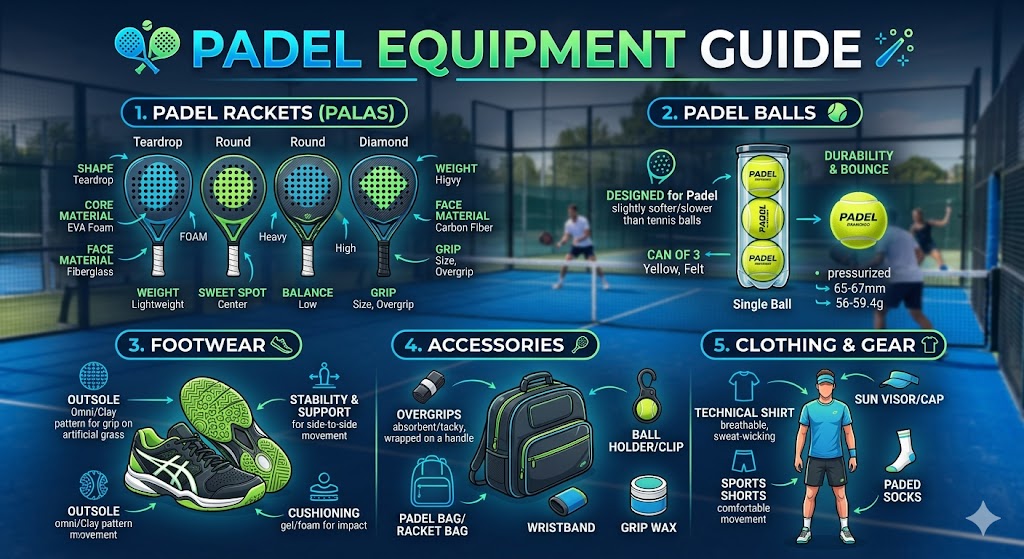
Padel Equipment Guide: Choosing the Right Racket, Balls, and Shoes
Padel has exploded in popularity across the world. The sport combines elements of tennis and squash while adding its own strategic twist through the use of walls and enclosed courts.
One reason padel attracts new players so quickly is the simplicity of its equipment. Unlike many sports, beginners do not need a large collection of gear to start playing.
However, choosing the right equipment can make a major difference in comfort, control, and performance.
Players who understand rackets, balls, shoes, and accessories will improve faster and enjoy the game more.
If you are completely new to the sport, begin with The Ultimate Beginner’s Guide to Padel: Rules, Equipment, Strategy, and How to Start Playing. That article explains how the game works and how beginners can get started quickly.
In this guide, we will focus specifically on padel equipment, including how to choose the right racket, what type of balls to use, and which shoes provide the best support on the court.
Understanding these pieces of equipment will help you play with confidence from your very first match.
The Essential Equipment for Padel
Padel equipment is refreshingly simple.
Most players only need a few core items:
- a padel racket
- padel balls
- court shoes
- comfortable athletic clothing
Optional accessories can improve convenience and performance, but these four items form the foundation of the game.
Because padel courts are enclosed and rallies often last longer than in tennis, equipment that provides control and comfort becomes extremely important.
Before buying gear, it also helps to understand how equipment interacts with the court itself. You can learn more about the court structure in Padel Court Layout and Dimensions: Understanding the Walls, Net, and Service Boxes.
Understanding the Padel Racket
The padel racket is the most important piece of equipment in the sport.
Unlike tennis rackets, padel rackets do not have strings. Instead, they feature a solid hitting surface with small holes drilled throughout the face.
This design provides control and durability while reducing vibration.
Most padel rackets measure:
- 45.5 cm maximum length
- 26 cm width
- 38 mm thickness
The compact design allows players to react quickly during fast rallies near the net.
The solid surface also provides better control when hitting angled shots or defensive returns.
Learning to use a padel racket effectively becomes much easier once players practice the techniques explained in Essential Padel Shots Every Beginner Should Learn.
The Three Main Racket Shapes
Padel rackets generally come in three shapes.
Each shape affects power, control, and balance.
Understanding these shapes can help beginners choose the right racket for their skill level.
Round Rackets
Round rackets emphasize control and forgiveness.
They feature a large sweet spot located near the center of the racket.
Because of this design, off-center hits still produce solid shots.
Round rackets are often recommended for beginners.
They help players develop consistency and accuracy.
Teardrop Rackets
Teardrop rackets provide a balance between power and control.
The sweet spot sits slightly higher on the racket face.
Intermediate players often prefer this shape because it offers versatility.
Teardrop rackets work well for players who want to attack while still maintaining control during defensive shots.
Diamond Rackets
Diamond-shaped rackets focus on maximum power.
The sweet spot sits near the top of the racket.
Advanced players often use these rackets for aggressive smashes and offensive play.
However, beginners may find diamond rackets harder to control.
For this reason, most new players start with round or teardrop designs.
Racket Weight
Racket weight also affects performance.
Most padel rackets weigh between:
- 340 grams
- 390 grams
Lighter rackets provide quicker reactions and easier maneuverability.
Heavier rackets deliver more power but require stronger arms and better technique.
Beginners usually perform best with rackets in the 360–370 gram range.
This weight offers a comfortable balance between power and control.
Racket Balance
Balance refers to where the racket’s weight is distributed.
There are three general balance types:
- low balance
- medium balance
- high balance
Low-balance rackets place more weight in the handle. These rackets feel easier to control.
Medium-balance rackets distribute weight evenly throughout the frame.
High-balance rackets concentrate weight near the head of the racket. This design produces stronger smashes but requires better technique.
Understanding balance helps players match their equipment with their playing style.
Strategic players who prefer control often choose low-balance rackets.
Aggressive players may prefer high-balance models.
These equipment choices become especially important when applying tactics discussed in Winning Padel Strategies: Positioning, Teamwork, and Shot Selection.
Racket Materials
Modern padel rackets use advanced materials that improve durability and performance.
Common materials include:
- fiberglass
- carbon fiber
- EVA foam cores
Fiberglass rackets provide flexibility and comfort.
Carbon fiber rackets deliver greater power and durability.
Inside the racket, manufacturers usually place an EVA foam core. This foam absorbs vibration and improves control.
Higher-end rackets often combine multiple materials to optimize performance.
Padel Balls
Padel balls look very similar to tennis balls.
However, they have slightly lower internal pressure.
This difference creates slower ball speeds and longer rallies.
The lower pressure also helps players maintain control during rebounds off the walls.
Most recreational players use standard padel balls approved by official organizations.
These balls provide consistent bounce and durability.
Because padel rallies can be intense, balls eventually lose pressure.
Many players replace them after several matches to maintain performance.
Understanding ball behavior also helps players anticipate rebounds from the court surfaces described in Padel Court Layout and Dimensions: Understanding the Walls, Net, and Service Boxes.
Choosing the Right Padel Shoes
Proper footwear is essential for safe movement on a padel court.
Players constantly change direction during rallies.
Quick starts, stops, and lateral movements occur throughout each point.
Shoes designed for court sports provide the traction needed for these movements.
Most padel players choose either:
- tennis shoes
- specialized padel shoes
Both options offer strong grip and lateral support.
However, padel shoes often include soles designed specifically for artificial turf courts.
These soles help players move confidently without slipping.
Shoe Features to Look For
When selecting padel shoes, several features matter most.
Traction
The outsole pattern should grip artificial turf effectively.
Good traction prevents slipping during sudden movements.
Lateral Support
Side-to-side movement occurs frequently in padel.
Shoes must stabilize the foot during quick directional changes.
Cushioning
Rallies can last a long time.
Comfortable cushioning reduces fatigue and protects joints.
Durability
Padel courts create friction between the shoe and the surface.
Durable materials help shoes last longer under these conditions.
Padel Clothing
Clothing for padel is simple and similar to other racket sports.
Most players wear:
- moisture-wicking shirts
- athletic shorts or skirts
- breathable socks
Comfort and mobility matter more than style.
Players should choose clothing that allows full freedom of movement.
Because padel involves quick reactions and constant movement, lightweight fabrics improve comfort during long matches.
Helpful Accessories
Several accessories can enhance the padel experience.
While not required, they often improve convenience and performance.
Common accessories include:
- overgrips
- racket bags
- wristbands
- protective eyewear
Overgrips help players maintain a secure hold on the racket.
Racket bags protect equipment and make transportation easier.
Wristbands help absorb sweat during long rallies.
These accessories can also reduce some of the common issues beginners face when starting the sport.
To learn more about early challenges players experience, review Common Padel Mistakes Beginners Make and How to Fix Them.
Choosing Equipment as a Beginner
New players often feel overwhelmed by equipment options.
Fortunately, beginners can keep things simple.
A good starting setup usually includes:
- a round or teardrop racket
- standard padel balls
- comfortable court shoes
This basic equipment allows players to learn the game without unnecessary complications.
As players gain experience, they can experiment with different racket shapes and weights.
Eventually, equipment choices may align with specific playing styles and strategies.
Equipment Maintenance
Proper maintenance extends the life of padel equipment.
Players should store rackets in protective cases to avoid damage.
Keeping rackets away from extreme heat also prevents structural issues.
Padel balls should remain in sealed containers when possible to maintain pressure.
Shoes should dry completely after matches to prevent odor and material breakdown.
These simple habits keep equipment in excellent condition.
Preparing for Competitive Play
As players improve, they may become interested in tournaments and leagues.
Competitive play often requires higher-quality equipment.
Players also begin experimenting with rackets that match their preferred strategies.
If you plan to compete, you can learn more about organized events in Padel Tournaments and Leagues: How Competitive Padel Works.
Competitive players often adjust equipment based on experience and match conditions.
Finding Courts to Use Your Equipment
Once you have the right gear, the next step is finding a place to play.
Padel facilities are expanding rapidly around the world.
Many tennis clubs now include padel courts.
New dedicated padel clubs also appear regularly.
If you want to locate courts or learn how they are constructed, explore How to Build or Find a Padel Court Near You.
Access to quality courts allows players to practice consistently and improve their skills.
Final Thoughts on Padel Equipment
Padel equipment remains simple compared with many sports.
However, choosing the right gear can greatly improve comfort, control, and performance.
A well-balanced racket helps players develop consistent shots.
Quality shoes provide stability and safety during fast rallies.
Meanwhile, proper balls ensure predictable bounce and enjoyable gameplay.
When players combine good equipment with practice, their skills develop quickly.
Understanding equipment also helps beginners feel more confident on the court.
As experience grows, players can experiment with different gear to refine their playing style.
Continue Learning About Padel
Explore the rest of the padel learning series:
The Ultimate Beginner’s Guide to Padel: Rules, Equipment, Strategy, and How to Start Playing
Official Padel Rules Explained: Court Dimensions, Serving, and Gameplay
Padel Court Layout and Dimensions: Understanding the Walls, Net, and Service Boxes
Essential Padel Shots Every Beginner Should Learn
Winning Padel Strategies: Positioning, Teamwork, and Shot Selection
Common Padel Mistakes Beginners Make and How to Fix Them
How to Build or Find a Padel Court Near You
Padel Tournaments and Leagues: How Competitive Padel Works