
What Makes an Olympic Champion Mentally Tough
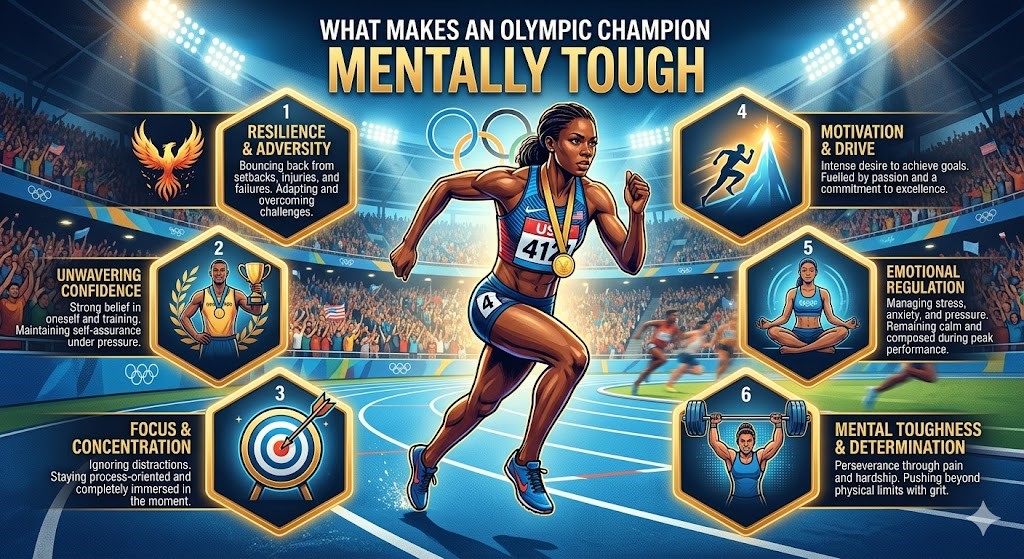
What Makes an Olympic Champion Mentally Tough
Mental toughness separates Olympic champions from the rest of the field. At the highest level of sport, physical ability is no longer enough. Every athlete is fast, strong, and highly skilled. The difference comes down to mindset. It shows up in pressure moments, in preparation, and in how athletes respond when things go wrong.
The Olympic Games represent the ultimate test. Years of work come down to a single performance. There are no second chances. Because of this, mental toughness becomes the defining factor between winning a medal and going home empty-handed.
The Ability to Perform Under Extreme Pressure
Olympic champions thrive under pressure. While others feel overwhelmed, they remain composed.
Pressure at the Olympics is unlike anything else. The world is watching. Expectations are massive. The stakes are career-defining.
Athletes like Michael Phelps built their legacy on performing in these moments. Race after race, he delivered when it mattered most.
This ability does not happen by accident. It comes from years of mental conditioning. Athletes train their minds just as much as their bodies.
They learn to focus on the task rather than the outcome. They block out distractions. And most importantly, they trust their preparation.
Relentless Focus and Concentration
Focus is a cornerstone of mental toughness.
Olympic champions maintain concentration even in chaotic environments. Noise, crowds, and expectations do not break their attention.
Instead, they narrow their focus to the present moment.
For example, Simone Biles demonstrates incredible focus during routines that last only seconds. One small mistake can cost everything. Yet she performs with precision and confidence.
This level of concentration requires discipline. Athletes train their minds to stay locked in, regardless of external factors.
Over time, this focus becomes automatic.
Resilience in the Face of Failure
Failure is part of every athlete’s journey.
Even Olympic champions face setbacks. Injuries, losses, and disappointing performances are common.
What separates them is how they respond.
Take Allyson Felix as an example. She faced challenges throughout her career but continued to adapt and succeed at the highest level.
Resilience allows athletes to recover quickly. They learn from mistakes instead of dwelling on them.
This mindset turns setbacks into opportunities for growth.
Without resilience, long-term success is impossible.
Confidence Built Through Preparation
Confidence is not just belief. It is built through preparation.
Olympic champions prepare relentlessly. They repeat drills, refine techniques, and simulate competition conditions.
This preparation creates trust.
When the moment arrives, they do not hesitate. They rely on what they have practiced thousands of times.
Confidence allows athletes to perform freely. It removes doubt and enables peak performance.
However, this confidence is earned. It comes from doing the work consistently over time.
Emotional Control and Composure
Emotions run high at the Olympics.
Excitement, nerves, and pressure can overwhelm even the most experienced athletes.
Mentally tough competitors manage these emotions effectively.
They do not suppress feelings completely. Instead, they control how those emotions impact performance.
For instance, Novak Djokovic is known for his ability to stay composed during intense matches. He channels emotion into focus rather than distraction.
This emotional control allows athletes to stay steady in critical moments.
It also prevents small mistakes from turning into major problems.
The Power of Visualization
Visualization is a powerful mental tool used by Olympic champions.
Athletes mentally rehearse their performance before it happens. They picture every movement, every detail, and every possible scenario.
This practice builds familiarity.
When the real moment arrives, it feels like something they have already experienced.
Visualization also helps athletes prepare for challenges. They imagine overcoming obstacles and executing under pressure.
This mental rehearsal strengthens confidence and reduces anxiety.
Over time, it becomes a key part of their preparation routine.
Goal Setting and Long-Term Vision
Olympic success does not happen overnight.
Athletes set long-term goals and break them into smaller, manageable steps.
This process keeps them motivated and focused.
Each milestone represents progress. Each achievement builds momentum.
For example, Usain Bolt followed a clear path from junior competitions to Olympic dominance.
This structured approach helps athletes stay committed over years of training.
It also provides direction during difficult times.
Without clear goals, maintaining motivation becomes much harder.
Handling Expectations and External Pressure
Olympic athletes face enormous expectations.
Fans, media, and even their own countries place pressure on them to succeed.
Mentally tough athletes manage this external pressure effectively.
They focus on what they can control.
Instead of worrying about public opinion, they concentrate on preparation and execution.
This mindset reduces distractions and keeps attention on performance.
It also allows athletes to enjoy the experience rather than fear it.
Adaptability in Unpredictable Situations
No competition goes exactly as planned.
Conditions change. Opponents perform unexpectedly. Mistakes happen.
Olympic champions adapt quickly.
They adjust strategies, stay flexible, and remain calm under changing circumstances.
For instance, Katie Ledecky has demonstrated the ability to adjust race strategies based on competition.
This adaptability is a key component of mental toughness.
It allows athletes to stay competitive regardless of the situation.
Discipline and Consistency
Mental toughness is built through daily habits.
Olympic champions maintain discipline in training, nutrition, and recovery.
They show up every day, even when motivation is low.
Consistency creates progress.
Over time, these habits build a strong foundation.
This discipline also reinforces confidence. Athletes know they have done the work.
As a result, they are prepared for the biggest moments.
The Role of Support Systems
While mental toughness is often seen as an individual trait, support systems play a major role.
Coaches, teammates, and family provide guidance and encouragement.
They help athletes stay grounded and focused.
A strong support system also helps athletes manage stress.
It provides perspective during challenging times.
Even the most mentally tough athletes rely on others.
This balance strengthens their overall mindset.
Learning to Embrace Pressure
Many athletes fear pressure. Olympic champions embrace it.
They see pressure as an opportunity rather than a threat.
This shift in perspective changes everything.
Instead of feeling overwhelmed, they feel energized.
They understand that pressure comes with importance. It means the moment matters.
This mindset allows them to perform at their best when it counts.
Recovery and Mental Reset
Mental toughness also involves recovery.
Athletes must reset after both success and failure.
Dwelling too long on either can be harmful.
After a win, they stay focused on future goals. After a loss, they learn and move forward.
This ability to reset keeps them balanced.
It also prevents burnout over long careers.
Recovery is not just physical. It is mental as well.
Why Mental Toughness Defines Olympic Champions
When you combine all these elements, the importance of mental toughness becomes clear.
Olympic champions are not just physically gifted. They are mentally prepared.
They perform under pressure, stay focused, recover from setbacks, and adapt and grow.
These qualities create a competitive edge.
At the Olympic level, that edge makes all the difference.
Final Thoughts
If you want to understand what makes an Olympic champion, look beyond physical ability.
Watch how athletes handle pressure. Notice their focus, resilience, and composure.
These traits reveal the true difference.
The Olympic Games are the ultimate test of both body and mind.
And in that arena, mental toughness is the deciding factor.
It turns great athletes into champions.