
The Ultimate Beginner’s Guide to Wiffle Ball
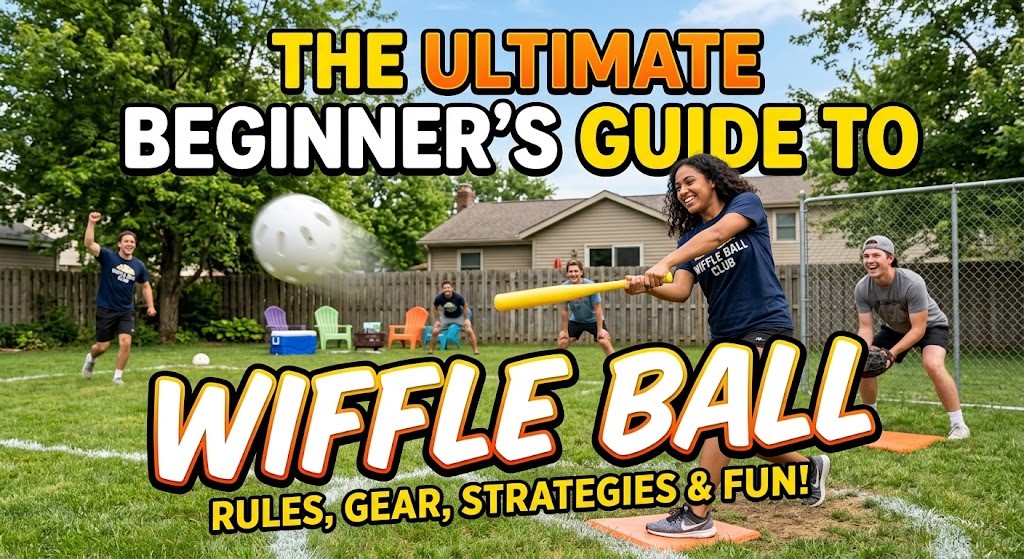
The Ultimate Beginner’s Guide to Wiffle Ball: Rules, Equipment, Backyard Setup, and Winning Strategies
Wiffle Ball is one of the most iconic backyard sports in America. It combines the excitement of baseball with a simplified setup that allows players of all ages to participate.
Unlike traditional baseball, Wiffle Ball requires minimal equipment, limited space, and fewer players. As a result, it has become a favorite activity for families, friends, and neighborhood competitions.
Over the years, Wiffle Ball has evolved from a casual backyard game into an organized sport with leagues, tournaments, and dedicated communities.
However, many beginners still feel unsure about how to start.
They may wonder:
- What are the official rules?
- What equipment do you need?
- How do you throw those crazy curveballs?
- Can you actually play competitively?
This guide answers all of those questions.
In this complete beginner’s guide, you will learn:
- the rules of Wiffle Ball
- the equipment required to play
- how to set up a field in your backyard
- essential pitching and hitting techniques
- strategies to win games
If you are new to the sport or looking to improve your game, this guide will give you everything you need to start playing confidently.
What Is Wiffle Ball?
Wiffle Ball is a variation of baseball designed for small spaces and casual play.
The game uses a lightweight plastic ball with holes on one side. This unique design allows players to throw pitches that curve dramatically, even at low speeds.
Because of this, pitching becomes one of the most exciting parts of the game.
The bat is also made of plastic, which makes hitting more accessible for beginners.
Wiffle Ball can be played almost anywhere:
- backyards
- parks
- driveways
- beaches
This flexibility has helped the sport grow in popularity for decades.
To fully understand how the game works, you should review Official Wiffle Ball Rules Explained: Gameplay, Scoring, and Outs.
Why Wiffle Ball Is So Popular
Wiffle Ball continues to thrive because it removes many barriers associated with traditional baseball.
First, it requires very little equipment.
Second, it does not need a full team to play.
Third, the game is easy to learn.
These factors make Wiffle Ball ideal for beginners.
In addition, the sport encourages creativity.
Players often develop their own house rules, field layouts, and scoring systems.
This flexibility keeps the game fresh and exciting.
Basic Rules of Wiffle Ball
Although backyard rules can vary, most games follow a consistent structure.
Each team takes turns batting and fielding.
The goal is to score more runs than the opposing team.
A typical game includes:
- innings (often 3 to 9)
- strikes and balls
- outs
- base running
However, Wiffle Ball often simplifies certain aspects of baseball.
For example, many games use imaginary bases instead of physical ones.
Pitchers may also serve as the only defensive player.
Because rules can vary, it is important to understand the standard format.
You can explore this in detail in Official Wiffle Ball Rules Explained: Gameplay, Scoring, and Outs.
Equipment You Need to Play
Wiffle Ball requires only a few pieces of equipment.
This simplicity makes it one of the most accessible sports available.
The essential items include:
- a Wiffle Ball
- a plastic bat
- a playing area
The Wiffle Ball itself features a unique design with perforations on one side. These holes allow pitchers to create curveballs, sliders, and other movement-based pitches.
The bat is lightweight and easy to swing, which helps beginners make contact.
Some players also use strike zone targets or markers.
To choose the best gear, read Wiffle Ball Equipment Guide: Bats, Balls, and Backyard Essentials.
Setting Up a Wiffle Ball Field
One of the best aspects of Wiffle Ball is its flexibility.
You can create a field almost anywhere.
Most backyard fields include:
- a home plate area
- a strike zone target
- boundaries for hits
Players often use fences, trees, or cones to define the playing area.
Distances can vary depending on available space.
For example:
- shorter distances for small yards
- longer distances for parks
Some players even build custom Wiffle Ball stadiums.
If you want to create your own setup, check out How to Set Up a Wiffle Ball Field in Your Backyard.
Understanding Wiffle Ball Pitching
Pitching is the most unique and exciting part of Wiffle Ball.
Because of the ball’s design, pitchers can create dramatic movement.
Even beginners can throw curveballs with practice.
Common pitch types include:
- curveballs
- sliders
- risers
- drop balls
Pitchers control movement by adjusting how they grip and release the ball.
Mastering these techniques can make it very difficult for hitters to make contact.
To improve your pitching, study How to Throw Wiffle Ball Pitches: Curveballs, Sliders, and More.
Hitting Basics for Beginners
Hitting in Wiffle Ball requires timing, patience, and control.
Because pitches can move unpredictably, hitters must stay focused and disciplined.
Beginners often struggle with swinging too early or chasing bad pitches.
Instead, successful hitters wait for pitches they can handle.
They also focus on making solid contact rather than swinging for power.
Practicing these fundamentals will improve your consistency.
You can learn more in Wiffle Ball Hitting Tips: How to Improve Contact and Power.
Fielding and Defense
In many Wiffle Ball games, defense looks very different from traditional baseball.
Some formats use only one fielder (the pitcher).
Others include multiple fielders depending on the number of players.
Defensive players must react quickly to hits.
Because the ball is lightweight, it can bounce and roll unpredictably.
Strong communication also helps teams avoid mistakes.
To understand positioning and defensive play, read Wiffle Ball Fielding and Defense: Positioning and Strategy.
Basic Strategies to Win Games
Wiffle Ball is not just about hitting and pitching.
Strategy plays a major role in winning games.
For example:
- pitchers must mix up their pitches
- hitters should avoid chasing bad balls
- teams should adapt to their playing environment
Good decision-making often determines the outcome of close games.
Players who think strategically gain a clear advantage.
You can explore these concepts in Winning Wiffle Ball Strategies: Pitching, Hitting, and Game Tactics.
Common Beginner Mistakes
Every new player makes mistakes.
However, recognizing these mistakes can speed up improvement.
Common errors include:
- swinging at every pitch
- throwing the ball too hard
- ignoring field positioning
- using poor technique
Fortunately, these mistakes are easy to fix with practice.
Learning what to avoid can help beginners improve quickly.
You can find detailed solutions in Common Wiffle Ball Mistakes Beginners Make and How to Fix Them.
Playing Wiffle Ball Competitively
While many people play Wiffle Ball casually, competitive leagues and tournaments also exist.
These organized events follow structured rules and formats.
Players compete in teams and often travel to different locations.
Competitive Wiffle Ball emphasizes skill, strategy, and consistency.
Some tournaments even attract large audiences.
If you are interested in organized play, explore Wiffle Ball Leagues and Tournaments: How Competitive Play Works.
Benefits of Playing Wiffle Ball
Wiffle Ball offers several benefits beyond entertainment.
First, it provides a fun way to stay active.
Second, it encourages social interaction.
Third, it helps develop coordination and timing.
Because the game is easy to learn, players of all ages can participate.
Families often play together, creating lasting memories.
This accessibility makes Wiffle Ball a lifelong activity.
Tips for Getting Started
Starting Wiffle Ball is simple.
Follow these steps:
- gather basic equipment
- choose a playing area
- review basic rules
- invite friends or family
- start playing
Do not worry about perfection.
Focus on having fun and learning the game.
As you gain experience, your skills will improve naturally.
Final Thoughts on Learning Wiffle Ball
Wiffle Ball remains one of the most enjoyable and accessible sports available.
Its simplicity allows beginners to start playing immediately.
At the same time, the game offers depth through pitching, strategy, and competition.
Whether you play casually in your backyard or compete in organized leagues, Wiffle Ball provides endless opportunities for fun and improvement.
By learning the basics, practicing regularly, and avoiding common mistakes, you can quickly become a confident player.
Continue Learning About Wiffle Ball
Explore the full Wiffle Ball learning series:
Official Wiffle Ball Rules Explained: Gameplay, Scoring, and Outs
Wiffle Ball Equipment Guide: Bats, Balls, and Backyard Essentials
How to Set Up a Wiffle Ball Field in Your Backyard
How to Throw Wiffle Ball Pitches: Curveballs, Sliders, and More
Wiffle Ball Hitting Tips: How to Improve Contact and Power
Wiffle Ball Fielding and Defense: Positioning and Strategy
Winning Wiffle Ball Strategies: Pitching, Hitting, and Game Tactics
Common Wiffle Ball Mistakes Beginners Make and How to Fix Them
Wiffle Ball Leagues and Tournaments: How Competitive Play Works



9 Responses
[…] you are just learning the sport, begin with The Ultimate Beginner’s Guide to Wiffle Ball: Rules, Equipment, Backyard Setup, and Winning Strate…. That parent guide provides the foundation you need before moving into organized […]
[…] you are new to the game, begin with The Ultimate Beginner’s Guide to Wiffle Ball: Rules, Equipment, Backyard Setup, and Winning Strate…. That guide covers the fundamentals you need before focusing on […]
[…] you are new to the sport, begin with The Ultimate Beginner’s Guide to Wiffle Ball: Rules, Equipment, Backyard Setup, and Winning Strate…. That article covers the fundamentals you need before diving into advanced […]
[…] you are new to the sport, start with The Ultimate Beginner’s Guide to Wiffle Ball: Rules, Equipment, Backyard Setup, and Winning Strate…. That guide gives you a complete foundation for understanding the […]
[…] you are just getting started, begin with The Ultimate Beginner’s Guide to Wiffle Ball: Rules, Equipment, Backyard Setup, and Winning Strate…. That guide provides a complete foundation for the […]
[…] you are new to the game, start with The Ultimate Beginner’s Guide to Wiffle Ball: Rules, Equipment, Backyard Setup, and Winning Strate…. That guide explains the basics and helps you get […]
[…] you are just starting, begin with The Ultimate Beginner’s Guide to Wiffle Ball: Rules, Equipment, Backyard Setup, and Winning Strate…. That guide explains how the game works and how beginners can get started […]
[…] you are new to the sport, begin with The Ultimate Beginner’s Guide to Wiffle Ball: Rules, Equipment, Backyard Setup, and Winning Strate…. That guide introduces the basics and helps you get started […]
[…] you are new to the sport, start with The Ultimate Beginner’s Guide to Wiffle Ball: Rules, Equipment, Backyard Setup, and Winning Strate…. That guide covers everything from rules to […]