
Wiffle Ball Hitting Tips: How to Improve Contact and Power
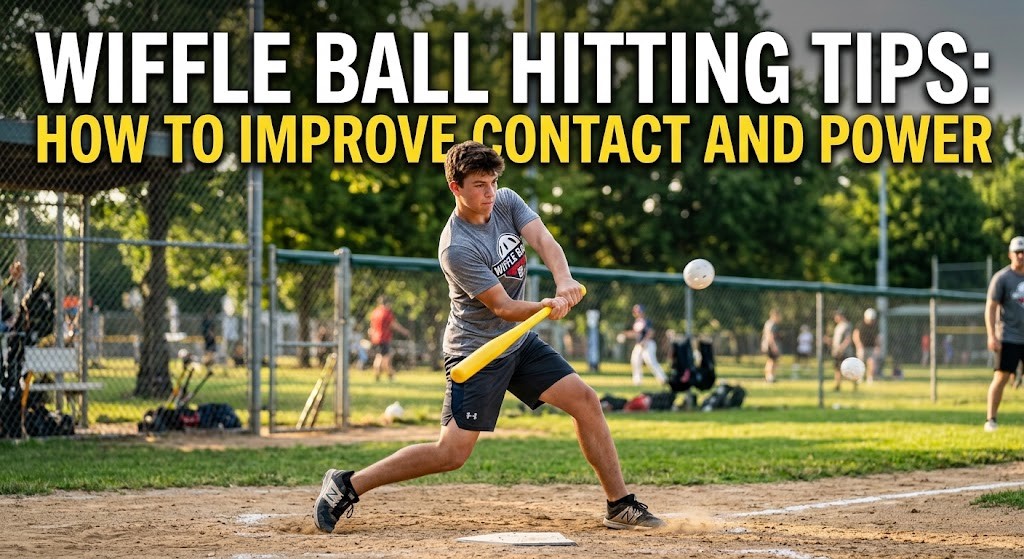
Wiffle Ball Hitting Tips: How to Improve Contact and Power
Hitting a Wiffle Ball may look easy at first. After all, the ball is lightweight, and the bat is simple to swing.
However, once you step into the batter’s box, things quickly change.
The ball curves, drops, rises, and moves in unpredictable ways. Timing becomes difficult. Solid contact becomes rare.
As a result, many beginners struggle to hit consistently.
The good news is that hitting in Wiffle Ball is a skill you can develop with the right approach.
If you are just getting started, begin with The Ultimate Beginner’s Guide to Wiffle Ball: Rules, Equipment, Backyard Setup, and Winning Strategies. That guide provides a complete foundation for the game.
In this article, you will learn how to improve your Wiffle Ball hitting, increase contact, and develop more power at the plate.
Why Hitting a Wiffle Ball Is Challenging
Wiffle Ball hitting differs significantly from baseball or softball.
The biggest challenge is movement.
Because of the ball’s design, pitches can:
- curve sharply
- drop suddenly
- rise unexpectedly
This movement forces hitters to react quickly.
Timing becomes more important than strength.
Understanding how pitches move can help you prepare.
You can study pitching techniques in How to Throw Wiffle Ball Pitches: Curveballs, Sliders, and More.
Building a Proper Batting Stance
A strong stance provides the foundation for good hitting.
Without balance, it becomes difficult to react to pitches.
Feet Position
Stand with your feet shoulder-width apart.
Keep your weight evenly distributed.
This helps maintain balance throughout your swing.
Body Alignment
Face the pitcher with a slight angle.
Avoid standing too open or too closed.
A natural position allows better movement.
Grip on the Bat
Hold the bat firmly but not too tight.
A relaxed grip improves swing speed.
Too much tension can slow your swing.
Keeping Your Eyes on the Ball
Vision plays a major role in hitting.
You must track the ball from the pitcher’s hand to the plate.
Focus on Release Point
Watch the pitcher’s hand closely.
This helps you identify the type of pitch early.
Follow the Ball
Keep your eyes on the ball throughout its flight.
Do not look away during your swing.
Consistent tracking improves contact.
Timing Your Swing
Timing is one of the most important skills in Wiffle Ball.
Swing too early, and you miss.
Swing too late, and you miss again.
Start Your Swing Early
Because Wiffle Ball pitches move unpredictably, you need to react quickly.
Begin your swing slightly earlier than you would in baseball.
Adjust Mid-Swing
Be ready to adjust your swing as the ball moves.
This flexibility increases your chances of making contact.
Making Solid Contact
Contact is the first goal for any hitter.
Without contact, power does not matter.
Focus on the Sweet Spot
Try to hit the ball with the center of the bat.
This produces better results.
Shorten Your Swing
A shorter swing improves control.
Long swings often lead to missed pitches.
Stay Balanced
Balance helps you make consistent contact.
Avoid lunging or overreaching.
Developing Power
Once you can make consistent contact, you can focus on power.
Power in Wiffle Ball comes from technique, not strength.
Use Your Lower Body
Generate power from your legs and hips.
Rotate your body as you swing.
This creates more force.
Follow Through
A complete follow-through adds distance to your hits.
Do not stop your swing early.
Swing with Confidence
Confidence leads to better swings.
Hesitation often results in weak contact.
Hitting Different Types of Pitches
To become a strong hitter, you must handle different pitches.
Each pitch requires a slightly different approach.
Hitting Curveballs
Curveballs move sideways.
To hit them:
- track the ball carefully
- wait slightly longer
- adjust your swing path
Hitting Risers
Risers appear to rise as they approach the plate.
To hit them:
- swing slightly higher
- avoid swinging under the ball
Hitting Drop Balls
Drop balls fall quickly.
To hit them:
- swing downward slightly
- stay patient
Improving Plate Discipline
Plate discipline means knowing when to swing.
Not every pitch is worth hitting.
Avoid Chasing Bad Pitches
Swinging at bad pitches leads to poor results.
Wait for pitches you can handle.
Recognize the Strike Zone
Understanding the strike zone helps you make better decisions.
You can learn more in Official Wiffle Ball Rules Explained: Gameplay, Scoring, and Outs.
Practice Drills for Better Hitting
Practice is essential for improvement.
Simple drills can make a big difference.
Soft Toss Drill
Have someone toss the ball gently.
Focus on making clean contact.
Target Practice
Aim for specific areas of the field.
This improves accuracy and control.
Repetition
Practice regularly.
Repetition builds muscle memory.
A proper setup makes practice easier.
Learn more in How to Set Up a Wiffle Ball Field in Your Backyard (Dimensions and Layout Tips).
Adjusting to Different Field Sizes
Field size can affect hitting strategy.
Small Fields
In smaller fields:
- focus on contact
- aim for placement
- avoid overswinging
Large Fields
In larger fields:
- use full swings
- aim for distance
- take advantage of open space
Understanding field layout helps you adapt your approach.
Common Hitting Mistakes
Many beginners make similar mistakes.
These errors can limit performance.
Swinging Too Hard
Trying to hit the ball too hard often leads to misses.
Focus on control instead.
Poor Timing
Bad timing results in weak contact.
Work on recognizing pitches earlier.
Lack of Practice
Without practice, improvement is slow.
Consistency is key.
You can fix these issues by studying Common Wiffle Ball Mistakes Beginners Make and How to Fix Them.
Using Strategy at the Plate
Hitting is not just about mechanics.
Strategy plays a major role.
Anticipate the Pitch
Think about what the pitcher might throw.
This gives you an advantage.
Adjust During the Game
If a pitcher favors certain pitches, adapt your approach.
Flexibility leads to success.
Work with Your Team
Communication improves overall performance.
Share observations with teammates.
You can learn more in Winning Wiffle Ball Strategies: Pitching, Hitting, and Game Tactics.
Confidence and Mental Approach
Hitting requires a strong mindset.
Confidence helps you stay focused.
Stay Positive
Do not get discouraged by misses.
Every hitter struggles at times.
Focus on Improvement
Set small goals.
Work on one skill at a time.
Enjoy the Game
Having fun improves performance.
Relax and play with confidence.
Preparing for Competitive Play
In competitive Wiffle Ball, hitting becomes more challenging.
Pitchers use advanced techniques.
Games become more strategic.
Practice Under Pressure
Simulate game situations during practice.
This prepares you for real competition.
Study Opponents
Learn pitcher tendencies.
This helps you anticipate pitches.
Stay Consistent
Consistency is key in competitive play.
If you want to compete, read Wiffle Ball Leagues and Tournaments: How Competitive Play Works.
How Hitting Connects to Defense
Strong hitting puts pressure on the defense.
Good hitters force fielders to make plays.
Understanding defense can also improve hitting.
Learn more in Wiffle Ball Fielding and Defense: Positioning and Strategy.
Final Thoughts on Wiffle Ball Hitting
Hitting a Wiffle Ball takes practice, patience, and the right approach.
Focus on:
- balance
- timing
- contact
- controlled power
Start with the basics.
Then build your skills step by step.
With time and effort, you will become a more consistent and confident hitter.
Continue Learning About Wiffle Ball
Explore the rest of the Wiffle Ball series:
Official Wiffle Ball Rules Explained: Gameplay, Scoring, and Outs
Wiffle Ball Equipment Guide: Bats, Balls, and Backyard Essentials
How to Set Up a Wiffle Ball Field in Your Backyard (Dimensions and Layout Tips)
How to Throw Wiffle Ball Pitches: Curveballs, Sliders, and More
Wiffle Ball Fielding and Defense: Positioning and Strategy
Winning Wiffle Ball Strategies: Pitching, Hitting, and Game Tactics
Common Wiffle Ball Mistakes Beginners Make and How to Fix Them
Wiffle Ball Leagues and Tournaments: How Competitive Play Works