
How to Set Up a Wiffle Ball Field in Your Backyard
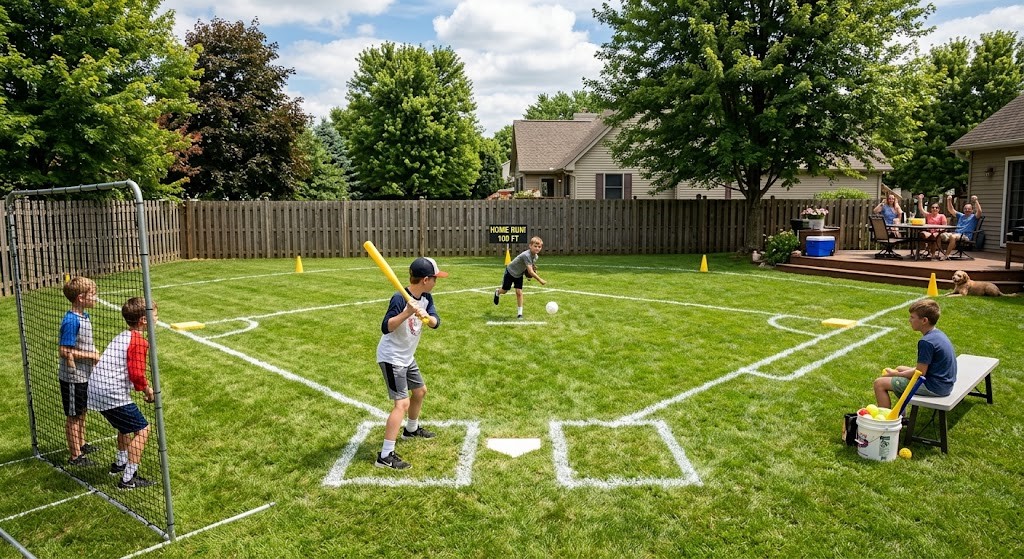
How to Set Up a Wiffle Ball Field in Your Backyard (Dimensions and Layout Tips)
One of the biggest reasons Wiffle Ball has remained popular for generations is its flexibility. You do not need a professional stadium or a perfectly measured diamond to play.
Instead, you can create a fun and competitive field almost anywhere.
Backyards, parks, driveways, and open lots all work well. With a little creativity, you can design a field that fits your available space while still delivering an authentic playing experience.
However, many beginners struggle with setup.
They often ask:
- How big should a Wiffle Ball field be?
- Where should I place the strike zone?
- Do I need real bases?
- How do I make the game fair?
The good news is that setting up a Wiffle Ball field is simple once you understand the basics.
If you are new to the sport, start with The Ultimate Beginner’s Guide to Wiffle Ball: Rules, Equipment, Backyard Setup, and Winning Strategies. That guide covers everything from rules to gameplay.
In this article, we will walk through how to set up a Wiffle Ball field in your backyard, including dimensions, layout ideas, and customization tips.
Why Field Setup Matters
Field setup plays a major role in how the game feels.
A well-designed field improves:
- gameplay flow
- fairness
- safety
- overall enjoyment
On the other hand, a poorly designed field can lead to confusion and frustration.
For example, unclear boundaries may cause arguments about scoring.
Similarly, uneven layouts can give one team an unfair advantage.
Therefore, taking time to plan your field is worth the effort.
Choosing the Right Location
The first step is selecting a location.
Most players use backyards, but other spaces can work just as well.
When choosing a location, consider:
- available space
- surface type
- obstacles
- safety
Flat areas work best because they allow consistent ball movement.
Grass surfaces are ideal, but dirt or pavement can also work.
Make sure the area is free from hazards such as rocks or sharp objects.
Safety should always come first.
Understanding Wiffle Ball Field Dimensions
Unlike baseball, Wiffle Ball does not require fixed dimensions.
However, most fields follow general guidelines.
Typical backyard dimensions include:
- pitching distance: 35–45 feet
- home run distance: 70–100 feet
- field width: 60–90 feet
These measurements can be adjusted based on available space.
Smaller yards may require shorter distances.
Larger areas can support more expansive layouts.
Consistency matters more than exact measurements.
Setting Up Home Plate and Pitching Area
The most important part of the field is the area around home plate.
This is where every play begins.
Home Plate Placement
Home plate should be positioned in a central location.
Players often use:
- rubber mats
- plastic plates
- painted markers
The exact material does not matter as long as it is visible.
Pitching Distance
The pitching mound should be placed directly in front of home plate.
A distance of 35–45 feet works well for most games.
Shorter distances make hitting more challenging.
Longer distances give hitters more reaction time.
Players should agree on the distance before the game begins.
Understanding how pitching works becomes easier after reading How to Throw Wiffle Ball Pitches: Curveballs, Sliders, and More.
Creating a Strike Zone
Most Wiffle Ball games use a strike zone target instead of a catcher.
This target helps determine balls and strikes.
Common options include:
- plastic boards
- folding chairs
- strike zone nets
- custom-built frames
The strike zone should be placed directly behind home plate.
It should be large enough to allow consistent pitching.
Learning how the strike zone affects gameplay is explained in Official Wiffle Ball Rules Explained: Gameplay, Scoring, and Outs.
Defining Field Boundaries
Boundaries are essential for scoring and gameplay.
Without clear boundaries, players may disagree on whether a hit counts as a single, double, or home run.
Outfield Boundaries
Players often use natural features or markers to define the outfield.
Examples include:
- fences
- trees
- cones
- chalk lines
You can create zones for different hit types.
For example:
- short hits = singles
- mid-range hits = doubles
- deep hits = triples or home runs
Foul Lines
Foul lines extend from home plate outward.
These lines define the playable area.
Balls hit outside these lines count as foul balls.
You can mark foul lines using cones, ropes, or chalk.
Ground Rules
Every field should include ground rules.
These rules define how specific situations are handled.
For example:
- hitting a fence may count as a double
- hitting over a fence may count as a home run
- hitting certain obstacles may result in an out
Clear ground rules prevent confusion during the game.
Deciding on Bases
Wiffle Ball games may or may not include physical bases.
Imaginary Bases
Many backyard games use imaginary bases.
In this format, players do not run physically.
Instead, hits automatically result in base advancement.
This method simplifies the game and works well in small spaces.
Physical Bases
Some players prefer using actual bases.
These can include:
- rubber bases
- cones
- mats
Physical bases add realism but require more space.
They also increase the complexity of the game.
Adding Fielding Positions
The number of fielders depends on how many players you have.
Single Fielder Setup
In small games, the pitcher may be the only defender.
This format keeps the game simple and fast-paced.
Multiple Fielders
Larger games may include:
- infielders
- outfielders
Players should spread out to cover key areas.
Proper positioning improves defensive performance.
You can learn more in Wiffle Ball Fielding and Defense: Positioning and Strategy.
Adjusting for Small Spaces
Not everyone has access to a large backyard.
Fortunately, Wiffle Ball adapts easily to smaller spaces.
Short Field Adjustments
For smaller areas:
- reduce pitching distance
- shorten home run distance
- limit field width
These adjustments keep the game balanced.
Indoor Setup Options
Some players set up Wiffle Ball fields indoors.
This requires:
- soft balls
- smaller boundaries
- minimal obstacles
Indoor play can be a fun alternative during bad weather.
Customizing Your Field
One of the best aspects of Wiffle Ball is customization.
Players often create unique fields that reflect their environment.
Adding Obstacles
Objects such as trees or fences can become part of the game.
For example:
- hitting a tree may count as a double
- bouncing off a wall may remain in play
These features add creativity and excitement.
Creating Stadium-Style Fields
Some enthusiasts build elaborate backyard stadiums.
These fields may include:
- fences
- dugouts
- scoreboards
- seating areas
While not necessary, these additions enhance the experience.
Equipment for Field Setup
Basic equipment can improve your field setup.
Examples include:
- cones for boundaries
- chalk for lines
- nets for backstops
- markers for bases
To choose the right equipment, read Wiffle Ball Equipment Guide: Bats, Balls, and Backyard Essentials.
Safety Considerations
Safety should always be a priority.
Before starting a game:
- remove hazards from the field
- ensure enough space between players
- establish safe boundaries
These steps reduce the risk of injury.
Strategy and Field Design
Field design can influence strategy.
For example:
- smaller fields favor hitters
- larger fields favor pitchers
- narrow fields increase foul balls
Understanding these factors helps players adjust their approach.
You can explore strategic concepts in Winning Wiffle Ball Strategies: Pitching, Hitting, and Game Tactics.
Avoiding Common Setup Mistakes
Beginners often make simple setup errors.
These mistakes can affect gameplay.
Common issues include:
- unclear boundaries
- inconsistent pitching distance
- poorly placed strike zones
Fortunately, these problems are easy to fix.
You can learn more in Common Wiffle Ball Mistakes Beginners Make and How to Fix Them.
Preparing for Competitive Play
If you plan to host organized games or tournaments, consistency becomes even more important.
Competitive play often requires:
- clearly defined dimensions
- standardized rules
- organized field layouts
These elements create fair competition.
To learn more, read Wiffle Ball Leagues and Tournaments: How Competitive Play Works.
Final Thoughts on Backyard Wiffle Ball Fields
Setting up a Wiffle Ball field is simple, flexible, and fun.
You do not need perfect dimensions or expensive equipment.
Instead, focus on creating a balanced and enjoyable playing environment.
Choose a safe location.
Define clear boundaries.
Establish consistent rules.
With these steps, you can create a field that provides hours of entertainment.
Whether you play casually with friends or host competitive games, a well-designed field enhances the experience.
Continue Learning About Wiffle Ball
Explore the rest of the Wiffle Ball series:
Official Wiffle Ball Rules Explained: Gameplay, Scoring, and Outs
Wiffle Ball Equipment Guide: Bats, Balls, and Backyard Essentials
How to Throw Wiffle Ball Pitches: Curveballs, Sliders, and More
Wiffle Ball Hitting Tips: How to Improve Contact and Power
Wiffle Ball Fielding and Defense: Positioning and Strategy
Winning Wiffle Ball Strategies: Pitching, Hitting, and Game Tactics
Common Wiffle Ball Mistakes Beginners Make and How to Fix Them
Wiffle Ball Leagues and Tournaments: How Competitive Play Works



1 Response
[…] For a complete breakdown of setup options, read How to Set Up a Wiffle Ball Field in Your Backyard (Dimensions and Layout Tips). […]