
How to Get Better at Rock Climbing
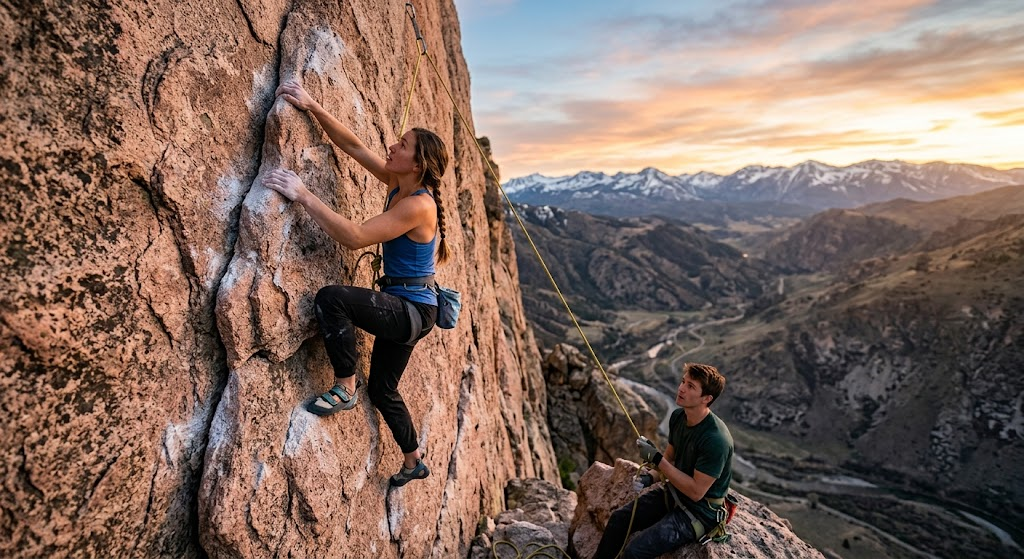
How to Get Better at Rock Climbing: Training, Strength, Endurance, Flexibility, and Practice
Rock climbing is one of those sports where improvement can be both exciting and frustrating. You may feel noticeably stronger after only a few weeks, suddenly climb a route that once seemed impossible, or discover that a problem you failed ten times yesterday feels surprisingly easy today.
Then, just as quickly, progress can seem to stop.
You climb regularly. You work hard. You get stronger. Yet the grades do not seem to move.
The good news is that climbing improvement is rarely about simply working harder. Becoming a better climber involves developing several different abilities at the same time: climbing technique, finger strength, pulling strength, body tension, endurance, mobility, coordination, route-reading ability, confidence, and mental resilience.
It also requires something that many beginners overlook: recovery.
Training too little can slow your progress, but training too much can do the same thing—and may increase your risk of injury.
The goal is not to become exhausted every time you climb. The goal is to give your body and your climbing skills the right challenges, recover from them, and gradually become capable of doing things that were previously beyond your ability.
This guide explains how to structure that process.
If you are completely new to climbing, start with Rock Climbing for Beginners: How to Start, What to Expect, and Your First Climbing Experience before building a serious training program. If you already understand the basics, this article can help you turn regular climbing sessions into a more purposeful path toward improvement.
What Actually Makes a Rock Climber Better?
One of the biggest mistakes beginners make is assuming climbing improvement is primarily about getting stronger.
Strength certainly matters. But climbing performance is much more complicated.
A climber might have excellent pulling strength but struggle because of poor footwork. Another climber may have exceptional finger strength but waste enormous amounts of energy because of inefficient movement.
A third climber might be physically capable of completing a route but fail because they cannot figure out the sequence.
Improvement comes from developing several interconnected qualities.
Technique
Technique determines how efficiently you use your body.
Good technique allows you to:
- Place your feet accurately
- Keep your arms relatively relaxed
- Position your hips effectively
- Maintain balance
- Use momentum efficiently
- Reduce unnecessary movement
- Rest when possible
- Choose better body positions
- Conserve energy
The importance of technique is why Rock Climbing Techniques: Footwork, Grip, Body Position, Balance, and Efficient Movement is such an important companion article in this cluster.
Strength
Climbing uses many different forms of strength.
These include:
- Finger strength
- Grip strength
- Pulling strength
- Shoulder strength
- Core strength
- Hip strength
- Leg strength
- Body tension
However, climbing strength is highly specific. Being able to bench press a lot of weight does not automatically make someone a great climber.
Endurance
Endurance becomes increasingly important as climbing sessions and routes become longer.
A climber who can perform one powerful move but becomes exhausted immediately afterward may struggle on routes that require sustained effort.
Mobility and Flexibility
Mobility can help you reach awkward holds, maintain balance, position your hips, high-step, stem, and use unusual body positions.
Flexibility isn’t everything, but adequate mobility can make certain movements dramatically easier.
Movement Skill
Climbing involves coordination.
You have to move your hands, feet, hips, torso, and center of gravity while maintaining enough contact with the wall to remain in control.
That coordination improves through practice.
Mental Skills
Climbing also involves problem-solving and managing fear, frustration, uncertainty, and fatigue.
Sometimes the physical ability is already there.
The climber simply hasn’t learned how to use it yet.
The Most Important Training Principle: Climb More Intelligently
There is an enormous difference between climbing frequently and training intelligently.
You could spend three hours at the gym every day and make less progress than someone who climbs three focused sessions per week.
Why?
Because improvement occurs during a cycle:
Stress → Recovery → Adaptation → Increased ability
Training provides the stimulus.
Recovery gives the body time to respond.
Adaptation is what ultimately makes you stronger or more capable.
If you constantly train while exhausted, your body may never get enough opportunity to adapt.
This is particularly important with climbing because the fingers, tendons, elbows, and shoulders can take considerable stress.
The objective should therefore be:
Train enough to stimulate improvement without consistently exceeding your ability to recover.
How Often Should You Climb?
There is no universal perfect schedule.
A beginner may improve rapidly with two climbing sessions per week.
A more experienced climber might train three or four times per week.
An advanced climber may use a carefully structured program with different types of sessions.
For many recreational climbers, two or three climbing sessions per week provides an excellent balance between practice and recovery.
For example:
Two-Day Schedule
Day 1: Technique and moderate climbing
Day 2: Harder climbing and strength development
Leave several days between demanding sessions when possible.
Three-Day Schedule
Day 1: Technique and volume
Day 2: Hard climbing or strength
Day 3: Endurance, movement practice, or easier climbing
The exact schedule should depend on your experience, recovery, age, workload, sleep, and other physical activities.
More is not automatically better.
Why Beginners Should Resist Training Like Advanced Climbers
One of the easiest ways to make a training mistake is to copy an experienced climber’s program.
You see someone performing difficult finger exercises, weighted pull-ups, campus-board movements, and long training sessions.
It looks impressive.
But you don’t know how many years that person spent developing the tissues and skills necessary to tolerate that workload.
A beginner generally has enormous room for improvement simply through climbing.
That means complicated training isn’t necessarily necessary.
During the early stages, the best training may simply be:
- Climb consistently
- Learn technique
- Practice different wall angles
- Try different styles
- Improve footwork
- Learn to rest
- Develop basic strength naturally
- Get adequate sleep
- Avoid injury
The more advanced you become, the more specialized your training may need to become.
Strength Training for Rock Climbing
Strength training can complement climbing extremely well.
But it should support climbing rather than interfere with it.
Several areas deserve particular attention.
Finger Strength
Finger strength is one of the most important physical qualities in climbing.
Small holds can place significant demands on the fingers, especially when combined with body weight and poor positioning.
However, finger strength should be developed gradually.
Tendons and connective tissues generally adapt more slowly than muscles.
That means your muscles may feel capable of performing an exercise before your connective tissues are ready for the workload.
This is one reason aggressive finger training is a poor choice for many beginners.
Pulling Strength
Pulling strength is useful for:
- Pull-ups
- Lock-offs
- Steep climbing
- Powerful moves
- Maintaining body position
- Controlling movement
Pull-ups can be useful supplemental training, but you don’t need to perform enormous numbers of them.
Quality matters more than simply accumulating repetitions.
Core Strength
Your core helps connect your upper and lower body.
A strong core can help you:
- Maintain body tension
- Control your feet
- Keep your body close to the wall
- Perform steep climbing
- Control dynamic movements
- Resist unwanted swinging
Useful exercises might include:
- Planks
- Side planks
- Dead bugs
- Hollow-body variations
- Controlled leg raises
- Other appropriately scaled core exercises
You don’t need a complicated abdominal routine.
Consistency is more important.
Shoulder Stability
Healthy shoulders are extremely important for climbers.
Supplemental exercises emphasizing controlled shoulder movement and stability can be valuable, particularly when recommended by a qualified professional.
Do not treat shoulder exercises simply as a way to make yourself stronger.
Their value also lies in developing control.
Should Climbers Lift Weights?
Yes, many climbers can benefit from strength training.
But the answer depends on the climber.
If your primary goal is climbing performance, excessive bodybuilding-style training may not be the best use of your time.
Strength training should generally address weaknesses and support climbing.
A basic supplemental program might include movements for:
- Pulling
- Pushing
- Legs
- Core
- Shoulder stability
- General physical conditioning
Leg training should not be ignored.
Climbing is not simply an upper-body sport.
Strong legs can contribute to powerful movement, high steps, pushing through footholds, and maintaining body control.
Fingerboards and Hangboards: When Should You Start?
Hangboards, sometimes called fingerboards, are specialized training devices used to develop finger strength.
They can be extremely effective.
They can also be an excellent way to overload the fingers if used incorrectly.
That distinction matters.
A beginner who has been climbing for only a short time usually does not need an aggressive hangboard program.
Before introducing serious finger-strength training, you should have a reasonable climbing foundation and understand how to perform the exercises correctly.
Even experienced climbers should progress cautiously.
Why?
Because finger injuries can interrupt climbing for weeks or months.
The temptation is to think:
“If stronger fingers help, then training them as hard as possible must be better.”
It isn’t.
Progressive overload works when the body can adapt to the stress.
Too much stress too quickly can create problems.
If you eventually incorporate hangboard training, begin conservatively, use sound technique, avoid training through pain, and consider guidance from an experienced climbing coach or qualified professional.
The Difference Between Muscle Fatigue and Pain
This is an important distinction.
Training can produce:
- Muscle fatigue
- Temporary soreness
- Forearm pump
- General tiredness
Those sensations aren’t necessarily signs of injury.
Pain is different.
Sharp, persistent, localized, or unusual pain deserves attention.
In particular, climbers should not automatically assume that finger, elbow, or shoulder pain is something they should simply “push through.”
If something feels injured rather than merely tired, stop and evaluate it.
When appropriate, seek advice from a qualified medical or rehabilitation professional who understands athletic injuries.
A week of reduced training is far better than turning a manageable problem into a months-long interruption.
Climbing Endurance: How to Stop Getting Pumped So Quickly
One of the most common complaints from developing climbers is:
“My forearms get pumped before I finish the route.”
This is normal.
Climbing endurance can be developed through climbing itself.
The key is to train the appropriate energy systems rather than simply trying to climb as hard as possible every session.
Climbing Volume
One simple approach is climbing easier routes for longer periods.
Instead of repeatedly attempting your maximum grade, spend some sessions climbing below your limit.
This develops movement efficiency while accumulating volume.
You may discover that endurance improves simply because you’re learning how to waste less energy.
Resting on the Wall
Learning to rest is an important climbing skill.
Depending on the route, you may find:
- Large holds
- Good footholds
- Stances
- Corners
- Positions where one arm can relax
Learning how to recognize these opportunities can dramatically extend your climbing ability.
Avoiding the Death Grip
Gripping every hold as hard as possible wastes energy.
A hold that requires 40 percent of your maximum grip should not be squeezed at 100 percent.
Relax whenever the movement allows it.
This is another reason technique and conditioning are connected.
Power vs. Endurance
Not every climber needs the same physical abilities.
Consider two routes.
One might consist of:
Five extremely powerful moves followed by a rest.
Another might consist of:
Forty moderate moves with very few opportunities to recover.
Those routes demand different physical qualities.
The first may emphasize power.
The second may emphasize endurance.
A good climber learns to identify what a route demands and train accordingly.
Training for Power
Power is the ability to produce force quickly.
It becomes particularly important on:
- Dynamic moves
- Powerful bouldering problems
- Large reaches
- Explosive movement
- Steep terrain
Power should not be confused with simply being strong.
A person can be strong without being particularly explosive.
Power-oriented training should generally be introduced after a solid technical and physical foundation has been established.
Advanced tools such as campus boards can place significant demands on the fingers, elbows, and shoulders and are not appropriate as a casual beginner exercise.
Training for Climbing Flexibility and Mobility
Flexibility receives mixed attention in climbing.
Some climbers are naturally flexible.
Others aren’t.
You do not need to become a contortionist to climb well.
However, useful mobility can make many movements easier.
Hips
Hip mobility can help with:
- High steps
- Drop knees
- Wide stances
- Stemming
- Keeping the body balanced
Ankles
Ankle mobility can help with certain foothold positions and lower-body movement.
Shoulders
Adequate shoulder mobility allows climbers to reach and position their arms effectively.
Hamstrings
Hamstring mobility can contribute to certain high-foot and wide-position movements.
The goal isn’t simply stretching as far as possible.
The goal is useful range of motion that you can control.
Don’t Forget Movement Practice
One of the most underrated training tools is simply climbing easy routes differently.
For example, try climbing an easy route while concentrating on one specific skill.
Silent Feet
Place each foot as quietly as possible.
If your shoes make loud contact with the wall, you may be placing your feet carelessly.
Straight Arms
When appropriate, keep your arms straighter rather than constantly pulling.
Slow Climbing
Move deliberately.
Take your time between movements.
This can reveal inefficient habits.
No Re-Gripping
Place your hand on a hold and try to commit to the position rather than repeatedly adjusting your grip.
Look Ahead
Before moving a hand, identify where the next foothold or handhold will be.
These drills can make an easy climbing session surprisingly productive.
Training Your Climbing Technique
Strength training is only one part of becoming better.
Technical practice should remain part of your program.
A climber should continually work on:
- Foot placement
- Hip positioning
- Balance
- Flagging
- Drop knees
- Smearing
- Edging
- Body tension
- Efficient hand movement
- Resting positions
- Route reading
Don’t assume that once you learn a technique, you’ve mastered it.
Climbing technique continues developing throughout a climber’s career.
For a deeper examination of these skills, see Rock Climbing Techniques: Footwork, Grip, Body Position, Balance, and Efficient Movement.
Practice at Different Wall Angles
One of the best ways to become a more versatile climber is to stop climbing only the style you enjoy most.
Try:
- Slab
- Vertical walls
- Overhangs
- Corners
- Arêtes
- Volumes
- Technical routes
- Powerful problems
Each style teaches different skills.
Slab
Slab climbing can teach:
- Balance
- Footwork
- Weight transfer
- Precision
- Confidence
Vertical
Vertical climbing can provide a useful mixture of technique, balance, and strength.
Overhangs
Overhangs emphasize:
- Core tension
- Pulling strength
- Foot control
- Body positioning
- Power endurance
If you only climb one type of wall, your development may become unnecessarily narrow.
How to Train When You Have a Weakness
One of the best questions a climber can ask is:
“Why did I fail?”
Don’t simply record that you failed.
Analyze the reason.
Maybe:
- You couldn’t reach the hold.
- Your foot slipped.
- Your grip failed.
- You became pumped.
- You chose the wrong sequence.
- You were afraid to commit.
- You lost body tension.
- You didn’t notice a better foothold.
- You moved too quickly.
- You used too much strength.
Each answer suggests a different solution.
If your foot keeps slipping, doing more pull-ups may not solve the problem.
If your fingers fail repeatedly, climbing easier routes may not address the underlying limitation by itself.
If you become exhausted because of inefficient movement, technique training may provide more benefit than additional strength training.
Training should attack the actual problem.
The Importance of Projecting
“Projecting” means repeatedly working on a route or problem that you cannot currently climb successfully.
This is one of the most effective ways to improve.
Instead of simply climbing routes you can already complete, choose something that challenges you.
Then break it into pieces.
You might:
- Attempt the route.
- Identify the difficult section.
- Try different sequences.
- Practice individual moves.
- Figure out where to rest.
- Refine your foot placement.
- Link sections together.
- Eventually attempt the entire route.
Failure becomes information.
That’s an important mindset shift.
You are not simply failing to climb the problem.
You are collecting information about how to climb it.
How to Avoid Turning Every Session Into a Maximum-Effort Session
This is a major training mistake.
If every session involves repeatedly attempting your hardest possible climb, you may accumulate excessive fatigue without developing the qualities you actually need.
A better program can include different session purposes.
For example:
Technique Session
Focus on movement quality.
Volume Session
Climb many easier routes.
Project Session
Work on difficult problems or routes.
Strength Session
Supplement climbing with carefully selected strength exercises.
Endurance Session
Focus on sustained climbing.
You don’t have to perform every training objective during every visit.
A Simple Beginner Training Program
Someone who has moved beyond their first few climbing sessions but still considers themselves a beginner can use a simple structure.
Two Climbing Days Per Week
Day One: Technique + Volume
Start with an easy warm-up.
Then:
- Climb several easy routes.
- Practice quiet feet.
- Work on straight-arm climbing.
- Try different wall angles.
- Finish with moderate climbing.
The goal is quality movement.
Day Two: Harder Climbing + Strength
Warm up thoroughly.
Then:
- Attempt several challenging problems.
- Spend time projecting.
- Analyze failed moves.
- Perform a modest amount of supplemental strength work if appropriate.
Finish before technique deteriorates dramatically from fatigue.
A Simple Three-Day Program
If you recover well from three sessions per week, a basic structure might look like this:
Day One: Technique and Volume
Easy-to-moderate climbing with technical drills.
Day Two: Strength and Projecting
Harder climbing plus carefully selected strength exercises.
Day Three: Endurance and Movement
Longer climbing sessions at moderate difficulty.
You can adjust the schedule according to your recovery.
If you are consistently exhausted, reduce the workload.
How Long Should a Climbing Session Last?
There is no magic number.
A productive session might last roughly an hour.
Another might last two hours.
The important question is not:
“How long was I at the gym?”
Ask:
“How much useful climbing did I accomplish?”
Once fatigue becomes severe, technique often deteriorates.
Continuing simply because you planned to climb for another hour may provide little benefit.
Sometimes the smartest training decision is to stop.
Warm Up Before Hard Climbing
A proper warm-up prepares the body for climbing.
Start with general movement and gradually increase climbing intensity.
You might begin with:
- Easy movement
- Easy traversing
- Very easy climbs
- Gradually harder problems
Pay attention to the fingers, shoulders, elbows, and overall body.
Don’t go from sitting in the car directly into maximum-effort finger-intensive climbing.
Your warm-up should become more specific as the difficulty increases.
Recovery Is Part of Training
Recovery is not what you do when you’re not training.
Recovery is part of training.
Your body needs time to adapt.
Important recovery factors include:
- Sleep
- Nutrition
- Hydration
- Rest days
- Managing overall workload
- Appropriate warm-ups
- Avoiding excessive training
If your sleep is poor and your stress is high, your ability to recover may be reduced.
That matters even if your climbing program hasn’t changed.
Why Sleep Matters
Sleep is one of the simplest and most overlooked performance tools.
A climber who trains hard but consistently sleeps poorly may struggle to recover.
Good sleep supports:
- Physical recovery
- Mental concentration
- Learning
- Coordination
- General athletic performance
You don’t need an expensive recovery gadget to begin improving your recovery.
Start with adequate sleep.
Nutrition for Climbers
You don’t need a complicated diet to become a better climber.
But you do need enough energy and nutrients to support your activity.
A balanced diet should provide:
- Protein
- Carbohydrates
- Healthy fats
- Vitamins and minerals
- Adequate fluids
Carbohydrates can be particularly useful for fueling physical activity.
Protein supports muscle repair and adaptation.
Hydration matters during longer or more demanding sessions.
Avoid the temptation to believe that becoming as light as possible automatically makes you a better climber.
Body composition is only one factor in performance, and aggressive restriction can harm health and performance.
Rest Days Are Not Wasted Days
Many ambitious athletes feel guilty about resting.
That mindset can be counterproductive.
If your fingers, elbows, shoulders, or forearms need recovery, another hard session may make you worse rather than better.
Rest days can include normal daily activity or light movement if it feels good.
The objective is to recover enough to perform well during the next meaningful training session.
How to Recognize a Plateau
Eventually, almost every climber experiences a plateau.
You may climb the same grades for weeks.
You may feel stronger but not climb harder.
You may repeatedly fail the same type of movement.
Don’t automatically conclude that you need to train harder.
Instead, investigate.
Ask:
- Am I climbing too hard too often?
- Am I getting enough recovery?
- Have I been neglecting technique?
- Am I climbing only one style?
- Is endurance limiting me?
- Is finger strength limiting me?
- Is fear affecting my performance?
- Am I practicing difficult problems intelligently?
- Have I been sleeping adequately?
- Have I changed anything in my training?
Plateaus are often opportunities to identify weaknesses.
Change the Stimulus When Progress Stops
If you’ve been doing exactly the same thing for months, your body may have adapted.
Consider changing:
- Wall angle
- Route style
- Training volume
- Intensity
- Session structure
- Technical drills
- Strength exercises
You don’t need to change everything simultaneously.
Small changes can provide new challenges.
Keep a Climbing Journal
A climbing journal can be surprisingly useful.
Record:
- Date
- Gym or location
- Routes/problems attempted
- Grades
- What you completed
- What you failed
- Why you failed
- How you felt
- Training exercises
- Any unusual pain or fatigue
- What you want to work on next
Over time, patterns become visible.
You may discover that you consistently struggle with overhangs.
Or perhaps your slab climbing has improved dramatically.
Maybe you always climb poorly when excessively fatigued.
The journal turns vague impressions into information.
Measure More Than Grades
Grades are useful, but they aren’t the only measure of improvement.
Other signs include:
- Better foot placement
- Less forearm fatigue
- Better route reading
- More efficient movement
- Greater confidence
- Better balance
- Faster recovery between attempts
- Improved ability to rest
- Better control on steep terrain
- Fewer unnecessary movements
- Ability to climb longer
- Ability to solve unfamiliar problems
You might even become a better climber without immediately increasing your maximum grade.
That is still progress.
How to Improve Your Route Reading
Route reading is a skill that can be trained.
Before starting a climb, look at:
- Handholds
- Footholds
- Wall features
- Rest positions
- Possible cruxes
- Direction of movement
- Potential sequences
Try to visualize the climb before leaving the ground.
You won’t always get it right.
That’s fine.
The exercise is learning to think ahead.
Eventually, experienced climbers can look at a route and begin forming a movement strategy almost immediately.
Practice Climbing Below Your Limit
This may sound counterintuitive.
If you want to climb harder, shouldn’t you always climb as hard as possible?
No.
Easy climbing allows you to practice movement without the distraction of survival.
On an easy route you can think about:
- Hip positioning
- Foot precision
- Breathing
- Grip pressure
- Looking ahead
- Movement efficiency
If every move is at your absolute limit, you have less mental capacity to analyze technique.
Easy climbing can therefore be serious training.
When Should You Add Cross-Training?
Cross-training can be useful when you have a specific reason.
Possible activities include:
- General strength training
- Mobility work
- Running
- Cycling
- Hiking
- Swimming
- Other recreational sports
But cross-training has a cost.
Your body has a limited recovery budget.
If you add several demanding activities without reducing anything else, you may simply become more fatigued.
Cross-training should support your goals rather than compete with them.
Training for Different Types of Climbing
Your training should eventually reflect the discipline you care about.
A boulderer may emphasize:
- Power
- Finger strength
- Body tension
- Coordination
- Short-duration intensity
A sport climber may emphasize:
- Endurance
- Power endurance
- Route reading
- Clipping efficiency
- Resting
A trad climber may need:
- Endurance
- Efficient movement
- Mental control
- Gear-management skills
- Longer-duration performance
A climber interested in multiple disciplines should develop a broad physical and technical foundation.
This is another reason Types of Rock Climbing Explained: Bouldering, Sport Climbing, Trad Climbing, Top-Rope, and More is useful when deciding what kind of climbing you want to pursue.
Don’t Neglect Mental Training
Physical ability doesn’t automatically eliminate fear.
You may know you can make a move but hesitate.
You may become nervous above your last piece of protection.
You may repeatedly back off a route because the exposure makes you uncomfortable.
Mental skills develop through experience.
You can work on:
- Controlled breathing
- Staying focused
- Breaking challenges into smaller sections
- Accepting failure
- Building confidence gradually
- Learning appropriate falling skills where applicable
- Developing trust in your technique and equipment
Confidence should be built through experience rather than forced through recklessness.
Fear and Training
Fear is not necessarily your enemy.
Fear can provide useful information.
The goal isn’t to eliminate every fear response.
Instead, learn to distinguish between:
reasonable caution
and
unnecessary anxiety.
Climbing in an appropriate environment, using proper equipment, following established safety practices, and learning from qualified instructors can help build confidence.
Safety should always take priority over completing a climb.
For a comprehensive look at risk management, see Rock Climbing Safety: Essential Rules, Common Hazards, Risk Management, and How Climbers Stay Safe.
Common Training Mistakes Climbers Make
Training Too Hard
Hard sessions are useful.
Constantly hard sessions are not.
Ignoring Recovery
More training does not help if your body can’t recover from it.
Chasing Grades
Grades are useful measurements, but obsessing over them can encourage poor decisions.
Training Only Strength
A stronger climber with poor technique may simply become a stronger inefficient climber.
Ignoring Technique
Technique can save enormous amounts of energy.
Starting Finger Training Too Aggressively
The fingers deserve patience.
Comparing Yourself to Other Climbers
Different people have different:
- Backgrounds
- Body types
- Training histories
- Strengths
- Flexibility
- Experience
Your progression is your own.
Ignoring Pain
Pain isn’t a badge of commitment.
Never Climbing Easy Routes
Easy climbing can provide some of the best technical practice available.
How Quickly Can You Expect to Improve?
Beginners often improve surprisingly quickly.
During the early stages, improvement may come from learning basic movement skills as much as physical adaptation.
You might notice:
- Better balance
- Better footwork
- Less fear
- More efficient movement
- Greater grip confidence
- Improved route reading
Later, progress may become slower.
That is normal.
The stronger and more experienced you become, the harder it is to make dramatic improvements.
Instead of expecting constant breakthroughs, think in months and years.
Climbing is a long-term sport.
A Better Way to Think About Progress
Instead of asking:
“How much better am I this week?”
Ask:
“What can I do today that I couldn’t do three months ago?”
Maybe you can now climb an overhang without falling.
Maybe you can climb a route without stopping.
Maybe you understand how to use a heel hook.
Maybe you can identify the crux before starting.
Maybe your feet no longer slap against the wall.
Those are meaningful improvements.
When Should You Get Professional Coaching?
You don’t need a coach to enjoy climbing.
But coaching can be extremely valuable when:
- You have reached a plateau
- You want to improve efficiently
- You are preparing for competition
- You are beginning advanced disciplines
- You aren’t sure how to structure training
- You want feedback on technique
- You have recurring movement problems
A knowledgeable climbing coach can often identify problems you don’t notice yourself.
Video analysis can also help, provided it is used thoughtfully.
Watching yourself climb can reveal:
- Excessive movement
- Poor foot placement
- Over-gripping
- Hesitation
- Inefficient sequencing
How to Build a Long-Term Climbing Program
As your experience grows, your training can become more structured.
A long-term approach might rotate emphasis.
For example:
Phase One: Technique
Build movement quality and climbing efficiency.
Phase Two: Strength
Develop appropriate physical weaknesses.
Phase Three: Endurance
Build the ability to sustain climbing.
Phase Four: Performance
Focus on specific goals or projects.
Phase Five: Recovery
Reduce training volume when necessary.
You don’t necessarily need formal phases as a recreational climber.
The concept is simply to avoid trying to maximize every physical quality simultaneously.
What If You Don’t Have a Climbing Gym?
You can still improve.
Depending on your circumstances, you might have access to:
- Outdoor climbing
- A home wall
- A hangboard
- Training equipment
- General strength equipment
However, climbing itself provides something that strength equipment cannot completely reproduce: movement against a wall.
If you have access to a climbing gym, regular climbing remains one of the best ways to develop climbing-specific skills.
If you don’t, supplemental training can still develop useful physical qualities.
Training at Home
Home training doesn’t need to be complicated.
You can work on:
- Core strength
- Pulling strength
- General strength
- Mobility
- Balance
- Shoulder stability
If you have a home climbing wall, you have additional options.
If you have a hangboard, be especially cautious.
A hangboard can provide significant finger loading, and the absence of immediate pain does not necessarily mean the workload is appropriate.
Beginners should avoid treating specialized equipment like a shortcut.
The Role of Body Weight
Body weight naturally affects climbing because you are moving your own body.
That doesn’t mean lighter is always better.
A climber who loses excessive weight may become weaker, less energetic, and less healthy.
The goal should be healthy athletic performance rather than chasing an arbitrary number on the scale.
Strength-to-weight ratio matters, but health matters more.
Training Around Your Life
The best training program is one you can actually maintain.
If you work long hours, have family responsibilities, or participate in other sports, you may not be able to climb five days per week.
That’s okay.
Two consistent sessions every week can produce significant improvement over time.
Consistency beats occasional heroic efforts.
A sustainable program might look less impressive on paper but produce better long-term results.
What to Do When You Miss a Workout
Don’t try to “make up” every missed session.
If you miss Tuesday, you don’t necessarily need to cram Tuesday’s workout into Wednesday.
Resume your schedule when practical.
One missed session will not destroy your progress.
The danger is turning one missed session into a cycle of overcompensation and fatigue.
The Best Training Tool Is Still Climbing
There is a tendency among athletes to search for the perfect exercise.
What is the best hangboard routine?
What is the best pull-up program?
What is the best finger exercise?
What is the best supplement?
But climbing remains the foundation.
You become a better climber by climbing.
Strength training can help.
Mobility can help.
Endurance training can help.
Mental training can help.
Recovery helps.
But none of those completely replace actual climbing practice.
A Practical Weekly Checklist
For a recreational climber trying to improve, consider asking:
Every Week
- Did I climb consistently?
- Did I practice technique?
- Did I climb some easier routes?
- Did I challenge myself?
- Did I work on a weakness?
- Did I get enough recovery?
- Did I avoid training through significant pain?
- Did I get adequate sleep?
- Did I have fun?
That last question matters.
If climbing becomes nothing but a performance test, you can lose one of the reasons you started in the first place.
How to Know Your Training Is Working
Your training is probably moving in the right direction when you notice several of these changes:
- You climb harder without feeling dramatically more exhausted.
- Your feet become more precise.
- You recover faster between attempts.
- You can recognize useful rests.
- You solve problems more quickly.
- Your grip feels more confident.
- You use less unnecessary strength.
- You are more comfortable on different wall angles.
- You understand your weaknesses.
- You recover adequately between sessions.
- You are progressing without accumulating recurring injuries.
Grades may eventually rise as a result.
But grades are the outcome—not the entire process.
The Long-Term Path From Beginner to Skilled Climber
A climber’s development often follows a rough progression.
Stage 1: Learning to Move
You learn how climbing feels.
Stage 2: Learning Technique
You begin using your feet, hips, and body position more effectively.
Stage 3: Building Strength
Your fingers, pulling muscles, core, and general conditioning improve.
Stage 4: Understanding Routes
You begin reading climbs before and during attempts.
Stage 5: Developing Specialization
You discover whether you prefer bouldering, sport climbing, trad, or another discipline.
Stage 6: Structured Training
You begin targeting specific weaknesses.
Stage 7: Performance
You pursue increasingly challenging goals.
There is no requirement to reach every stage.
Climbing can remain a recreational activity forever.
Frequently Asked Questions About Getting Better at Rock Climbing
Is climbing twice a week enough to improve?
Absolutely. Two consistent sessions per week can provide substantial improvement, especially for beginners and intermediate climbers.
Should I climb every day?
Not necessarily. Recovery is an important part of improvement, and frequent hard sessions can increase fatigue and injury risk.
Do I need to lift weights?
No. You can improve tremendously through climbing alone, particularly when you’re relatively new. Supplemental strength training can become useful when you identify specific weaknesses.
How important is finger strength?
Very important for many types of climbing, but it isn’t the only factor. Technique, body positioning, endurance, and route-reading ability are also critical.
Should beginners use a hangboard?
Many beginners don’t need one. Finger-specific training can create substantial loading, so it should be approached cautiously and progressively rather than treated as mandatory climbing equipment.
How can I improve my endurance?
Climb consistently, accumulate appropriate volume, improve movement efficiency, and learn how to use rest positions. Training should progress gradually.
Why am I getting stronger but not climbing harder?
Your limitation may not be strength. Technique, route reading, endurance, flexibility, fear, or movement efficiency may be holding you back.
How long does it take to become a good climber?
There is no universal answer. Most beginners notice improvement fairly quickly, but becoming highly skilled can take years of consistent practice.
Should I train when I’m sore?
It depends on the type and severity of soreness and what you plan to do. Normal mild muscle soreness isn’t necessarily a reason to stop all activity, but significant pain or suspected injury should not be ignored.
Is failure good for climbing improvement?
Yes—if you learn from it. Failed attempts can reveal weaknesses, movement possibilities, and better strategies.
Final Thoughts: Getting Better Is a Process
The most successful climbers aren’t necessarily the people who train the hardest every day.
They’re often the people who learn how to train intelligently.
They climb consistently.
They practice technique.
They identify weaknesses.
They challenge themselves.
They recover.
They pay attention to their bodies.
They learn from failure.
And they stay with the sport long enough for small improvements to accumulate into major ones.
Don’t feel as though every climbing session needs to produce a new personal best.
Some sessions are for learning.
Some are for strength.
Some are for endurance.
Some are for projecting.
Some are simply for having fun.
Over time, all of those experiences contribute to becoming a better climber.
If you are ready to take the next step beyond physical training, the next article in this series turns toward one of the most important subjects in the sport: Rock Climbing Safety: Essential Rules, Common Hazards, Risk Management, and How Climbers Stay Safe.
Training can make you stronger.
Technique can make you more efficient.
Experience can make you more confident.
But none of those matter if you don’t learn how to manage risk.
That is where good climbing development ultimately leads: not simply toward climbing harder, but toward becoming a stronger, smarter, more capable, and safer climber.