
What Separates Stanley Cup Teams from Pretenders in NHL
What Separates Stanley Cup Teams from Pretenders in the NHL
Winning a championship in the National Hockey League is one of the most difficult accomplishments in professional sports. The journey to the Stanley Cup requires surviving an 82-game regular season before enduring one of the most physically demanding playoff tournaments in athletics. Every playoff round presents new challenges, and even the league’s most talented teams can see their championship hopes disappear in a matter of days.
Each season, several teams enter the playoffs with impressive regular-season records and high expectations. Yet only a handful possess the qualities necessary to make a deep postseason run. Some clubs dominate from October through April but struggle once playoff hockey begins. Others elevate their level of play when the stakes are highest and emerge as legitimate Stanley Cup contenders.
The difference between a championship team and a pretender goes far beyond wins and losses. Depth, defensive commitment, elite goaltending, coaching adjustments, leadership, special teams, and mental toughness all play vital roles in determining which organizations are capable of lifting hockey’s most prestigious trophy.
Understanding what separates Stanley Cup teams from pretenders reveals why sustained success in the NHL requires far more than simply accumulating regular-season points.
Championship Teams Build Depth Throughout the Roster
One of the clearest characteristics of Stanley Cup contenders is roster depth.
While star players receive much of the attention, championships are often won by complete teams rather than individual superstars.
Elite organizations receive contributions from:
- Top scoring lines
- Middle-six forwards
- Fourth-line energy players
- Defensive pairings
- Backup goaltenders
- Special teams specialists
When injuries occur or stars encounter difficult matchups, championship teams continue producing.
Pretenders often rely too heavily on one or two elite players.
During the playoffs, balanced rosters consistently outperform top-heavy lineups.
Defense Wins Championships
Scoring goals attracts headlines.
Preventing goals wins playoff series.
Stanley Cup teams consistently rank among the NHL’s strongest defensive organizations.
Their defensive commitment includes:
- Responsible positioning
- Shot blocking
- Backchecking
- Neutral zone discipline
- Limiting high-danger scoring chances
Every player contributes defensively.
Championship teams understand that defense begins with forwards applying pressure just as much as defensemen protecting the crease.
Strong defensive habits become increasingly valuable as playoff games become tighter and lower scoring.
Elite Goaltending Changes Everything
Perhaps no position influences playoff success more than goaltender.
A hot goalie can transform a good team into a championship contender.
Elite playoff goaltenders consistently:
- Make timely saves
- Remain calm under pressure
- Control rebounds
- Handle heavy shot volumes
- Maintain consistency throughout long playoff runs
History has repeatedly shown that outstanding goaltending can overcome offensive limitations.
Pretenders often receive inconsistent performances in net.
Championship teams usually enjoy dependable play from their last line of defense.
Physical Play Increases During the Playoffs
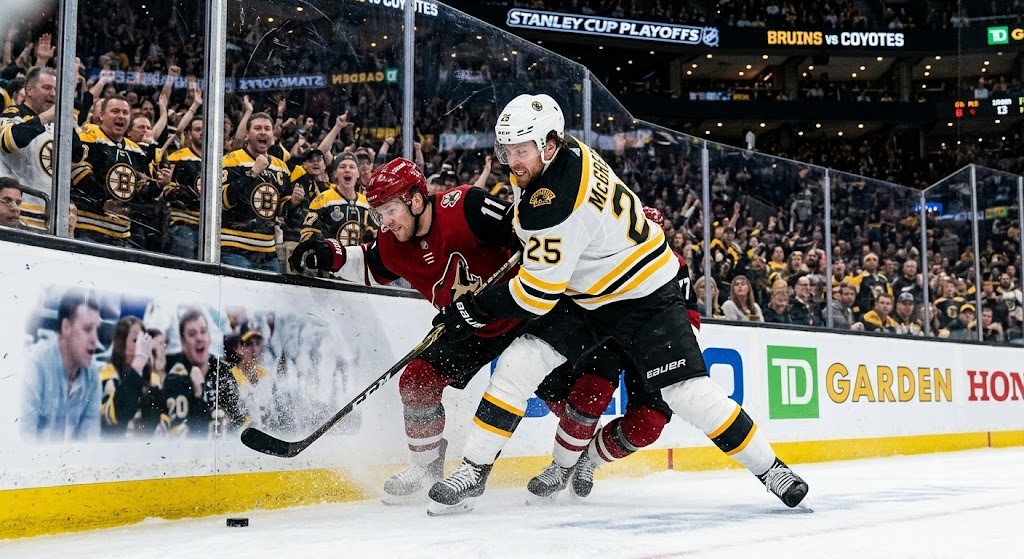
Playoff hockey differs significantly from the regular season.
Games become faster, more physical, and emotionally intense.
Officials often allow greater physicality.
Successful teams prepare for this change.
Stanley Cup contenders embrace:
- Board battles
- Net-front battles
- Heavy forechecking
- Physical defensive play
- Winning loose pucks
Players willing to compete through physical adversity frequently gain important advantages.
Championship teams adapt to playoff intensity rather than resisting it.
Special Teams Can Decide Series
Power plays and penalty kills often determine playoff outcomes.
Close games frequently hinge on one or two special teams opportunities.
Elite teams consistently execute in both situations.
Strong power plays feature:
- Quick puck movement
- Accurate shooting
- Effective net-front presence
- Smart decision-making
Elite penalty kills rely upon:
- Aggressive pressure
- Disciplined positioning
- Shot lane coverage
- Timely clears
Championship organizations invest heavily in developing both units.
Pretenders often struggle when special teams become critical.
Coaching Adjustments Separate Elite Teams
Playoff hockey becomes a chess match.
Opponents face one another repeatedly, allowing coaches to identify strengths and weaknesses.
Successful coaches make adjustments involving:
- Line matchups
- Defensive assignments
- Offensive zone strategies
- Forechecking systems
- Neutral zone coverage
Teams that adapt throughout a series frequently gain competitive advantages.
Championship coaches recognize problems quickly and respond effectively.
Pretenders often fail to adjust as opponents expose weaknesses.
Veteran Leadership Provides Stability
Every playoff run includes adversity.
Championship teams rely on experienced leaders to maintain focus during difficult moments.
Veteran leadership contributes through:
- Calm communication
- Positive locker-room culture
- Accountability
- Professional preparation
- Emotional stability
Experienced players understand that playoff momentum changes quickly.
Their composure helps younger teammates remain confident throughout challenging series.
Leadership often proves invaluable during championship runs.
Team Chemistry Matters
Talent alone rarely wins championships.
Stanley Cup contenders typically display outstanding chemistry.
Players trust one another.
Everyone understands their role.
Selfless play becomes common.
Strong chemistry encourages:
- Better communication
- Greater accountability
- Improved teamwork
- Willingness to sacrifice individual statistics
Championship teams celebrate collective success.
Pretenders sometimes struggle because individual goals overshadow team objectives.
Winning the Puck Possession Battle
Possession remains one of hockey’s most valuable advantages.
Teams controlling the puck generally dictate pace and create more scoring opportunities.
Championship clubs excel at:
- Clean breakouts
- Offensive zone possession
- Efficient passing
- Winning battles along the boards
- Sustaining offensive pressure
Long offensive possessions also reduce defensive workloads.
Maintaining puck control becomes increasingly important during closely contested playoff games.
Faceoffs Create Important Opportunities
Although faceoffs may seem routine, they frequently determine puck possession in critical situations.
Elite centers consistently win draws in:
- Defensive zone situations
- Offensive zone opportunities
- Special teams
- Late-game scenarios
Winning faceoffs allows teams to execute planned strategies immediately.
Small advantages often become decisive in playoff hockey.
Championship organizations value players who consistently perform well in the faceoff circle.
Discipline Prevents Costly Mistakes
Playoff games often feature limited scoring.
One unnecessary penalty can change an entire series.
Championship teams remain disciplined despite emotional intensity.
Players avoid:
- Retaliation penalties
- Undisciplined hits
- Careless stick infractions
- Mental mistakes after whistles
Maintaining emotional control allows teams to stay focused on winning.
Pretenders sometimes allow frustration to influence decision-making.
Discipline remains a hallmark of championship hockey.
Secondary Scoring Wins Playoff Games
Opposing coaches devote tremendous attention to shutting down star players.
Championship teams overcome this challenge through secondary scoring.
Third-line and fourth-line contributors frequently produce crucial playoff goals.
Balanced offensive production forces opponents to defend every line.
This depth creates matchup problems throughout a playoff series.
Pretenders often struggle when their top scorers are neutralized.
Mental Toughness Defines Champions
No team wins the Stanley Cup without overcoming setbacks.
Championship teams respond positively to:
- Overtime losses
- Injuries
- Road environments
- Momentum swings
- Elimination games
Mental resilience keeps players focused regardless of circumstances.
The ability to recover quickly after disappointment often separates champions from contenders.
Confidence remains steady even during difficult stretches.
Conditioning Sustains Long Playoff Runs
The Stanley Cup Playoffs require extraordinary endurance.
Teams may play more than two dozen physically demanding games.
Conditioning becomes increasingly important as rounds progress.
Well-conditioned teams:
- Maintain skating speed
- Recover more quickly
- Sustain physical pressure
- Reduce fatigue-related mistakes
Elite conditioning supports consistent execution late in games and throughout extended playoff runs.
Preparation before the season often pays dividends in June.
Adaptability Is Essential
Every playoff opponent presents different challenges.
Championship teams adjust effectively.
They modify strategies based on:
- Opponent strengths
- Injuries
- Matchups
- Game situations
- Series momentum
Rigid teams often struggle against changing circumstances.
Flexible organizations continue finding solutions.
Adaptability has become one of the defining characteristics of modern Stanley Cup champions.
Strong Organizational Culture Creates Long-Term Success
Championship teams rarely develop overnight.
Successful organizations build cultures emphasizing:
- Accountability
- Player development
- Professionalism
- Team-first attitudes
- Continuous improvement
This culture influences every level of the franchise.
Young players learn expectations early.
Veterans reinforce organizational standards.
Strong cultures produce sustainable success rather than isolated playoff appearances.
Smart Roster Construction Pays Off
General managers play major roles in championship success.
Building a Stanley Cup roster requires balancing:
- Star talent
- Defensive depth
- Salary cap management
- Prospect development
- Veteran experience
Successful organizations avoid relying exclusively on expensive superstars.
Instead, they assemble complete teams capable of surviving playoff attrition.
Thoughtful roster construction provides flexibility throughout long seasons.
Playoff Experience Has Value
Experience cannot guarantee championships.
However, teams familiar with playoff intensity often perform better under pressure.
Players who have previously competed in deep postseason runs understand:
- Physical demands
- Emotional challenges
- Tactical adjustments
- Recovery routines
Experience helps eliminate uncertainty.
Championship organizations frequently include veterans who understand what it takes to succeed in the postseason.
The Best Teams Peak at the Right Time
Regular-season dominance does not always translate into playoff success.
Stanley Cup champions often improve as the season progresses.
They enter the playoffs healthy, confident, and playing their best hockey.
Momentum matters.
Teams peaking at the right time frequently outperform opponents with stronger regular-season records.
Championship hockey depends upon when a team reaches its highest level.
The Future of Stanley Cup Contenders
The NHL continues evolving.
Advanced analytics, sports science, player development, and salary cap strategy increasingly influence roster construction.
Successful franchises combine traditional hockey values with modern innovation.
Future Stanley Cup contenders will likely continue emphasizing depth, speed, versatility, elite goaltending, and organizational stability.
Although styles of play may change, the qualities that define champions remain remarkably consistent.
Final Thoughts
Stanley Cup teams distinguish themselves through far more than talent alone. Championship organizations combine roster depth, elite goaltending, defensive commitment, coaching adaptability, leadership, discipline, conditioning, and mental toughness into a complete formula for postseason success.
While pretenders may enjoy impressive regular seasons, true contenders consistently elevate their performance when playoff hockey demands physicality, resilience, and flawless execution. Every player understands their role, every line contributes, and every game is approached with a championship mindset.
Ultimately, winning the Stanley Cup is about far more than having the league’s most talented roster. It requires organizational excellence, relentless consistency, and the ability to perform under the most demanding conditions in professional sports. Those qualities separate true championship teams from the pretenders every single season.;