
Wiffle Ball Equipment Guide: Bats, Balls, and Backyard Essentials
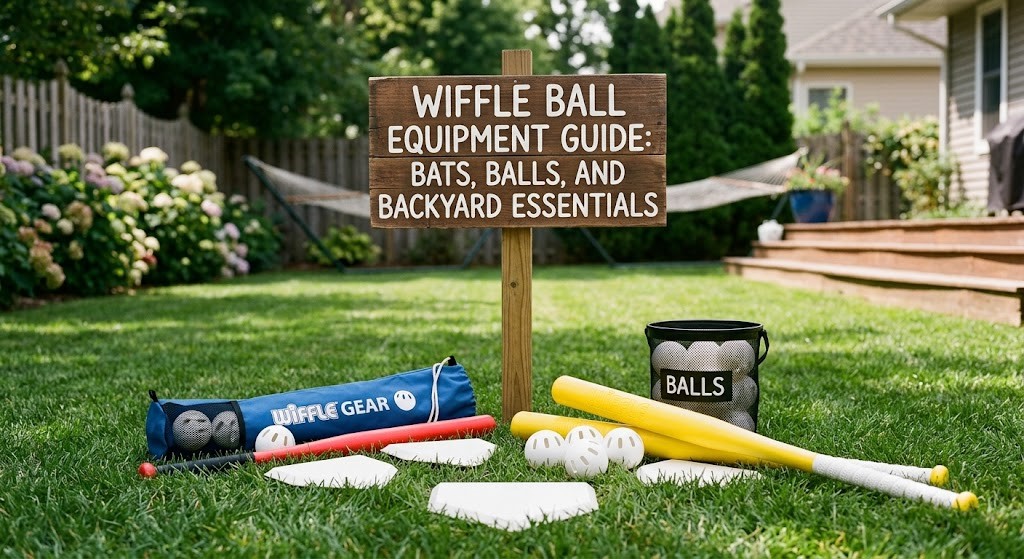
Wiffle Ball Equipment Guide: Bats, Balls, and Backyard Essentials
Wiffle Ball is one of the easiest sports to start because it requires very little equipment. That simplicity is one of the main reasons it has remained popular for generations.
However, not all Wiffle Ball equipment is the same.
Choosing the right bat, ball, and accessories can significantly improve your experience. The right setup can also make games more competitive, safer, and more enjoyable.
Beginners often assume that any plastic bat and ball will work.
While that is technically true, better equipment leads to better gameplay.
Understanding your options will help you play more effectively and get the most out of every game.
If you are new to the sport, begin with The Ultimate Beginner’s Guide to Wiffle Ball: Rules, Equipment, Backyard Setup, and Winning Strategies. That guide introduces the basics and helps you get started quickly.
In this article, we will break down everything you need to know about Wiffle Ball equipment, including bats, balls, and essential backyard gear.
The Wiffle Ball: The Heart of the Game
The most important piece of equipment in Wiffle Ball is the ball itself.
Unlike a baseball, the Wiffle Ball is lightweight and hollow.
It features a unique design with holes on one side and a solid surface on the other.
This design allows the ball to curve dramatically when thrown.
Because of this, pitching becomes the most exciting and strategic part of the game.
How the Ball Design Affects Gameplay
The holes in the ball create uneven air resistance.
When a pitcher throws the ball with a specific grip, the airflow causes the ball to move.
This movement allows players to throw:
- curveballs
- sliders
- risers
- drop balls
Even beginners can learn to control these movements with practice.
The design also makes the ball safer than a baseball.
It reduces the risk of injury while still allowing competitive play.
To understand how these pitches work, read How to Throw Wiffle Ball Pitches: Curveballs, Sliders, and More.
Types of Wiffle Balls
Although the classic Wiffle Ball is the most common, several variations exist.
Each type offers slightly different performance characteristics.
Standard Wiffle Balls
These are the most widely used balls.
They provide consistent movement and are ideal for most games.
Beginners should start with standard balls because they offer predictable performance.
Heavyweight or Training Balls
Some balls are slightly heavier than standard versions.
These balls can travel farther and may require more control.
They are often used for practice or advanced play.
Indoor Wiffle Balls
Indoor versions are softer and lighter.
They are designed to reduce damage to walls and furniture.
These balls are ideal for limited spaces.
Choosing the Right Wiffle Ball
Most players will benefit from using standard Wiffle Balls.
They provide the best balance of control, safety, and performance.
However, players should consider their environment.
For example:
- small spaces may require softer balls
- windy conditions may affect lighter balls
- advanced players may prefer heavier options
Selecting the right ball improves both pitching and hitting performance.
Wiffle Ball Bats
The bat is the second most important piece of equipment.
Like the ball, Wiffle Ball bats are made from lightweight plastic.
This design makes them easy to swing and control.
However, not all bats perform the same way.
Types of Wiffle Ball Bats
Several types of bats are available.
Each type offers different advantages.
Standard Plastic Bats
These bats are the most common.
They are lightweight and easy to use.
Beginners often find them comfortable and forgiving.
Thick Barrel Bats
Some bats feature a thicker barrel.
This design increases the hitting surface.
As a result, players may find it easier to make contact.
Long Barrel Bats
Longer bats provide greater reach.
They can help players cover more of the strike zone.
However, they may be slightly harder to control.
Reinforced or Durable Bats
Some bats are made with stronger plastic.
These bats last longer and resist cracking.
They are ideal for frequent play.
Choosing the Right Bat
Selecting the right bat depends on your skill level and preferences.
Beginners should choose lightweight bats that are easy to control.
More advanced players may experiment with different styles.
Comfort and control should always be the top priorities.
A good bat helps players develop proper swing mechanics.
To improve your hitting technique, review Wiffle Ball Hitting Tips: How to Improve Contact and Power.
Strike Zone Targets
Many Wiffle Ball games use a strike zone target instead of a catcher.
This target determines whether a pitch is a strike or a ball.
Common strike zone options include:
- plastic boards
- folding chairs
- custom-built frames
- commercial strike zone nets
Using a strike zone target makes the game more consistent.
It also eliminates arguments over pitch location.
Understanding how strikes work becomes easier after reading Official Wiffle Ball Rules Explained: Gameplay, Scoring, and Outs.
Backyard Field Essentials
One of the best features of Wiffle Ball is its flexibility.
Players can create a field almost anywhere.
However, adding a few simple elements can improve gameplay.
Boundary Markers
Players often use objects to define field boundaries.
These may include:
- cones
- flags
- fences
- chalk lines
Clear boundaries help determine hits and scoring.
Home Plate and Bases
Some games use physical bases, while others use imaginary ones.
Simple markers such as rubber mats or painted spots work well.
These elements help players visualize the field.
Backstops and Barriers
A backstop prevents the ball from traveling too far behind the strike zone.
Players can use:
- fences
- nets
- walls
Backstops keep the game moving and reduce lost balls.
Building a Better Backyard Field
Creating a well-organized field enhances the experience.
Players can customize their setup based on available space.
For a complete guide, check out How to Set Up a Wiffle Ball Field in Your Backyard (Dimensions and Layout Tips).
Optional Equipment for Enhanced Play
Although basic equipment is enough to play, additional items can improve the experience.
Scoreboards
Simple scoreboards help track runs and innings.
Players can use whiteboards or mobile apps.
Uniforms or Team Colors
Some groups enjoy wearing matching shirts or team colors.
This adds a competitive and organized feel to the game.
Protective Gear
Although Wiffle Ball is generally safe, some players use:
- batting gloves
- protective eyewear
These items can increase comfort and safety.
Equipment for Competitive Wiffle Ball
Competitive Wiffle Ball leagues often use standardized equipment.
This ensures fairness and consistency.
Players may need to follow specific guidelines for:
- approved bats
- official balls
- field dimensions
Understanding these requirements is important for organized play.
You can learn more in Wiffle Ball Leagues and Tournaments: How Competitive Play Works.
Maintaining Your Equipment
Proper maintenance extends the life of your equipment.
For example:
- store bats in a cool, dry place
- replace damaged balls
- clean equipment after use
Taking care of your gear ensures consistent performance.
Avoiding Common Equipment Mistakes
Beginners sometimes make simple equipment mistakes.
These issues can affect gameplay.
Common mistakes include:
- using damaged bats
- playing with cracked balls
- setting unclear boundaries
Fortunately, these problems are easy to fix.
You can learn more in Common Wiffle Ball Mistakes Beginners Make and How to Fix Them.
How Equipment Affects Strategy
Equipment choices can influence how the game is played.
For example:
- lighter bats favor control hitting
- heavier balls may travel farther
- smaller fields encourage contact hitting
Understanding these factors helps players adjust their strategies.
Strategic thinking plays a major role in success.
You can explore these concepts in Winning Wiffle Ball Strategies: Pitching, Hitting, and Game Tactics.
Equipment and Player Development
The right equipment supports player development.
Beginners should focus on control and consistency.
Advanced players may experiment with different setups.
Practice with reliable equipment helps build confidence.
It also improves performance over time.
Final Thoughts on Wiffle Ball Equipment
Wiffle Ball equipment may seem simple, but it plays a major role in the game.
The ball’s unique design creates exciting pitching opportunities.
The bat allows players to develop their hitting skills.
Additional equipment helps create a structured and enjoyable playing environment.
By choosing the right gear, players can improve their performance and enjoy the game even more.
Whether you play casually in your backyard or compete in organized leagues, the right equipment makes a difference.
Continue Learning About Wiffle Ball
Explore the rest of the Wiffle Ball series:
Official Wiffle Ball Rules Explained: Gameplay, Scoring, and Outs
How to Set Up a Wiffle Ball Field in Your Backyard (Dimensions and Layout Tips)
How to Throw Wiffle Ball Pitches: Curveballs, Sliders, and More
Wiffle Ball Hitting Tips: How to Improve Contact and Power
Wiffle Ball Fielding and Defense: Positioning and Strategy
Winning Wiffle Ball Strategies: Pitching, Hitting, and Game Tactics
Common Wiffle Ball Mistakes Beginners Make and How to Fix Them
Wiffle Ball Leagues and Tournaments: How Competitive Play Works



1 Response
[…] If you want to understand the equipment in more detail, review Wiffle Ball Equipment Guide: Bats, Balls, and Backyard Essentials. […]