
Wiffle Ball Fielding and Defense: Positioning and Strategy
Wiffle Ball Fielding and Defense: Positioning and Strategy
When most people think about Wiffle Ball, they focus on pitching and hitting. The dramatic curves, the unpredictable movement, and the big swings often steal the spotlight.
However, defense plays just as important a role.
In fact, strong fielding can completely change the outcome of a game.
A well-positioned defender can turn hits into outs. Smart defensive strategy can shut down even the best hitters.
On the other hand, poor defense leads to easy runs and missed opportunities.
If you are new to the sport, start with The Ultimate Beginner’s Guide to Wiffle Ball: Rules, Equipment, Backyard Setup, and Winning Strategies. That guide gives you a complete foundation for understanding the game.
In this article, we will break down Wiffle Ball fielding and defense, including positioning, strategy, and tips for improving your performance.
Why Defense Matters in Wiffle Ball
Defense often gets overlooked, especially in casual backyard games.
However, it plays a critical role.
Unlike baseball, Wiffle Ball usually involves fewer players. This means each defender must cover more ground.
As a result, positioning becomes extremely important.
Good defense can:
- reduce scoring opportunities
- create outs on difficult plays
- support your pitcher
- control the pace of the game
Strong defense gives your team a clear advantage.
Understanding Defensive Roles
Wiffle Ball defense varies depending on the number of players.
Some games include only one fielder, while others use multiple positions.
Single Defender Setup
In small games, the pitcher often acts as the only defender.
This setup requires quick reactions and smart positioning.
The pitcher must anticipate where the ball will be hit.
Two to Three Defenders
With more players, teams can divide responsibilities.
Common positions include:
- pitcher
- infielder
- outfielder
Each player covers a specific area.
Full Defensive Setup
Larger games may include:
- multiple infielders
- multiple outfielders
This setup allows better coverage.
It also creates more strategic options.
Basic Fielding Techniques
Before diving into strategy, players should learn basic fielding skills.
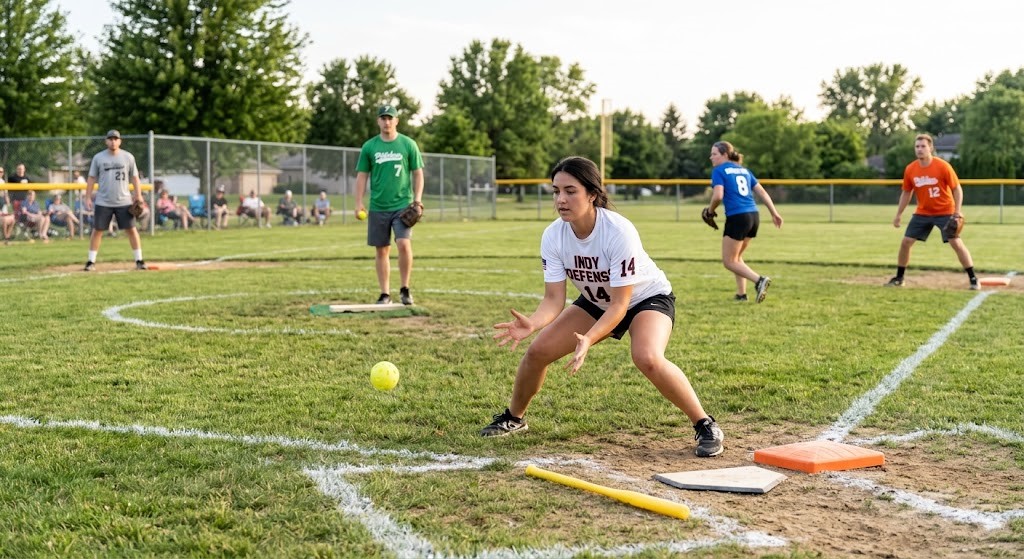
Ready Position
Always stay in a ready stance.
Keep your knees slightly bent.
Stay on the balls of your feet.
This allows quick movement.
Tracking the Ball
Watch the ball from the moment it leaves the bat.
Do not look away.
Good tracking improves reaction time.
Fielding Ground Balls
Get low and position your body in front of the ball.
Use both hands when possible.
This increases control.
Catching Fly Balls
Keep your eyes on the ball.
Move under it.
Use soft hands to secure the catch.
Throwing Accuracy
Accurate throws are essential.
Focus on control rather than power.
This helps prevent errors.
Positioning for Success
Positioning is one of the most important aspects of defense.
Adjusting to the Hitter
Pay attention to the hitter’s tendencies.
Some players consistently hit to certain areas.
Position yourself accordingly.
Playing the Angles
Stand where you can cover the most ground.
Avoid leaving large gaps.
Communicating with Teammates
Communication prevents confusion.
Call out plays clearly.
Work together to cover the field.
Defensive Strategies
Strong teams use strategy to improve their defense.
Anticipation
Think ahead.
Consider what the hitter might do.
This helps you react faster.
Shifting Positions
Adjust your position based on the situation.
For example:
- move closer for weak hitters
- move deeper for power hitters
Supporting the Pitcher
Defense and pitching work together.
A strong defense gives pitchers confidence.
Learn more in How to Throw Wiffle Ball Pitches: Curveballs, Sliders, and More.
Handling Different Types of Hits
Each type of hit requires a different approach.
Ground Balls
Move quickly.
Get in front of the ball.
Make a clean throw.
Line Drives
React fast.
Keep your hands ready.
Line drives can be difficult to field.
Fly Balls
Track the ball early.
Position yourself under it.
Secure the catch.
Field Awareness
Awareness helps you make better decisions.
Know where:
- your teammates are
- the boundaries are
- the runners would be
This awareness improves your performance.
Understanding field layout is easier after reading How to Set Up a Wiffle Ball Field in Your Backyard (Dimensions and Layout Tips).
Practicing Defense
Practice improves fielding skills.
Focus on:
- reaction time
- catching
- throwing
Simple Drills
- ground ball practice
- fly ball tracking
- quick reaction drills
Repetition builds confidence.
Playing in Different Environments
Wiffle Ball fields vary widely.
Some are small backyards.
Others are large open spaces.
Adjusting to Small Fields
In smaller areas:
- play closer to the batter
- react quickly
Adjusting to Large Fields
In larger areas:
- spread out more
- focus on coverage
Adaptation is key.
Common Defensive Mistakes
Beginners often make simple mistakes.
Poor Positioning
Standing in the wrong place reduces effectiveness.
Lack of Communication
Miscommunication leads to missed plays.
Overcommitting
Charging too aggressively can leave gaps.
Weak Throws
Inaccurate throws give opponents extra chances.
You can fix these issues by reading Common Wiffle Ball Mistakes Beginners Make and How to Fix Them.
Team Defense Strategy
Defense works best as a team effort.
Covering Gaps
Players should position themselves to eliminate open spaces.
Backing Up Plays
Always support your teammates.
Be ready to react if a play goes wrong.
Staying Organized
Keep a clear structure.
Avoid confusion.
Defense and Game Strategy
Defense connects directly to overall strategy.
Strong fielding supports:
- pitching
- game control
- momentum
Learn more in Winning Wiffle Ball Strategies: Pitching, Hitting, and Game Tactics.
Defense in Competitive Play
In competitive Wiffle Ball, defense becomes even more important.
Players refine their positioning.
Teams develop advanced strategies.
Studying Opponents
Learn hitting tendencies.
Adjust your positioning.
Consistency
Avoid errors.
Stay focused.
Discipline
Stick to your role.
Do not overreact.
If you want to compete, read Wiffle Ball Leagues and Tournaments: How Competitive Play Works.
How Defense Impacts Hitting
Defense and hitting are connected.
Strong defenders force hitters to adjust.
Understanding defense can improve your hitting approach.
You can improve your offense with Wiffle Ball Hitting Tips: How to Improve Contact and Power.
Final Thoughts on Wiffle Ball Defense
Defense is a key part of Wiffle Ball success.
It requires:
- positioning
- awareness
- communication
- practice
Start with the basics.
Then build your skills over time.
With effort and consistency, you can become a reliable defender.
Continue Learning About Wiffle Ball
Explore the rest of the Wiffle Ball series:
Official Wiffle Ball Rules Explained: Gameplay, Scoring, and Outs
Wiffle Ball Equipment Guide: Bats, Balls, and Backyard Essentials
How to Set Up a Wiffle Ball Field in Your Backyard (Dimensions and Layout Tips)
How to Throw Wiffle Ball Pitches: Curveballs, Sliders, and More
Wiffle Ball Hitting Tips: How to Improve Contact and Power
Winning Wiffle Ball Strategies: Pitching, Hitting, and Game Tactics
Common Wiffle Ball Mistakes Beginners Make and How to Fix Them
Wiffle Ball Leagues and Tournaments: How Competitive Play Works