
Rock Climbing for Beginners
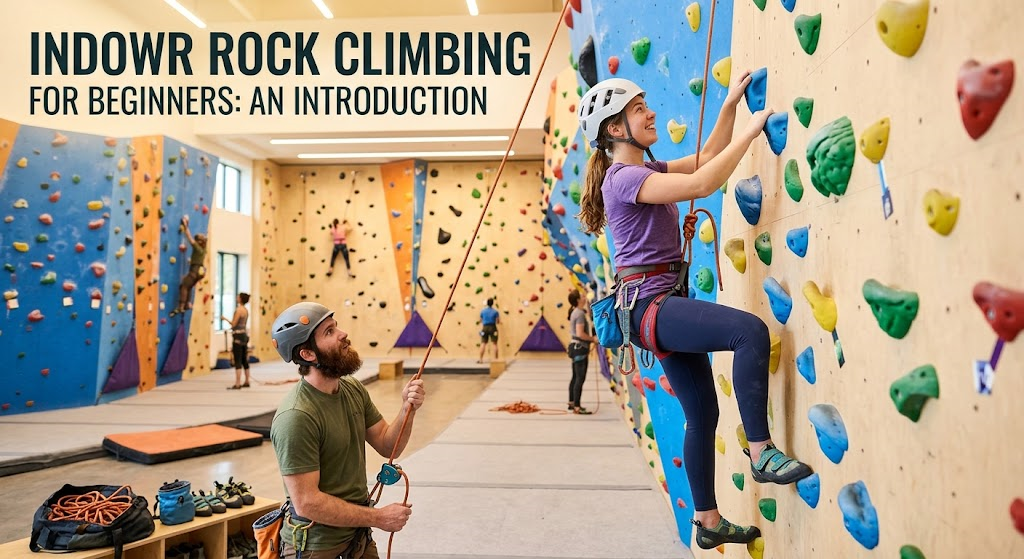
Rock Climbing for Beginners: How to Start, What to Expect, and Your First Climbing Experience
You’ve watched people climb rock walls and thought, That looks like something I’d like to try.
Then the questions start.
Where do you go? What do you wear? Do you need special equipment? What if you’re afraid of heights? Are you strong enough? Do you need a climbing partner? What happens when you walk into a climbing gym for the first time? And perhaps the biggest question of all:
What if you have absolutely no idea what you’re doing?
The good news is that being a beginner is completely normal.
Every experienced climber started somewhere. The person effortlessly working their way up a difficult wall may have years of experience, but they once stood at the bottom of a climbing wall trying to figure out where to put their hands and feet.
Rock climbing can seem complicated because it has its own equipment, terminology, techniques, grading systems, and safety procedures. But you don’t have to learn everything before you begin.
You simply need to start at the appropriate level, learn the basics, and give yourself time to improve.
For a broader overview of the sport, The Ultimate Beginner’s Guide to Rock Climbing: Types, Equipment, Techniques, Safety, and How to Get Started is the ideal place to begin. This article takes a more practical approach.
Think of it as your guide to the question:
“I’ve never climbed before. What do I actually do?”
Is Rock Climbing a Good Sport for Beginners?
Absolutely.
One of the biggest misconceptions about climbing is that you need to be extremely strong before you start.
You don’t.
Rock climbing certainly develops strength, but beginners can learn a tremendous amount through technique, balance, coordination, and efficient movement.
In fact, climbing can be particularly rewarding for people who enjoy solving problems.
A climbing wall isn’t simply an obstacle.
It’s a puzzle.
You have to figure out:
- Where to put your hands
- Where to place your feet
- Which direction to move
- How to position your body
- When to reach
- When to rest
- How to conserve energy
That combination of physical movement and mental problem-solving is one of the sport’s greatest attractions.
You Don’t Have to Look Like a Climber
Walk into a climbing gym and you may see people who appear incredibly athletic.
Don’t let that intimidate you.
Climbing attracts people of many different ages, sizes, fitness levels, and athletic backgrounds.
Some are competitive athletes.
Some are weekend recreational climbers.
Some are children.
Some are older adults.
Some are exceptionally strong.
Others rely heavily on flexibility, balance, technique, or problem-solving.
There is no single body type required to participate.
Your starting point is your starting point.
The goal isn’t to compare yourself with someone who has been climbing for years.
The goal is to become more capable than you were during your last session.
The Easiest Way to Start: Visit a Climbing Gym
For most beginners, an indoor climbing gym is the easiest introduction to the sport.
Indoor facilities provide a controlled environment where you can learn without having to immediately deal with the complexities of outdoor climbing.
Depending on the facility, you may find:
- Bouldering walls
- Top-rope climbing
- Lead-climbing areas
- Rental shoes
- Rental harnesses
- Instruction
- Beginner classes
- Training areas
- Fitness equipment
- Experienced climbers
You can learn the basics without having to travel to a mountain or buy a garage full of equipment.
What Is a Climbing Gym Like?
Every gym is different, but many have a similar general layout.
You might walk through the front door and see a large open room filled with climbing walls.
Those walls may be:
- Vertical
- Overhanging
- Slab-style
- Curved
- Steep
- Short
- Extremely tall
Colorful climbing holds cover the walls.
At first, it may look chaotic.
You might wonder how anyone knows which holds they’re supposed to use.
That’s where routes and problems come in.
What Are Climbing Routes?
A climbing route is a designated path up a wall.
Indoor gyms usually identify routes using colored holds, tape, or other markings.
A route might tell you:
- Which holds to start with
- Which holds are part of the route
- Where the finish is
- Approximately how difficult the climb is
Once you understand the system, the wall becomes much less intimidating.
Instead of seeing hundreds of colorful holds, you begin seeing individual climbing problems.
What Is Bouldering?
Bouldering is one of the simplest ways to experience climbing.
It involves climbing relatively short walls without a rope system.
Instead of being attached to a rope, climbers generally use thick landing mats or crash pads to help protect against falls.
Bouldering is extremely popular in climbing gyms.
Because the walls are shorter, you can focus almost entirely on movement.
You don’t need to learn how to belay before you can begin bouldering.
That makes it an attractive option for first-time climbers.
However, beginners should still receive an orientation and learn the facility’s falling and landing procedures.
What Is Top-Rope Climbing?
Top-rope climbing involves a rope system in which the rope is anchored above the climber.
A belayer manages the rope from below.
The climber is attached to the rope through a harness and climbing system.
Because the rope is positioned above the climber, top-rope climbing is commonly used for instruction and beginner experiences.
You will need appropriate instruction before belaying another climber.
Many gyms offer classes that teach the basics.
Should Your First Experience Be Bouldering or Roped Climbing?
There isn’t one correct answer.
Bouldering may appeal to you if:
- You don’t like heights
- You want to focus on movement
- You want a simple introduction
- You don’t have a climbing partner
- You enjoy short physical challenges
Top-rope climbing may appeal to you if:
- You want to experience taller walls
- You enjoy the sensation of climbing high
- You want to learn roped climbing
- You have a partner or instructor
- Heights don’t bother you
Trying both can eventually help you determine what you enjoy most.
Do You Need a Climbing Partner?
It depends on the type of climbing.
You can generally participate in indoor bouldering without a traditional climbing partner, although other climbers and gym staff may be nearby.
Roped climbing is different.
You typically need an appropriate partner or organized instructional environment.
That is one reason climbing gyms can be useful for beginners.
You can meet other climbers, participate in classes, and learn the skills required for roped climbing.
Never improvise a climbing system simply because you don’t have a partner.
What Should You Wear?
You don’t need specialized clothing when you’re starting.
Wear comfortable athletic clothing that allows you to move freely.
You should be able to:
- Bend your knees
- Lift your legs
- Stretch
- Reach
- Twist
- Move your hips
- Squat comfortably
Shorts, athletic pants, leggings, or other flexible clothing can work.
The most important thing is freedom of movement.
What Shoes Do You Need?
Climbing shoes are specifically designed for climbing.
They have specialized rubber soles that provide traction and allow climbers to use small footholds.
Most climbing gyms rent them.
That means you don’t have to purchase expensive climbing shoes before you know whether you enjoy the sport.
Your first pair should be comfortable enough to allow you to concentrate on learning rather than thinking about your feet hurting.
For a much more detailed discussion of shoes and other equipment, see Rock Climbing Equipment Guide: Shoes, Harnesses, Ropes, Chalk, Helmets, and Essential Gear.
Do You Need a Harness?
If you’re participating in roped climbing, yes.
A harness connects you to the climbing rope through the appropriate system.
Many gyms rent harnesses to beginners.
You should learn how to properly wear, adjust, and inspect a harness before using it.
Never assume that simply putting on a harness means it is properly fitted.
What About Chalk?
Chalk can help keep your hands dry and improve grip.
You’ll see climbers using chalk frequently.
You don’t necessarily need to buy your own chalk immediately.
Many gyms have rental or shared options, although policies vary.
As you climb more frequently, you may eventually want your own chalk bag and preferred chalk.
Your First Visit: What to Expect
Walking into a climbing gym for the first time can feel overwhelming.
Here’s a typical sequence.
Step 1: Check In
You’ll generally register and complete any required paperwork or waiver.
The facility may explain its policies and rules.
Step 2: Get an Orientation
New climbers may receive an orientation covering things such as:
- Gym rules
- Falling
- Landing
- Wall etiquette
- Safety procedures
- Equipment
Pay attention.
The orientation isn’t just bureaucracy.
It’s part of learning how to use the facility safely.
Step 3: Rent Equipment
If you’re climbing in a roped area, you may need a harness.
You may also rent climbing shoes.
Step 4: Start Easy
Don’t immediately walk toward the hardest wall in the building.
Find beginner-level routes or problems.
Your first goal is to learn how climbing feels.
Don’t Be Embarrassed by Beginner Routes
One of the easiest ways to ruin your first climbing session is to worry about what other people think.
Nobody worth worrying about cares that you’re climbing an easy route.
Experienced climbers know that beginners have to start somewhere.
In fact, many experienced climbers enjoy helping new people learn.
Climbing communities can be surprisingly supportive.
Take advantage of that.
Your First Climbing Problem May Feel Weird
Climbing uses movement patterns that aren’t necessarily familiar.
You may find yourself thinking:
“Why does moving three feet to the left require this much effort?”
That’s normal.
You aren’t just exercising.
You’re learning a new movement language.
Your brain is figuring out how your body interacts with the wall.
The more you climb, the more natural these movements become.
Use Your Feet More Than You Think
One of the biggest beginner discoveries is that climbing isn’t simply pulling yourself upward.
Your feet are incredibly important.
Instead of trying to haul your entire body upward with your arms, learn to:
- Stand on footholds
- Push with your legs
- Shift your weight
- Move your hips
- Keep your body balanced
This will make climbing much more efficient.
Don’t Grip Every Hold Like Your Life Depends on It
Beginners often grip holds incredibly hard.
It feels natural.
You’re worried about falling, so you squeeze.
Unfortunately, that burns energy quickly.
Try to develop a relaxed grip whenever the hold allows it.
Use only the amount of force necessary.
As your technique improves, you’ll discover that climbing becomes less about brute force and more about efficiency.
Learn to Trust Your Feet
Beginners often stare at their hands while barely paying attention to their feet.
That’s backwards.
Your feet determine where your body goes.
Practice placing your feet carefully.
Avoid stepping on holds recklessly.
Try to make deliberate movements.
The better your footwork becomes, the easier climbing tends to feel.
What If You’re Afraid of Heights?
You aren’t alone.
Fear of heights is one of the most common concerns beginners have.
The good news is that you don’t have to immediately climb to the highest point in the gym.
Start low.
Bouldering can provide an introduction to climbing movement without putting you high above the floor.
If you’re using a rope, communicate your comfort level with your instructor or partner.
You can gradually become more comfortable.
There is no prize for forcing yourself into a situation that overwhelms you.
What If You Fall?
Falling is part of climbing.
How you fall depends on the type of climbing you’re doing.
In bouldering, the landing area and appropriate falling technique are important.
In roped climbing, the climbing system and belayer are part of the fall-management process.
Beginners should learn proper falling procedures from qualified instruction and follow the gym’s rules.
Don’t try to invent your own technique.
Your Arms Will Probably Get Tired
A very common first-session experience is discovering that your forearms are exhausted.
You may feel like your hands barely work.
That’s because climbing places unusual demands on the muscles and connective tissues involved in gripping.
Your body isn’t accustomed to the activity yet.
Don’t interpret that fatigue as proof that you aren’t strong enough to climb.
It simply means you’re new.
Don’t Overdo Your First Session
This is important.
A beginner may have a fantastic time, become excited, and decide to climb continuously for several hours.
Then the soreness arrives.
Give your body time to adapt.
Your first goal should be to leave the gym thinking:
“That was fun. I want to come back.”
Not:
“I destroyed every muscle in my body.”
How Long Should Your First Session Last?
There is no magic number.
Your first session should be based on how your body feels and the type of climbing you’re doing.
A shorter session can be perfectly productive.
Take breaks.
Drink water.
Stop when your technique begins falling apart because of fatigue.
Quality matters more than simply accumulating climbing time.
What Should You Practice During Your First Session?
Don’t worry about advanced techniques.
Focus on:
Balance
Try to keep your body controlled.
Footwork
Place your feet deliberately.
Grip
Use only the force necessary.
Body Position
Pay attention to where your hips and shoulders are.
Movement
Move smoothly rather than frantically.
Breathing
Don’t hold your breath during difficult movements.
These fundamentals will serve you throughout your climbing career.
Learn to Read the Wall
Before you start climbing, look at the route.
Ask yourself:
- Where are the starting holds?
- Where are the footholds?
- Where does the route go?
- Where might the difficult section be?
- Where can I rest?
- What direction will I need to move?
This process becomes increasingly important as routes become harder.
Eventually, experienced climbers can study a route and mentally plan sections before leaving the ground.
What Is a Crux?
The crux is generally the hardest section of a route or problem.
It might involve:
- A long reach
- Small holds
- A difficult foot placement
- A powerful movement
- An awkward position
- A tricky sequence
As a beginner, don’t be discouraged when you encounter a section that stops you.
That’s normal.
The question isn’t simply whether you can complete it.
The question is:
What can you change to make the movement work?
Experiment With Different Solutions
Suppose you can’t reach the next hold.
You might try:
- Moving your feet
- Changing your hip position
- Turning your body
- Using a different grip
- Shifting your weight
- Taking a different sequence
Climbing rewards experimentation.
Sometimes the first solution isn’t the best solution.
What Are Climbing Grades?
Climbing grades communicate difficulty.
However, different climbing disciplines and regions use different grading systems.
Indoor gyms may also use their own grading approaches.
Beginners shouldn’t become obsessed with grades.
Two routes with similar grades can feel completely different.
Your height, flexibility, strength, technique, and experience all influence how difficult a climb feels.
Use grades as guides rather than absolute measurements.
Don’t Chase Grades Too Early
It is tempting to look around the gym and think:
“I need to climb that difficult route.”
You don’t.
A beginner who develops excellent technique on easier routes is building a foundation that will eventually make harder routes more manageable.
Climbing harder is not the only way to improve.
Sometimes climbing easier routes better is more valuable.
Your First Few Weeks of Climbing
After your first session, you may decide you want to continue.
This is where things get interesting.
Your early sessions should focus on learning rather than maximizing difficulty.
Try different routes.
Experiment with different wall angles.
Practice your feet.
Pay attention to experienced climbers.
Ask instructors questions.
Learn the terminology gradually.
Your climbing ability will likely improve quickly at first because you’re learning basic movement patterns.
Finding a Climbing Community
One of the best parts of climbing is the community.
You may find climbers through:
- Climbing gyms
- Clubs
- Classes
- Friends
- Local groups
- Outdoor organizations
- Competitions
Don’t be afraid to introduce yourself.
Climbing often creates natural opportunities for conversation because people are working on the same problems and routes.
How to Find a Climbing Partner
If you want to progress into roped climbing, eventually you’ll need appropriate partner arrangements.
Start by learning from qualified instructors.
You can meet potential climbing partners through a gym or climbing community.
However, don’t automatically trust someone simply because they climb.
Your safety matters.
A climbing partner should be willing to communicate clearly, follow proper procedures, and take safety seriously.
When Should You Learn to Belay?
Belaying is a critical skill in roped climbing.
It involves managing the rope for a climber and requires proper technique and attention.
Do not try to learn belaying casually from someone who says, “It’s easy.”
Take appropriate instruction.
Many climbing gyms offer belay classes and assessments.
Once you learn, continue practicing until the process becomes reliable and automatic.
When Should You Learn Lead Climbing?
Lead climbing requires additional skills and responsibilities.
It should come after you are comfortable with basic climbing movement and appropriate roped-climbing skills.
Learn through qualified instruction and supervised practice.
There is no reason to rush.
Climbing isn’t a race to collect advanced skills.
Moving From Indoor to Outdoor Climbing
Eventually, many indoor climbers become curious about climbing real rock.
That transition can be incredibly rewarding.
But outdoor climbing introduces many variables that don’t exist in a gym.
You may encounter:
- Natural rock
- Weather
- Wildlife
- Loose rock
- Route-finding challenges
- Anchors
- Longer approaches
- Limited facilities
- Environmental responsibilities
Do not treat your first outdoor trip as a simple extension of a gym session.
Learn from experienced climbers or qualified professionals.
Our guide Rock Climbing Outdoors: How to Transition From the Gym to Real Rock will cover this transition in detail.
What Makes Outdoor Climbing Different?
Indoor walls are controlled environments.
Outdoor rock is not.
An indoor route has been designed.
A natural cliff has not.
Outdoor climbing requires you to interpret the environment.
You need to understand the route, the rock, the equipment, the weather, and the access rules.
This is part of what makes outdoor climbing so rewarding.
It is also why preparation matters.
Common Beginner Mistakes
Let’s look at some mistakes that can make the learning process unnecessarily difficult.
Mistake #1: Trying to Climb Too Hard
Difficulty isn’t everything.
Better approach:
Develop technique on manageable routes.
Mistake #2: Using Only Your Arms
Your legs are powerful tools.
Better approach:
Push through your feet and use your hips.
Mistake #3: Gripping Too Tightly
This wastes energy.
Better approach:
Relax your hands when possible.
Mistake #4: Ignoring Footwork
Poor feet make everything harder.
Better approach:
Place your feet deliberately.
Mistake #5: Comparing Yourself to Experienced Climbers
You’re comparing your beginning to someone else’s middle.
Better approach:
Compare yourself with your previous performance.
Mistake #6: Ignoring Safety Instructions
Rules exist for a reason.
Better approach:
Listen carefully to gym staff and instructors.
Mistake #7: Buying Too Much Equipment
You don’t need an enormous gear collection.
Better approach:
Rent equipment until you understand what you actually want.
Mistake #8: Climbing Until Your Technique Falls Apart
Fatigue increases the likelihood of poor movement and mistakes.
Better approach:
Take breaks and recover.
How to Improve Between Sessions
You don’t need to spend every day in the gym.
You can improve your climbing awareness by:
- Watching experienced climbers
- Studying route sequences
- Practicing mobility
- Working on general fitness
- Learning climbing terminology
- Reviewing technique
- Thinking about what caused you to fall
- Planning how to approach difficult movements
Climbing improvement isn’t only about time spent on the wall.
Keep a Simple Climbing Journal
A notebook or phone note can help.
After each session, write down:
- What routes you completed
- What problems gave you trouble
- What technique worked
- What didn’t work
- How your body felt
- What you want to practice next time
You don’t need elaborate statistics.
A few observations can reveal patterns.
For example, you may discover that you consistently struggle with:
- Overhangs
- Small footholds
- Long reaches
- Certain grips
- Route reading
Now you know what to work on.
How Strength Training Can Help
As you become more serious, strength training may become useful.
Important physical qualities for climbing can include:
- Grip strength
- Forearm endurance
- Core strength
- Pulling strength
- Leg strength
- Shoulder stability
- Mobility
However, beginners shouldn’t assume that maximum strength is the answer to every climbing problem.
Technique should remain a major priority.
Our dedicated guide How to Get Better at Rock Climbing: Training, Strength, Endurance, Flexibility, and Practice will explore climbing-specific training in much greater depth.
What About Hangboards?
Hangboards are specialized training tools designed to develop finger strength.
They can be useful for experienced climbers.
They are not necessarily appropriate for beginners.
Finger tissues can be vulnerable to excessive training loads, particularly when someone is new to climbing.
There is no need to rush into advanced training equipment.
Build a foundation first.
Learn Before You Specialize
You may eventually discover that you love:
- Bouldering
- Sport climbing
- Traditional climbing
- Competition
- Outdoor climbing
- Multi-pitch climbing
Don’t worry about choosing immediately.
Spend time exploring.
Your preferences may change as your skills develop.
What If You Don’t Like It?
That’s okay.
Not every sport is right for every person.
You may discover that you dislike heights.
Maybe your fingers don’t enjoy climbing.
Maybe you prefer running, cycling, swimming, or another activity.
Trying something new isn’t a failure simply because you don’t continue.
But don’t make the decision based on one uncomfortable first session.
The first experience is often awkward because everything is unfamiliar.
Give yourself a reasonable opportunity to learn what the sport actually feels like.
What If You Love It?
That’s when the adventure really begins.
You can start developing technique.
You can try different types of climbing.
You can meet other climbers.
You can take classes.
You can eventually climb outdoors.
You can participate in competitions.
You can travel to climbing destinations.
You can make climbing a recreational hobby or pursue it seriously.
The possibilities expand as your experience grows.
A Simple Beginner’s Rock Climbing Plan
If you want a straightforward way to begin, consider this progression.
Session One
Learn:
- Gym rules
- Basic movement
- Footwork
- Balance
- Falling procedures
- Easy routes
Sessions Two and Three
Focus on:
- Smooth movement
- Foot placement
- Body positioning
- Relaxed grip
- Route reading
Sessions Four Through Six
Begin experimenting with:
- Different wall angles
- More challenging routes
- Basic techniques
- Rest positions
- Movement sequences
After Several Weeks
Consider:
- Beginner classes
- Roped-climbing instruction
- Climbing partners
- More structured training
- Local climbing communities
This is only a general framework.
Your progress may be faster or slower.
That’s perfectly fine.
How to Know You’re Improving
Improvement isn’t just climbing a harder grade.
You may be improving if:
- You use less energy
- Your feet are more accurate
- You fall less frequently
- You recover more quickly
- You can climb longer
- You understand routes better
- You remain calmer
- You solve problems faster
- Your movements become smoother
Sometimes the most important improvement is invisible to anyone watching.
You simply feel more comfortable on the wall.
That’s progress.
Rock Climbing Safety Should Always Come First
Climbing is an exciting sport, but it involves genuine risks.
Beginners should understand that safety isn’t something you “graduate from.”
Even highly experienced climbers continue to follow safety procedures.
The basics include:
- Follow facility rules
- Use appropriate equipment
- Learn from qualified instructors
- Check equipment
- Communicate clearly
- Understand your limits
- Don’t improvise unfamiliar systems
- Pay attention to your surroundings
- Don’t allow ego to make decisions
For a complete examination of climbing hazards and risk management, see Rock Climbing Safety: Essential Rules, Common Hazards, Risk Management, and How Climbers Stay Safe.
Frequently Asked Questions About Rock Climbing for Beginners
Is rock climbing hard for beginners?
It can be challenging, but beginner routes are designed to provide an accessible starting point. Technique and balance are extremely important, so you don’t need extraordinary strength to begin.
Can I try rock climbing without owning equipment?
Yes. Many climbing gyms rent basic equipment such as climbing shoes and harnesses.
Do I need to be physically fit before starting?
No. You can begin at an appropriate level and gradually build climbing-specific fitness.
What if I’m afraid of heights?
Start gradually. Bouldering can provide a way to learn climbing movement without being far above the ground. If you try roped climbing, communicate your comfort level to your instructor or partner.
Can I go to a climbing gym alone?
You can often participate in bouldering independently, although you should still follow the gym’s safety rules. Roped climbing generally requires appropriate partner arrangements or instruction.
How often should I climb as a beginner?
A schedule that allows you to recover while maintaining consistency is generally a good starting point. Avoid increasing your training volume too quickly.
Do climbing shoes hurt?
They should fit snugly but shouldn’t cause unreasonable pain. Beginners should prioritize an appropriate fit rather than assuming more discomfort means better performance.
Do I need to be strong to climb?
No. Strength helps, but technique, balance, flexibility, footwork, and body positioning are extremely important.
How quickly will I improve?
Many beginners experience noticeable improvement during their early sessions because they are learning new movement patterns. Progress varies significantly from person to person.
When should I start climbing outdoors?
Wait until you understand the appropriate skills and systems for the type of outdoor climbing you want to do. Learning from experienced climbers or qualified professionals is strongly recommended.
Should I buy my own climbing gear?
Not necessarily. Renting equipment initially allows you to determine what type of climbing you enjoy before investing in specialized gear.
Can children start rock climbing?
Many climbing gyms offer youth programs and beginner instruction. Children should participate in age-appropriate programs with appropriate supervision.
Your First Climbing Experience Doesn’t Need to Be Perfect
Your first climbing session may be awkward.
You may not know where to put your feet.
You may grip every hold too tightly.
You may get tired much faster than expected.
You may stare at a route and have absolutely no idea how you’re supposed to climb it.
You may fall.
You may struggle with something that looks ridiculously easy when someone else does it.
None of that means you aren’t capable of becoming a climber.
You’re learning.
And learning a new physical skill is supposed to feel unfamiliar.
The climbers who eventually become very good aren’t necessarily the people who were amazing on their first day.
They’re the people who kept coming back.
From First-Timer to Climber
The transformation happens gradually.
First, you’re simply trying to get up the wall.
Then you begin noticing footholds.
You learn to use your legs.
You stop gripping everything with maximum force.
You begin recognizing routes.
You start planning before you climb.
You learn why you fell.
You try another sequence.
You complete a problem that previously seemed impossible.
And suddenly, you’re no longer just somebody who tried rock climbing once.
You’re a climber.
You may eventually discover a favorite discipline, develop specific training goals, join a climbing community, and venture outdoors.
But none of that matters on your first day.
Your first day has a much simpler purpose:
Learn something. Have fun. Stay safe. Come back if you enjoyed it.
Final Thoughts
Rock climbing can look intimidating from the outside.
Up close, however, it is a sport built around learning.
You learn how to move.
You learn how to balance.
You learn how to use your feet.
You learn how to conserve energy.
You learn how to solve problems.
You learn how to deal with fear.
You learn how to fail and try again.
And eventually, you discover that the wall isn’t simply something you climb.
It’s something you learn to understand.
You don’t need to be incredibly strong.
You don’t need to be fearless.
You don’t need expensive equipment.
You don’t need years of athletic experience.
You need a reasonable place to begin, proper instruction where necessary, appropriate equipment, and the willingness to learn.
Start easy.
Learn the fundamentals.
Respect the risks.
Don’t compare yourself with experienced climbers.
And most importantly, give yourself permission to be a beginner.
Every climber was one once.
Continue Exploring the Rock Climbing Beginner’s Guide
Now that you understand how to get started, the rest of the Rock Climbing cluster can help you go deeper.
Learn what you actually need with Rock Climbing Equipment Guide: Shoes, Harnesses, Ropes, Chalk, Helmets, and Essential Gear.
Explore the different disciplines in Types of Rock Climbing Explained: Bouldering, Sport Climbing, Trad Climbing, Top-Rope, and More.
Improve your movement with Rock Climbing Techniques: Footwork, Grip, Body Position, Balance, and Efficient Movement.
Build your skills and fitness with How to Get Better at Rock Climbing: Training, Strength, Endurance, Flexibility, and Practice.
Understand the risks with Rock Climbing Safety: Essential Rules, Common Hazards, Risk Management, and How Climbers Stay Safe.
Learn how to approach climbing problems with How to Read a Rock Climbing Route: Grades, Routes, Holds, Problems, and Climbing Strategy.
And when you’re ready to take your climbing beyond the gym, explore Rock Climbing Outdoors: How to Transition From the Gym to Real Rock.
Together with The Ultimate Beginner’s Guide to Rock Climbing: Types, Equipment, Techniques, Safety, and How to Get Started, these articles provide a complete path from curiosity to confident participation in the sport.



2 Responses
[…] you are completely new to climbing, start with Rock Climbing for Beginners: How to Start, What to Expect, and Your First Climbing Experience before building a serious training program. If you already understand the basics, this article can […]
[…] you’re completely new to climbing, begin with Rock Climbing for Beginners: How to Start, What to Expect, and Your First Climbing Experience. And if you’re unfamiliar with the equipment involved, Rock Climbing Equipment Guide: Shoes, […]