
Rock Climbing Safety
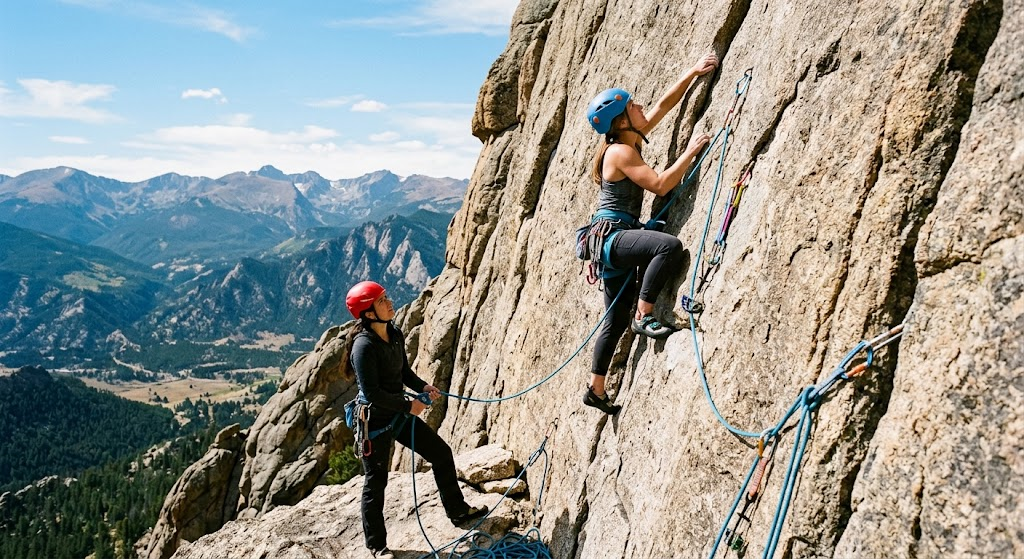
Rock Climbing Safety: Essential Rules, Common Hazards, Risk Management, and How Climbers Stay Safe
Rock climbing is one of the most rewarding sports in the world, but it is also a sport that demands respect.
Part of what makes climbing exciting is the challenge. You are solving physical problems, controlling your body, managing fear, and sometimes operating in an environment where mistakes can have serious consequences.
That doesn’t mean climbing is simply a dangerous sport.
It means climbing is a sport in which knowledge, preparation, equipment, communication, and judgment matter enormously.
A climber who understands those principles can make much better decisions than someone who simply knows how to pull themselves up a wall.
Safety is also not a single skill.
There is no piece of equipment or one rule that makes climbing safe by itself. A helmet doesn’t compensate for an improperly used rope system. A strong climber isn’t automatically a competent belayer. Experience doesn’t make an unsafe anchor safe.
Good climbing safety comes from multiple layers working together.
Those layers include:
- Appropriate equipment
- Proper equipment use
- Technical knowledge
- Hands-on instruction
- Partner communication
- Environmental awareness
- Understanding personal limitations
- Route selection
- Physical preparation
- Mental discipline
- Conservative decision-making
The safety considerations also change depending on what type of climbing you’re doing.
Bouldering has different hazards from top-rope climbing. Sport climbing introduces different risks from traditional climbing. Indoor climbing is different from climbing on natural rock. A short cragging day is different from a remote multi-pitch adventure.
That is why becoming a safer climber is a continuing process.
This guide examines the most important safety principles beginning climbers should understand and the habits experienced climbers should never stop practicing.
If you’re completely new to climbing, begin with Rock Climbing for Beginners: How to Start, What to Expect, and Your First Climbing Experience. And if you’re unfamiliar with the equipment involved, Rock Climbing Equipment Guide: Shoes, Harnesses, Ropes, Chalk, Helmets, and Essential Gear is an important companion.
What Makes Rock Climbing Different From Many Other Sports?
Many sports involve some risk.
Climbing is different because the consequences of certain mistakes can be significant, particularly when climbing above the ground or in remote outdoor environments.
A climber has to think about more than whether they can physically complete a route.
They may need to consider:
- How they are attached to the climbing system
- Whether the equipment is appropriate
- Whether the equipment is configured correctly
- Whether their partner is prepared
- Whether the anchor is appropriate
- Whether the weather is changing
- Whether the rock is sound
- How they will descend
- Whether they have enough water
- Whether they can communicate
- What happens if someone is injured
That creates a unique combination of athletic ability and risk management.
A great climber isn’t simply someone who can climb difficult grades.
A great climber also knows when a particular climb is inappropriate.
The Most Important Climbing Safety Principle: Don’t Guess
If you don’t know how something works, don’t guess.
This principle applies to:
- Knots
- Belay devices
- Anchors
- Ropes
- Protection
- Rappelling
- Lowering
- Route finding
- Weather decisions
- Outdoor access
- Emergency situations
Climbing contains many situations where something can look correct without actually being correct.
When you’re uncertain, stop.
Ask someone who knows.
Get instruction.
Research the issue from a reliable source.
Or choose a simpler objective.
There is nothing embarrassing about saying:
“I don’t know how to do that safely yet.”
In climbing, that can be one of the smartest things you ever say.
Know Your Limits
Personal limits are not simply about climbing ability.
There are several different types of limits.
You may have:
Physical Limits
You aren’t strong or conditioned enough for the route.
Technical Limits
You haven’t learned the necessary systems.
Mental Limits
The exposure or difficulty is beyond your current comfort level.
Environmental Limits
The weather or conditions make the climb inappropriate.
Experience Limits
You’ve never dealt with this particular situation before.
Equipment Limits
You don’t have the appropriate gear or don’t understand how to use it.
Any one of these can be a legitimate reason to change plans.
The Difference Between Difficulty and Danger
This distinction is extremely important.
A route can be extremely difficult but relatively well protected.
Another route can be physically easy but involve complicated or significant hazards.
Therefore:
Difficulty does not equal danger.
A climber should evaluate both separately.
Ask:
Can I climb this?
and then ask:
Can I climb this safely under these circumstances?
The second question is just as important as the first.
Indoor Climbing Safety
Climbing gyms provide an excellent environment for learning.
They generally offer:
- Controlled walls
- Manufactured holds
- Protective flooring
- Staff supervision
- Rental equipment
- Beginner instruction
- Clearly established routes
But gyms aren’t completely risk-free.
Potential hazards include:
- Falls
- Collisions
- Poor landings
- Incorrect belaying
- Equipment misuse
- Falling objects
- Crowded climbing areas
- Distracted climbers
- People walking underneath climbers
Always follow the facility’s specific rules.
The rules may vary from one gym to another.
Pay Attention During the Orientation
Many new climbers are anxious to get onto the wall.
That’s understandable.
But don’t mentally check out during the gym orientation.
This is where you may learn:
- Where you can climb
- How routes are designated
- How rental equipment works
- How belay systems operate
- How to use auto-belays
- Where falling is appropriate
- Where people are allowed to stand
- Gym-specific rules
Ten minutes of attention can prevent hours of problems later.
Auto-Belay Safety
Some climbing gyms use auto-belay systems.
These devices can eliminate the need for a human belayer in certain situations.
But they introduce their own critical safety requirement:
You must correctly connect yourself to the system.
One of the most dangerous mistakes in an auto-belay environment is climbing without actually being attached to the device.
Follow the gym’s procedures.
Use the designated attachment method.
If you’re uncertain, ask staff.
Never assume that simply standing beneath an auto-belay means you’re connected.
Bouldering Safety
Bouldering eliminates ropes and harnesses from the climbing system, but it doesn’t eliminate falling.
Instead, the climber generally climbs at lower heights and uses protective flooring or crash pads.
That changes the nature of the risk.
Bouldering safety involves:
- Landing correctly
- Keeping the landing zone clear
- Watching other climbers
- Avoiding uncontrolled falls
- Understanding the limitations of padding
- Knowing when to downclimb
Learn to Downclimb
If you can safely climb down instead of jumping, that may reduce impact.
Downclimbing also helps develop climbing control.
It teaches you to:
- Reverse movements
- Manage fatigue
- Find footholds
- Control your body
- Avoid unnecessary falls
Not every situation allows downclimbing, but when it does, it can be a useful skill.
Learn How to Fall
Falling is part of climbing.
That doesn’t mean you should intentionally throw yourself off a wall without instruction.
Instead, learn appropriate falling and landing techniques from qualified instructors or experienced climbing professionals.
Beginners often instinctively try to catch themselves with their hands.
That can place substantial force on the wrists and arms.
A controlled landing is generally preferable to a stiff, uncontrolled reaction.
Keep the Landing Zone Clear
Before climbing a boulder problem, look below you.
Move:
- Bags
- Water bottles
- Shoes
- Phones
- Equipment
- Personal belongings
out of the landing area.
Also check for people.
The landing zone can change while you’re climbing.
A clear floor when you started doesn’t guarantee a clear floor when you fall.
Spotting and Awareness
In some bouldering environments, another person may help guide a falling climber toward an appropriate landing area.
Spotting isn’t a substitute for adequate padding or good judgment.
Its purpose is not to catch an adult climber’s full body weight.
The safest approach depends on the environment, height, landing surface, and local practices.
Learn appropriate spotting techniques rather than improvising.
Top-Rope Safety
Top-rope climbing uses a rope system that runs through an anchor and connects the climber to a belayer.
Because the rope is generally positioned above the climber, falls can be relatively short when the system is properly configured.
But “top rope” doesn’t mean “can’t get hurt.”
Safety still depends on:
- Correct harness use
- Correct knot
- Correct belay setup
- Proper rope management
- Appropriate belaying
- Communication
- Proper lowering
The Partner Check
One of the most important habits in climbing is performing a partner check before leaving the ground.
Both climbers should inspect the system.
Depending on the setup, that can include:
- Harness
- Harness buckle
- Tie-in point
- Knot
- Belay device
- Carabiner
- Rope path
- Anchor
- Belayer configuration
The exact check should match the climbing system you’re using.
Don’t rely on memory alone.
Develop a consistent routine.
Why Both Partners Should Check
You might think:
“My partner knows what they’re doing.”
That’s not a safety system.
Your partner may have:
- Forgotten a step
- Been distracted
- Misconfigured something
- Assumed you completed a step
- Missed an obvious problem
You can make mistakes too.
Two people checking the system creates another opportunity to catch an error.
Belaying Is a Responsibility
A belayer has an important job.
Belaying requires attention and competence.
A belayer should not be distracted by:
- A phone
- Conversations
- Social media
- Other routes
- Spectators
- Unnecessary movement
If you’re belaying, your attention belongs to the climber.
Learn Before You Belay
Reading about belaying isn’t enough.
A beginner should receive appropriate hands-on instruction and supervised practice before independently belaying.
A qualified instructor can teach:
- Equipment setup
- Rope handling
- Braking technique
- Communication
- Lowering
- Responding to falls
- Appropriate procedures for the device being used
Belay devices differ.
Don’t assume that knowing how to use one automatically means you understand another.
Communication Is a Safety System
Climbing partners need to communicate clearly.
Before climbing, establish how you’ll communicate.
This is especially important outdoors, where:
- Wind may be loud
- Distance may be greater
- Other climbers may be nearby
- Visibility may be limited
Use terminology that both partners understand.
If you can’t hear each other, solve that problem before continuing.
Never Assume Your Partner Heard You
This is especially important when giving or receiving instructions.
If your partner’s response isn’t clear, don’t assume.
Clarify.
A simple misunderstanding can create a dangerous situation.
Outdoor Climbing Safety
Outdoor climbing introduces an entirely different environment.
Natural rock isn’t manufactured.
Routes aren’t necessarily maintained like indoor walls.
Weather can change.
Approaches can be difficult.
Cell service may be limited.
The descent can be more complicated than the climb.
And you may be far from emergency services.
Outdoor climbing therefore requires a higher level of preparation.
Don’t Treat Outdoor Climbing Like an Outdoor Gym
One of the biggest beginner mistakes is assuming:
“I climb hard indoors, so I’m ready to climb outdoors.”
Indoor climbing develops useful skills.
But outdoor climbing requires additional knowledge.
You may need to understand:
- Rock quality
- Anchors
- Outdoor equipment
- Route finding
- Weather
- Descents
- Environmental hazards
- Access rules
- Emergency planning
The transition should be gradual.
Loose Rock
Natural rock can contain loose or unstable material.
A hold that looks solid may not be.
A climber who pulls on unstable rock could cause it to break.
That creates danger for everyone below.
This is one reason climbers should learn to recognize rock quality and understand the characteristics of the area they’re climbing.
Falling Rock Is Everyone’s Problem
Loose rock doesn’t only threaten the person climbing.
It can hit:
- Belayers
- Other climbers
- Hikers
- Spectators
If you’re climbing in an area where falling rock is possible, understand how warnings are communicated.
If something falls, warn people below immediately and clearly.
Helmets and Climbing
Helmets can provide protection against certain impacts.
They can be particularly relevant in outdoor environments where falling rock or certain types of falls are possible.
But a helmet isn’t magic.
It does not:
- Make an unsafe anchor safe
- Prevent every head injury
- Replace good technique
- Eliminate falling-object hazards
- Make poor judgment acceptable
Think of a helmet as one component in a larger safety system.
Inspect Your Equipment
Before climbing, inspect your critical equipment.
Look for signs of:
- Cuts
- Abrasion
- Excessive wear
- Fraying
- Deformation
- Damaged stitching
- Broken components
- Contamination
- Unusual wear
Follow the manufacturer’s instructions for inspection and retirement.
If you don’t know whether a critical piece of equipment is safe, don’t gamble.
Get qualified advice or replace it.
Equipment Is Not Permanent
Climbing gear has a service life.
Its condition can be affected by:
- Age
- Frequency of use
- Falls
- Abrasion
- Sunlight
- Chemicals
- Storage conditions
- Moisture
- Heat
- Heavy use
A piece of equipment doesn’t need to look destroyed before it should be retired.
Follow manufacturer recommendations.
Don’t Modify Safety Equipment
Avoid unauthorized modifications to life-safety equipment.
Don’t drill, cut, sew, glue, tie, or otherwise alter equipment unless the manufacturer specifically provides an approved procedure.
The fact that a modification looks secure doesn’t mean it will perform properly under load.
Rope Safety
Ropes are among the most important components of many climbing systems.
They must be:
- Appropriate for the intended use
- Compatible with the equipment
- In suitable condition
- Properly handled
- Properly stored
Inspect ropes regularly.
Pay attention to:
- Abrasion
- Cuts
- Stiffness
- Damage
- Unusual texture
- Contamination
- Significant wear
When in doubt, consult the manufacturer or an appropriately qualified professional.
Knots Matter
Climbers use specific knots for specific purposes.
A knot isn’t automatically safe simply because it looks familiar.
Learn knots through proper instruction.
Understand:
- How to tie them
- How to dress them
- How to finish them where required
- How to inspect them
- What they’re designed to do
Don’t improvise knots in a life-safety system.
Anchors Require Serious Knowledge
Anchors are among the most important and technically demanding parts of climbing.
A climbing anchor must be appropriate for the situation and correctly constructed or used.
Outdoor anchor systems may involve:
- Bolts
- Natural features
- Trees
- Slings
- Carabiners
- Multiple protection points
This is an area where written explanations cannot replace hands-on education.
If you don’t know how to evaluate or construct an anchor, get qualified instruction.
Never Assume a Fixed Anchor Is Safe
A bolt or other fixed piece of equipment may look perfectly acceptable.
That doesn’t automatically mean it is.
The age, condition, placement, surrounding rock, and entire anchor system matter.
Don’t blindly trust hardware simply because somebody installed it previously.
Learn how to evaluate the systems appropriate to your climbing discipline.
Sport Climbing Safety
Sport climbing generally uses fixed protection such as bolts.
That can simplify certain aspects of climbing compared with traditional climbing.
But sport climbing introduces lead-climbing skills.
A sport climber needs to understand:
- Quickdraws
- Clipping
- Lead belaying
- Falling
- Rope management
- Anchors
- Lowering
- Route direction
The fact that bolts are already installed doesn’t remove the need for technical knowledge.
Don’t Rush Into Lead Climbing
Top-rope experience is valuable, but lead climbing introduces new skills.
A lead climber may fall above their last piece of protection.
The belayer also has different responsibilities.
Before lead climbing, learn appropriate techniques through qualified instruction and supervised practice.
This isn’t an area where confidence should substitute for competence.
Traditional Climbing Has Additional Risks
Traditional climbing involves placing removable protection.
That means the climber must understand whether their protection is:
- Appropriately placed
- Properly oriented
- Appropriate for the rock
- Correctly connected
- Likely to hold the anticipated load
Trad climbing therefore requires additional judgment and equipment knowledge.
It should not be treated as a simple variation of sport climbing.
Multi-Pitch Safety
Multi-pitch climbing adds another layer of complexity.
A climb may involve:
- Multiple pitches
- Belay stations
- Rope transitions
- Route finding
- Longer exposure
- Complex communication
- More complicated descents
A climber may be physically capable of climbing the grade while still lacking the systems experience needed for the route.
Technical readiness matters as much as physical readiness.
Rappelling Safety
Rappelling can be one of the most consequential parts of a climbing day.
The climb may be finished, but the danger isn’t necessarily over.
Rappelling requires appropriate understanding of:
- The anchor
- Rope setup
- Rappel device
- Harness connection
- Backup systems where appropriate
- Rope length
- Rope ends
- Descent control
- Communication
Get hands-on instruction before attempting unfamiliar rappel systems.
Always Account for Rope Length
One of the most basic but important considerations during a rappel or descent is knowing whether the rope is long enough for the intended descent.
Never assume.
Know:
- The rope length
- The descent length
- Where the rope ends
- What happens after reaching the end
- What the next step is
A rope ending unexpectedly during a descent can create an extremely serious situation.
Weather Is Part of Climbing Safety
Weather isn’t merely a comfort issue.
It can become a safety issue.
Potential hazards include:
- Lightning
- Heavy rain
- Snow
- Ice
- Strong winds
- Extreme heat
- Extreme cold
Weather forecasts should be checked before outdoor climbing, and changing conditions should be monitored throughout the day.
Lightning Deserves Special Respect
Lightning and climbing are a particularly bad combination.
Climbers may be:
- Elevated
- Exposed
- Surrounded by metal equipment
- Far from shelter
If thunderstorms are approaching, don’t wait until the situation feels terrifying.
Have a plan for retreat.
Weather decisions should be conservative.
Wet Rock Can Be Dangerous
Rain can make rock slippery.
It can also affect the condition of certain types of rock and climbing routes.
Some climbing areas have specific rules about climbing when wet.
Understand local guidance.
If conditions make the route unsafe or could damage the rock, don’t climb.
Heat and Dehydration
Outdoor climbing can involve considerable physical effort.
Add:
- Sun exposure
- Hiking
- Heavy equipment
- High temperatures
and dehydration can become a real concern.
Carry adequate water.
Plan for the entire outing, not just the time you’re on the wall.
Fatigue and dehydration can also affect decision-making.
Cold Weather Safety
Cold conditions can affect:
- Dexterity
- Grip
- Equipment handling
- Concentration
- Judgment
Cold also becomes more serious if an accident leaves someone unable to move normally.
Plan clothing and emergency supplies according to the environment.
Know the Approach
The climb isn’t the entire adventure.
You may have to:
- Park
- Hike
- Find the climbing area
- Climb
- Descend
- Hike back
A difficult approach can leave you fatigued before climbing begins.
A difficult descent can become dangerous after you’re already tired.
Research the complete outing.
Know the Descent Before You Start
A surprising number of climbing problems occur because climbers focus entirely on reaching the top.
Before climbing, ask:
How do we get down?
The descent might involve:
- Walking
- Downclimbing
- Rappelling
- Lowering
- Traversing
- A combination of methods
Understand the descent before committing to the route.
Navigation and Communication
Remote climbing areas may have limited cell coverage.
Don’t assume your phone will work.
Consider:
- Maps
- Offline navigation
- Paper maps where appropriate
- Emergency communication options
- Knowledge of the area
Someone outside your climbing group should know your plans for remote outings when appropriate.
Tell Someone Where You’re Going
For an outdoor adventure, especially in a remote location, let someone know:
- Where you’re going
- Who you’re with
- What route or area you’re visiting
- Your expected return time
If plans change significantly, communicate the change when possible.
This creates another layer of safety.
Emergency Planning
Before an outdoor climbing trip, ask:
What happens if someone gets hurt?
You should understand, at least generally:
- Where you are
- How to reach emergency services
- How evacuation might work
- Whether cell service exists
- What communication alternatives are available
- Where the nearest medical facility is
You don’t have to expect an accident.
You simply need to be prepared for one.
Carry Appropriate Emergency Supplies
The exact supplies depend on the environment and outing.
Depending on the circumstances, you may need:
- Water
- Food
- First-aid supplies
- Extra clothing
- Navigation equipment
- Communication equipment
- Emergency shelter
- Lighting
Remote environments demand more preparation than a short gym session.
First Aid for Climbers
Basic first-aid knowledge can be valuable.
Possible climbing injuries include:
- Cuts
- Bruises
- Sprains
- Strains
- Fractures
- Blisters
- Dehydration
- Heat illness
You should know how to respond appropriately to the emergencies you might reasonably encounter.
For remote climbing, additional training may be especially valuable.
Don’t Climb Through Significant Pain
There is a difference between effort and injury.
Hard climbing can produce:
- Forearm fatigue
- Muscle soreness
- General tiredness
But sharp, persistent, localized, or unusual pain deserves attention.
Particularly with fingers, elbows, and shoulders, attempting to “push through” an injury can turn a small problem into a much larger one.
If you suspect an injury, stop and seek appropriate professional advice.
Fatigue Is a Safety Hazard
Fatigue affects more than strength.
It can reduce:
- Concentration
- Coordination
- Reaction time
- Judgment
- Communication
- Equipment awareness
A tired climber may make mistakes that they would never make when fresh.
Know when you’re reaching that point.
The “One More Attempt” Trap
Projecting difficult climbs is part of climbing.
But there comes a point when another attempt isn’t productive.
If you are:
- Exhausted
- Losing concentration
- Making careless mistakes
- Unable to control your movements
- Increasingly frustrated
it may be time to stop.
There will be another session.
Ego Is a Safety Hazard
Ego can influence decisions in subtle ways.
You may feel pressure because:
- Your friend climbed it.
- Everyone else is watching.
- You don’t want to look inexperienced.
- You already committed to the route.
- You drove several hours to get there.
- You were almost finished.
None of those reasons make an unsafe decision acceptable.
Good climbers know when to walk away.
Never Let the Group Pressure You
You should be able to say:
“I’m not comfortable with this.”
Your climbing partner should respect that.
A good climbing partner doesn’t pressure you into:
- A route beyond your experience
- An unfamiliar system
- Bad weather
- Unsafe conditions
- Equipment you don’t understand
Climbing should challenge you.
It shouldn’t force you to ignore your judgment.
Choosing the Right Climbing Partner
A good partner is:
- Responsible
- Attentive
- Communicative
- Honest
- Willing to learn
- Willing to stop
- Comfortable discussing safety
Technical competence matters.
So does temperament.
Someone who becomes careless when tired or impatient can be a poor partner even if they climb extremely well.
Safety Checks Should Become Automatic
Experienced climbers develop routines.
Before climbing:
Stop. Check. Confirm. Climb.
This can apply to:
- Harnesses
- Knots
- Belay devices
- Carabiners
- Rope systems
- Anchors
- Weather
- Route conditions
- Landing areas
The goal is to build habits that continue functioning when you’re tired or distracted.
Redundancy and Layers of Protection
One of the most important concepts in climbing safety is that no single safety measure should be expected to solve every problem.
Think in layers.
For example:
Appropriate equipment
→ Correct setup
→ Partner check
→ Good communication
→ Appropriate route
→ Weather awareness
→ Good judgment
Each layer can catch problems the previous layer didn’t.
Safety Is About Managing Risk, Not Eliminating It
There is no such thing as zero risk in outdoor adventure.
The objective is to understand and manage risk.
Ask:
What can go wrong?
Identify hazards.
How likely is it?
Consider probability.
How serious would it be?
Consider consequences.
Can I reduce the risk?
Change the plan if necessary.
Am I prepared if something still goes wrong?
Have an emergency plan.
This is risk management.
Risk Changes With the Environment
A route isn’t automatically safe or dangerous forever.
Conditions change.
Consider:
- Weather
- Rock condition
- Temperature
- Crowds
- Route condition
- Your physical condition
- Your partner
- Available equipment
A climb that made sense in the morning may no longer make sense several hours later.
Safety Changes With Your Experience
Beginners have one set of safety concerns.
Advanced climbers have another.
A beginner may need to learn:
- How to wear a harness
- How to tie a knot
- How to belay
- How to communicate
An experienced climber may need to manage:
- Complex anchors
- Protection
- Multi-pitch systems
- Route finding
- Remote emergencies
- Weather
- Partner rescue considerations
Experience doesn’t eliminate safety requirements.
It expands them.
Don’t Confuse Confidence With Competence
Confidence is valuable.
Overconfidence can be dangerous.
You might feel comfortable because you’ve completed several climbs.
But comfort doesn’t necessarily mean you’ve developed the technical skills required for a new situation.
For example:
“I’ve climbed 5.10 indoors”
doesn’t automatically mean:
“I’m ready for an outdoor trad route of the same grade.”
The grades may not even represent comparable demands.
Learn One Step Ahead—Not Ten
A good progression is gradual.
For example:
Indoor bouldering
→ Indoor top rope
→ Learn belaying
→ Develop technique
→ Learn lead skills
→ Guided outdoor climbing
→ Develop outdoor systems knowledge
→ More independent climbing
The exact progression varies by climber.
The principle is to gain experience before taking on substantially more complicated systems.
Don’t Learn Critical Skills From One Source
Books, websites, videos, and articles can all be useful.
But for safety-critical climbing skills, use multiple reliable learning methods.
Ideally:
- Read
- Watch
- Get hands-on instruction
- Practice under supervision
- Receive feedback
- Demonstrate competence
A written explanation can explain a knot.
An instructor can see whether you’re actually tying it correctly.
That difference matters.
Outdoor Climbing and Leave No Trace
Safety also includes protecting climbing environments.
Follow local rules regarding:
- Access
- Parking
- Camping
- Fires
- Wildlife
- Vegetation
- Waste
- Closures
Don’t alter routes without authorization.
Don’t destroy vegetation simply to make an approach easier.
Don’t leave trash.
A healthy climbing area is part of climbing’s future.
Respect Closures
Climbing areas can close for reasons such as:
- Wildlife
- Rock instability
- Land management
- Seasonal restrictions
- Conservation
- Safety issues
A closure isn’t an invitation to find a way around the sign.
Respect it.
Climbers who ignore closures can damage access for everyone.
Don’t Create Unnecessary Hazards for Others
Good climbing etiquette includes safety.
Avoid:
- Throwing objects
- Leaving gear in landing areas
- Walking beneath climbers
- Distracting belayers
- Creating loose rock
- Blocking trails
- Ignoring warnings
Your behavior affects everyone around you.
Common Climbing Safety Mistakes
Here are some of the most common mistakes beginners and experienced climbers alike should avoid.
Skipping the Partner Check
A few seconds aren’t worth risking an accident.
Belaying While Distracted
The climber deserves your full attention.
Using Equipment You Don’t Understand
Learn before trusting it.
Assuming Outdoor Climbing Is Just Indoor Climbing Outside
It isn’t.
Ignoring Weather
Conditions can change quickly.
Underestimating the Descent
Getting to the top is only half the outing.
Continuing When Exhausted
Fatigue affects judgment.
Ignoring Pain
Injury can become worse.
Allowing Ego to Dictate Decisions
No climbing grade is worth a serious injury.
Attempting Advanced Systems Without Instruction
Experience should come before independence.
A Complete Indoor Climbing Safety Checklist
Before climbing indoors:
- Read the gym rules.
- Complete orientation.
- Inspect your equipment.
- Make sure your harness is properly fitted.
- Verify your rope system.
- Perform a partner check.
- Establish communication.
- Check the landing area.
- Watch for other climbers.
- Stay focused while belaying.
- Follow gym-specific procedures.
- Stop if something seems wrong.
A Complete Outdoor Climbing Safety Checklist
Before leaving:
- Check the weather.
- Research the climbing area.
- Confirm access.
- Research the approach.
- Research the descent.
- Check your equipment.
- Confirm your rope and gear are appropriate.
- Know your partner’s experience.
- Bring adequate water.
- Bring appropriate emergency supplies.
- Know your communication options.
- Tell someone your plans when appropriate.
At the crag:
- Inspect the area.
- Watch for loose rock.
- Identify hazards.
- Check anchors and systems appropriately.
- Establish communication.
- Keep people clear of potential falling objects.
- Monitor changing weather.
- Watch your fatigue.
- Reassess the plan if conditions change.
Before leaving:
- Confirm everyone is accounted for.
- Collect equipment.
- Leave the area clean.
- Follow the established descent.
- Communicate any significant change in plans.
Safety Considerations by Climbing Discipline
Different disciplines require different safety knowledge.
Bouldering
Major concerns include:
- Falls
- Landing
- Spotting
- Landing-zone awareness
- Surrounding climbers
Top Rope
Major concerns include:
- Harness
- Knot
- Belay device
- Rope system
- Belayer
- Communication
Sport Climbing
Additional concerns include:
- Lead belaying
- Clipping
- Falling
- Quickdraws
- Outdoor anchors
- Rock quality
Traditional Climbing
Additional concerns include:
- Protection
- Placement
- Gear evaluation
- Anchors
- Rock quality
- Route finding
Multi-Pitch Climbing
Additional concerns include:
- Belay stations
- Rope management
- Communication
- Route finding
- Descent
- Exposure
- Emergency planning
This is why understanding Types of Rock Climbing Explained: Bouldering, Sport Climbing, Trad Climbing, Top-Rope, and More should come before deciding to move into a new climbing discipline.
What Makes an Experienced Climber Safer?
Experience can improve safety because it helps climbers recognize patterns.
An experienced climber may notice:
- Weather changing
- Poor rock
- Excessive fatigue
- An inappropriate route
- A confusing anchor
- A partner struggling
- A deteriorating situation
But experience also creates a potential danger:
complacency.
The more familiar an activity becomes, the easier it can be to stop paying attention.
The best experienced climbers don’t abandon safety habits.
They become more disciplined about them.
The Safest Climbers Are Willing to Change Plans
Perhaps the greatest safety skill is adaptability.
You planned to climb five routes.
The weather changes.
You climb two and leave.
You planned to climb a particular grade.
The rock is wet.
You choose something else.
You planned a long day.
Your partner becomes exhausted.
You shorten the outing.
That’s not failure.
That’s responsible decision-making.
Safety Should Never Be a Competition
Climbing can naturally create competition.
Grades provide measurable goals.
Friends encourage each other.
People want to send difficult routes.
That’s part of the fun.
But safety should never become competitive.
Never think:
“If they can do it, I should be able to.”
or:
“I’ve got to prove I’m not scared.”
Your climbing journey is your own.
Frequently Asked Questions About Rock Climbing Safety
Is rock climbing safe for beginners?
Climbing involves inherent risk, but beginners can learn in controlled environments and reduce many risks through proper instruction, equipment, supervision, and good decision-making.
Is indoor climbing safer than outdoor climbing?
Indoor climbing generally offers a more controlled environment, which can make it an excellent place to learn. Outdoor climbing introduces natural rock, weather, navigation, anchors, and other additional hazards.
Is bouldering safe?
Bouldering can involve significant fall risk despite the relatively low height. Proper landing technique, appropriate padding, clear landing zones, and awareness are important.
Do I need to wear a helmet?
Helmet use depends on the type of climbing and circumstances. Helmets can provide protection against certain impacts but are only one layer of climbing safety.
Can I teach myself to belay?
Belaying is a safety-critical skill. Hands-on instruction and supervised practice are strongly preferable to trying to learn independently.
How often should I inspect climbing gear?
Inspect equipment before use and follow the manufacturer’s recommendations for more detailed inspections, maintenance, and retirement.
Can I use old climbing equipment?
Age, use, storage, damage, and manufacturer recommendations all matter. Critical equipment with questionable condition should not be used simply because it looks acceptable.
Is outdoor climbing safe after learning indoors?
Indoor experience is an excellent foundation, but outdoor climbing requires additional knowledge and skills. A gradual transition with appropriate instruction or experienced mentorship is recommended.
What if I don’t understand an anchor?
Don’t guess. Stop and get appropriate instruction or assistance from someone who is qualified and experienced with that system.
What if the weather changes while I’m climbing?
Reassess the situation immediately. If conditions create a meaningful hazard, retreat or seek appropriate shelter rather than continuing simply because you started the climb.
Is it okay to quit halfway through a climb?
Absolutely. If continuing creates unacceptable risk or you’re no longer comfortable with the situation, stopping can be the correct decision.
What’s the most important climbing safety rule?
There isn’t one magic rule, but a powerful principle is this: never knowingly accept a risk you don’t understand.
Final Thoughts: Become a Climber Who Makes Good Decisions
Rock climbing safety isn’t about being afraid.
It’s about being prepared.
The objective isn’t to eliminate every element of adventure. If you removed every challenge and every uncertainty from climbing, much of what makes the sport special would disappear.
Instead, good climbers learn how to manage those challenges.
They learn their equipment.
They develop technical skills.
They check their systems.
They communicate.
They understand their limitations.
They monitor weather.
They respect natural rock.
They plan approaches and descents.
They prepare for emergencies.
They know when fatigue is becoming a problem.
And they are willing to walk away when circumstances aren’t right.
Perhaps most importantly, they understand that being willing to stop is not weakness.
Sometimes the smartest climbing decision you’ll ever make is to untie your knot, pack your gear, and come back another day.
The route will still be there.
Your climbing partners will still be there.
There will always be another opportunity to try.
The goal isn’t to see how much risk you can tolerate.
The goal is to develop enough knowledge and judgment that you can recognize which risks are reasonable, which can be reduced, and which simply aren’t worth taking.
That is what allows climbing to become more than a sport you try.
It can become a sport you enjoy for decades.
And as you become more comfortable with safety and begin developing your climbing judgment, another fascinating part of climbing starts to emerge:
learning how to look at a route before you climb it and figure out how you’re going to solve it.
That’s the focus of the next article in this series:
How to Read a Rock Climbing Route: Grades, Routes, Problems, and Climbing Strategy