
How to Improve Your Ping Pong Serve
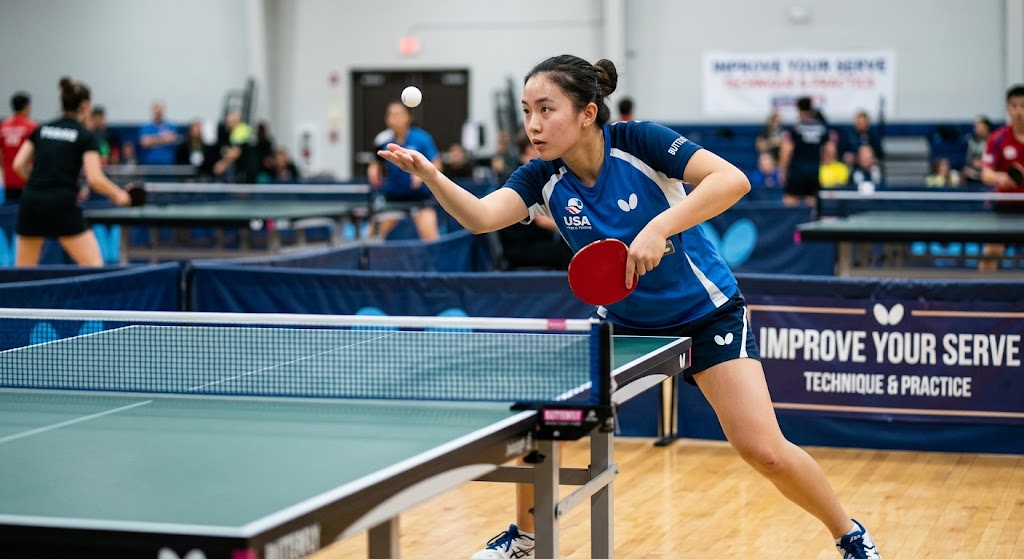
How to Improve Your Ping Pong Serve: Techniques, Spin, and Placement
The serve is one of the most important shots in ping pong.
Every rally begins with a serve, which means you have an opportunity to influence the point before your opponent has even touched the ball. A good serve can force a weak return, create an attacking opportunity, disrupt your opponent’s rhythm, or even win the point outright.
For beginners, however, serving can be frustrating.
The ball may go into the net. It may fly long. Your opponent may attack every serve you hit. You may know that spin is important but have no idea how to create it. Or perhaps you can produce a decent serve during practice but lose all confidence when someone is standing across the table trying to attack it.
The solution is not simply to serve harder.
Great ping pong serving is about control, consistency, spin, placement, variation, and deception.
The best servers do not necessarily have the fastest serves. They have serves that make their opponents uncomfortable.
This comprehensive guide explains how to improve your ping pong serve from the ground up. We will cover the rules of serving, grip, stance, ball toss, contact, spin, placement, short serves, long serves, deceptive serves, serve combinations, practice drills, common mistakes, and strategies for using your serve to build points.
If you are new to table tennis, start with The Ultimate Beginner’s Guide to Ping Pong, which provides a complete introduction to the sport.
And before practicing advanced serving techniques, make sure you understand Ping Pong Rules Explained: How to Play, Score Points, and Win Games. A spectacular serve is useless if it is not legal.
Why the Ping Pong Serve Matters So Much
The serve is unique because you have complete control over the beginning of the rally.
Your opponent cannot attack the ball before you serve it.
That gives you an opportunity to determine:
- Where the ball goes
- How much spin it has
- How fast it travels
- How long it is
- How high it bounces
- What type of return you want
- Where your opponent must move
A strong serve can make the next shot easier.
A weak serve can put you immediately on defense.
This is why experienced players spend enormous amounts of time practicing serves.
What Makes a Good Ping Pong Serve?
A good serve does not necessarily have one specific appearance.
A successful serve might be:
- Very short
- Very long
- Fast
- Slow
- Heavy with backspin
- Loaded with sidespin
- Nearly spinless
- Directed into the body
- Sent wide
- Disguised to look like another serve
The common factor is that the serve accomplishes something.
You want your opponent to have difficulty producing the return you want them to make.
For beginners, the first goal is simply consistency.
Then you can gradually add spin, placement, speed, and deception.
First: Learn the Legal Serving Rules
Before worrying about advanced serving techniques, make sure you know how to serve legally.
The standard rules require the ball to begin freely on the open palm of the server’s stationary free hand.
The ball is then tossed upward before being struck.
The toss must rise appropriately, and the server must not intentionally conceal the ball from the receiver.
The ball must first bounce on the server’s side and then reach the receiver’s side.
In singles, the serve can generally land anywhere on the opponent’s side.
In doubles, the serve must travel diagonally into the appropriate service court.
If you want a complete explanation of these requirements, review Ping Pong Rules Explained before moving into advanced serving.
Start With a Consistent Serve
The first mistake many beginners make is trying to learn a dozen different serves simultaneously.
Don’t.
Develop one dependable serve first.
Your initial serve should be:
- Legal
- Consistent
- Easy to control
- Repeatable
- Accurate
Practice until you can produce the same general serve repeatedly.
Once you have that foundation, start changing one variable at a time.
For example:
- Same motion, different placement
- Same placement, different speed
- Same speed, different spin
- Same motion, different spin
This makes learning much easier.
Your Grip Affects Your Serve
There is no single grip that makes every serve perfect.
However, you should hold the paddle comfortably and consistently.
Many players adjust their grip slightly during serving to allow greater wrist and forearm movement.
That can help with spin.
The key is to avoid gripping the paddle so tightly that your wrist and arm become stiff.
A relaxed grip can make it easier to generate controlled racket-head speed.
Stay Relaxed
Tension is one of the biggest enemies of a good serve.
If you grip the paddle too tightly and swing with excessive force, you may lose:
- Touch
- Accuracy
- Spin
- Control
- Consistency
Think about producing a precise movement rather than trying to smash the ball.
A good serve often requires a surprisingly small motion.
Your Stance During the Serve
Your stance should allow you to serve comfortably and then immediately prepare for the next shot.
Keep your:
- Knees slightly bent
- Feet balanced
- Body relaxed
- Weight controlled
- Paddle ready
Don’t finish a serve standing completely upright and admiring your shot.
The serve is only the beginning of the rally.
You should be ready for the return immediately.
The Serve Is Really Two Shots
One of the best ways to think about serving is:
Serve + next shot.
Don’t ask only:
“How do I make my serve difficult?”
Also ask:
“What return do I want?”
For example, you might use a short backspin serve because you expect your opponent to push the ball back.
That allows you to attack the next ball.
This is a major difference between recreational serving and strategic serving.
The Importance of the Ball Toss
A consistent toss helps produce a consistent serve.
If the toss changes dramatically from one serve to another, your contact point changes too.
That can affect:
- Spin
- Speed
- Placement
- Timing
Practice tossing the ball consistently.
The goal is not to create a dramatic toss.
The goal is repeatability.
Contact Point Is Critical
The paddle’s contact with the ball determines much of what happens next.
You need to control:
- Paddle angle
- Direction of movement
- Contact location
- Racket-head speed
- Timing
For spin, the relationship between the paddle and ball is particularly important.
A player can make a ball spin dramatically without hitting it hard.
That is one of the most important concepts for beginners to understand.
How to Generate Spin on a Serve
Spin comes primarily from how the paddle brushes or contacts the ball.
The faster and more appropriately you move the racket across the ball, the greater the potential for spin.
The exact technique depends on the type of spin you want.
Common serve spins include:
- Backspin
- Topspin
- Sidespin
- Side-backspin
- Side-topspin
Learning these varieties can transform your serving game.
For a deeper technical explanation, read How to Put Spin on a Ping Pong Ball: Topspin, Backspin, Sidespin, and More.
Backspin Serves
Backspin is one of the most useful types of spin for beginners to learn.
A backspin serve can make it more difficult for an opponent to attack aggressively.
A short backspin serve can force the receiver to push the ball.
That can give you an opportunity to attack the next shot.
Short Backspin Serve
A short backspin serve is designed to bounce twice on the opponent’s side if they do not attack it.
The goal is to keep the ball short enough that the opponent cannot easily attack with a powerful stroke.
This serve is particularly useful when you want to prevent an aggressive return.
However, short serves require good touch.
If you serve too high or too long, your opponent may attack.
Sidespin Serves
Sidespin causes the ball to react sideways after bouncing.
This can make the ball move differently from what a beginner expects.
Sidespin is especially useful when combined with another type of spin.
For example:
- Side-backspin
- Side-topspin
These combinations can be difficult to read.
Why Mixed Spin Is Effective
If every serve you hit has identical spin, your opponent eventually learns how to return it.
Variation creates uncertainty.
Suppose you use the same serving motion but alternate between:
- Heavy backspin
- Light backspin
- Side-backspin
- Nearly no spin
Your opponent has to read the ball more carefully.
That hesitation can produce weak returns.
The Importance of No-Spin Serves
A no-spin serve can be extremely effective.
Beginners often assume that every serve should have as much spin as possible.
That’s not necessarily true.
A no-spin serve can be deceptive because the opponent may expect spin based on your motion.
If they react as though the ball has heavy backspin when it actually has little or no spin, their return may pop up or go long.
This is a good example of why deception can be more valuable than raw spin.
Fast Long Serves
Not every serve should be short.
A fast, deep serve can surprise an opponent who is expecting a short ball.
The goal is often to send the ball quickly toward:
- Backhand
- Forehand
- Elbow or crossover point
- Body
A fast serve can force the opponent to react immediately.
The key is surprise.
If you serve long every time, the opponent will simply stand ready for it.
Serving to the Backhand
The backhand is a common target.
Many players prefer to attack from their forehand side, meaning a well-placed serve into the backhand can limit their options.
However, never assume someone’s backhand is weak simply because they are right-handed or left-handed.
Observe your opponent.
Serving to the Forehand
The forehand can also be a useful target.
A wide forehand serve can force your opponent to move.
That can create open space elsewhere.
But a serve toward the forehand can also give a strong player an opportunity to attack.
Use placement based on your opponent rather than following a rigid formula.
Serving to the Body
One of the most useful locations is often the opponent’s body.
This area can create uncertainty because the player may not know whether to use a forehand or backhand.
The result can be:
- Late movement
- Awkward contact
- Weak return
- Poor balance
The body or “elbow” area is therefore an important target.
Wide Serves
A wide serve can force an opponent to move laterally.
If you serve wide to the forehand, for example, the player may have to move quickly to reach it.
That movement can create an opening for your next shot.
However, wide serves must be controlled.
If you miss your target, you may give your opponent an easy opportunity.
Short vs. Long Serves
A strong serving strategy often includes both short and long serves.
Short serves can:
- Reduce attack opportunities
- Force pushes
- Create touch exchanges
- Keep the receiver close to the table
Long serves can:
- Surprise the opponent
- Force quick reactions
- Produce weak returns
- Prevent the opponent from simply stepping forward
The combination is more effective than relying on only one.
The Two-Bounce Concept
When players describe a serve as “short,” they are often talking about the number of times the ball would bounce on the opponent’s side.
A well-executed short serve can bounce twice before leaving the table.
This makes it difficult to attack aggressively.
A long serve reaches deep into the opponent’s court and may be attacked more easily—but it can also be much faster.
Understanding this distinction is critical to developing serving strategy.
Serve Placement Is a Weapon
Many beginners focus almost exclusively on spin.
Placement can be just as important.
You should learn to serve:
- Short to the forehand
- Short to the backhand
- Short to the middle
- Long to the backhand
- Long to the forehand
- Fast to the body
- Wide to either side
The ability to move the opponent around gives you far more options.
Don’t Always Serve to the Same Location
Predictability is dangerous.
If you always serve to your opponent’s backhand, they can begin anticipating the ball.
Even if your serve is excellent, predictability reduces its effectiveness.
Instead, establish patterns and then break them.
For example:
Backhand.
Backhand.
Backhand.
Then suddenly:
Wide forehand.
That unexpected change can create an immediate advantage.
Deception in the Ping Pong Serve
Deception is one of the most advanced serving concepts.
The idea is to make different serves look similar.
For example, you may use a similar motion for:
- Backspin
- No spin
- Sidespin
Your opponent cannot simply watch the beginning of your motion.
They must read the actual contact and resulting ball behavior.
The better you become at hiding your intentions, the more difficult your serves become to return.
Spin Reading Starts With the Opponent’s Paddle
When receiving a serve, players need to watch how the opponent contacts the ball.
As a server, remember that your opponent is watching you too.
They may observe:
- Paddle angle
- Contact direction
- Wrist movement
- Ball toss
- Follow-through
Therefore, try to make different serves look similar.
That is one reason experienced players can produce multiple types of serves from nearly the same setup.
The Importance of the Second Ball
The serve itself is only part of your strategy.
Think about what happens next.
Suppose you serve short backspin.
Your opponent pushes.
You attack.
That’s a three-shot pattern.
The serve created the opportunity.
This is why strong players practice serving and the expected next shot together.
Common Serve-and-Attack Patterns
You can create simple patterns such as:
Short Backspin → Opponent Push → Forehand Attack
This is one of the most basic attacking patterns.
Side-Backspin Serve → Weak Return → Backhand Attack
Use the spin to make the return uncomfortable.
Fast Long Serve → Weak Block → Follow-Up Attack
The surprise of the long serve creates the opportunity.
Short No-Spin → High Return → Attack
The receiver misreads the lack of spin.
You don’t need dozens of patterns.
Master a few reliable ones.
Serve Practice Drills
You can improve your serve dramatically without playing full matches.
Drill 1: Target Practice
Choose a specific area of the table.
Try to land 10 serves there.
Count how many succeed.
Then move to another target.
Drill 2: Short Serve Practice
Try to produce serves that bounce twice on the opponent’s side.
Focus on height and length.
Drill 3: Long Serve Practice
Practice deep serves to specific locations.
Drill 4: Spin Variation
Use the same general motion while changing the spin.
Drill 5: Serve + Third Ball
Serve, imagine the opponent’s return, and immediately practice your attacking shot.
This teaches you to think beyond the serve itself.
A Simple 15-Minute Serving Practice Routine
If you only have 15 minutes, try this:
Minutes 1–3
Practice your basic serve without worrying about placement.
Minutes 4–6
Practice short serves.
Minutes 7–9
Practice long serves.
Minutes 10–12
Practice different types of spin.
Minutes 13–15
Practice serve-and-attack combinations.
Short practice sessions performed consistently can produce excellent results.
How Many Serves Should You Practice?
There is no magic number.
Quality matters more than simply hitting thousands of balls.
If you can perform 50 focused serves while paying attention to:
- Contact
- Spin
- Placement
- Height
- Consistency
that can be more valuable than mindlessly hitting 500 serves.
Practice with a purpose.
Common Ping Pong Serving Mistakes
Trying to Hit Too Hard
Power does not equal quality.
Serving Too High
A high serve can be easier to attack.
Serving Too Long
Long serves can be useful, but accidental long serves often give opponents attacking opportunities.
Using the Same Serve Every Time
Predictability makes your opponent’s job easier.
Ignoring Placement
Spin alone does not win points.
Forgetting the Next Shot
The serve should help create your next opportunity.
Practicing Only Against Weak Players
A serve that works against beginners may not work against advanced players.
Practicing Without Targets
Specific goals make practice more productive.
How to Make Your Serve More Consistent
Consistency comes from repetition.
Try to make every part of your motion repeatable.
Pay attention to:
- Stance
- Ball position
- Toss
- Contact
- Follow-through
- Recovery
Record yourself if possible.
Video can reveal things you don’t notice while playing.
You may discover that your toss is inconsistent, your contact point changes, or your paddle movement is different from what you imagined.
How Spin Changes the Return
One of the reasons serving is so important is that spin influences your opponent’s paddle response.
For example, a heavy backspin serve can make an attempted aggressive return more difficult.
A sidespin serve can pull the ball in a different direction.
A no-spin serve can cause an opponent to misread the ball.
This is why developing spin recognition is essential.
Our broader guide on How to Put Spin on a Ping Pong Ball covers the subject in much greater depth.
Serving Against Different Types of Players
Your serving strategy should change depending on your opponent.
Against an Aggressive Player
Use short serves to reduce easy attacking opportunities.
Mix in occasional fast long serves to prevent them from leaning forward.
Against a Defensive Player
Longer serves may help force the player away from their preferred defensive position.
Against a Player With a Strong Backhand
Use more forehand and body placement.
Against a Player With a Strong Forehand
Target the backhand or body more frequently.
Against an Inconsistent Player
Focus on consistency rather than unnecessary complexity.
Make them beat you.
Serving Under Pressure
Many players can serve well during practice but struggle during matches.
This happens because pressure changes your decision-making.
The solution is to practice serving while keeping score.
Instead of simply serving 50 balls, play a game where:
- Every serve counts
- You alternate serve types
- You practice at 9-9
- You practice at game point
- You practice when behind
You want your serving technique to remain reliable when your heart rate rises.
Build a Serving Toolbox
You don’t need 25 different serves.
You need a handful of serves you can execute reliably.
A useful beginner-to-intermediate toolbox might include:
- Short backspin serve
- Short no-spin serve
- Side-backspin serve
- Fast long serve
- Body serve
If you can execute these consistently and vary their placement, you already have a strong foundation.
How Often Should You Change Your Serve?
Don’t change simply for the sake of changing.
Watch your opponent.
If they are struggling with short backspin, continue using it.
If they begin stepping forward aggressively, surprise them with a long serve.
If they are sitting on your backhand serve, go to the forehand.
Good serving is reactive.
You are solving a problem.
Developing a Signature Serve
As you improve, you may develop a serve that becomes one of your strengths.
It could be:
- A heavy side-backspin serve
- A deceptive no-spin serve
- A fast body serve
- A short forehand serve
- A difficult backhand serve
Your signature serve should not be the only serve you know.
It should be the serve you trust when you need to create an advantage.
Equipment Can Affect Serving
Your paddle matters.
Rubber type, sponge characteristics, blade construction, and overall paddle feel can influence your serving performance.
However, don’t assume that expensive equipment will automatically give you better serves.
The fundamentals remain more important.
If you are unsure what equipment you actually need, see Ping Pong Equipment Guide: Choosing the Right Paddle, Balls, Table, and Gear.
Serve Practice Without an Opponent
One of the best things about serving is that you can practice it alone.
You don’t need a partner.
You need:
- A table
- Balls
- Paddle
- Target
- Time
That makes serving one of the easiest parts of ping pong to deliberately practice.
Take advantage of that.
How to Measure Your Progress
Keep simple records.
For example:
Short backspin serves: 37/50 successful
Long backhand serves: 44/50 successful
Body serves: 31/50 successful
After several weeks, repeat the same tests.
You may discover that a serve you once struggled with has become automatic.
That kind of measurement is much more useful than simply saying, “I practiced serving today.”
Frequently Asked Questions About Ping Pong Serves
How do you serve in ping pong?
The ball begins on the open palm, is tossed upward appropriately, and is struck so it first bounces on the server’s side before reaching the receiver’s side.
Does a ping pong serve have to bounce on both sides?
Yes. A legal serve must first bounce on the server’s side and then on the receiver’s side.
Can you serve anywhere in singles?
Yes. In standard singles play, the serve can generally be placed anywhere on the opponent’s side as long as the serve is otherwise legal.
Does a ping pong serve have to be diagonal?
Only in doubles. Standard singles serving does not require a diagonal trajectory.
What is the best serve for beginners?
A consistent short or moderate-speed serve with controlled spin is a good starting point.
Is a fast serve always better?
No. A fast serve can be effective when used strategically, but an opponent may attack it if it is predictable or poorly placed.
What is the best spin for a serve?
There is no universally best spin. Backspin, sidespin, topspin, and no-spin serves all have different tactical purposes.
How can I get more spin on my serve?
Focus on controlled paddle acceleration and clean contact with the ball rather than simply swinging harder.
Why does my serve keep going long?
Your contact point, paddle angle, speed, or ball trajectory may be causing the ball to travel too far. Practice shorter contact and focus on controlling the ball’s depth.
Why does my serve keep going into the net?
The paddle angle may be too closed, the contact point may be too low, or you may be producing more spin than you realize.
How often should I practice serving?
Frequent short practice sessions can be extremely effective. Even 10–15 focused minutes can help if you practice deliberately.
Final Thoughts: Turn Your Serve Into a Weapon
A good ping pong serve is not about showing off.
It is about creating an advantage.
The best servers understand that every serve is a question they are asking their opponent:
Can you return this the way I want you to?
Your job is to make the answer as difficult as possible.
Start by mastering one legal, consistent serve.
Then add placement.
Then learn spin.
Then learn variation.
Then begin combining different spins and locations.
Finally, learn to think beyond the serve itself.
Ask what return you expect and what you plan to do with it.
That is when serving becomes more than simply putting the ball into play.
It becomes the first move in a strategy.
As you continue improving, remember that your serve works together with every other part of your game. Developing your forehand, backhand, and footwork will help you take advantage of the opportunities your serve creates.
Learning Ping Pong Strategies and Tactics will help you turn those opportunities into points.
Understanding How to Put Spin on a Ping Pong Ball will make your serves more varied and difficult to read.
And if you find yourself making the same serving errors repeatedly, review Common Ping Pong Mistakes Beginners Make and How to Fix Them.
The serve is only one shot.
But because it starts every rally, it can have an enormous impact on the outcome of the match.
Practice it.
Measure it.
Vary it.
And most importantly, learn to use it with a purpose.
A great serve doesn’t simply start the point.
It starts the plan for winning the point.