
How to Build a Backyard Cornhole Court: Layout, Distance, and Setup
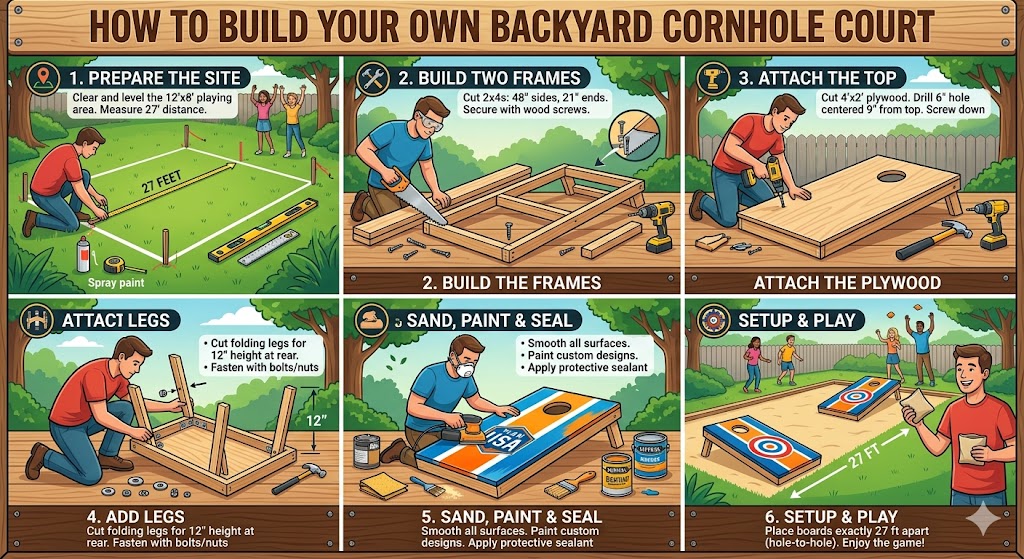
How to Build a Backyard Cornhole Court: Layout, Distance, and Setup
Cornhole has become one of the most popular backyard games in the United States. Families play it during cookouts, tailgates, and neighborhood gatherings. The game is easy to learn, portable, and fun for players of all ages.
However, many people set up their boards incorrectly without realizing it. Incorrect spacing, uneven surfaces, and poorly positioned boards can affect gameplay dramatically.
Creating a proper backyard cornhole court improves the experience for everyone. The bags slide better, throws become more consistent, and games feel more authentic.
If you are new to the sport, you may want to begin with The Ultimate Beginner’s Guide to Cornhole. That guide explains the basics of gameplay, scoring, and equipment.
This article focuses on how to build a proper backyard cornhole court, including official distances, layout recommendations, and setup tips that will help you create the perfect playing area.
Why a Proper Cornhole Court Matters
Many casual players simply place two boards in the yard and start throwing bags. While that approach works for casual fun, a properly designed court improves both fairness and enjoyment.
Correct spacing ensures that every player throws from the same distance.
A level surface allows bags to land and slide naturally.
Adequate space around the boards gives players room to move comfortably.
When you set up a court correctly, the game becomes much more consistent.
Proper setup also prepares players for competitive play.
Many backyard players eventually join leagues or tournaments. Practicing on a regulation-style court helps them develop accurate throwing habits from the beginning.
Official Cornhole Board Distance
One of the most important elements of a cornhole court is the distance between boards.
Regulation cornhole boards should sit 27 feet apart from front edge to front edge.
This distance creates the standard throwing challenge used in organized competition.
You measure the distance from the front edge of one board to the front edge of the other board.
For casual games or younger players, some people reduce the distance to make the game easier.
Common alternatives include:
- 21 feet for casual play
- 15 feet for children
However, serious players should practice at the full regulation distance whenever possible.
Understanding these measurements becomes even more important after reading Official Cornhole Rules Explained: A Complete Guide for Beginners.
Choosing the Right Location
Selecting the right location for your backyard court is essential.
Look for an area with enough open space to accommodate the boards and surrounding player movement.
Ideally, the surface should be flat and stable.
Grass works well for casual play, but uneven ground can affect gameplay. Bags may bounce differently or slide inconsistently.
Many dedicated players prefer setting up their courts on surfaces such as:
- packed dirt
- gravel
- concrete patios
- wooden decks
Each surface creates slightly different playing conditions.
Experimenting with surfaces helps you find the setup that works best for your backyard.
Leveling the Playing Surface
A level playing surface improves fairness and consistency.
If one board sits higher than the other, bags may slide unevenly or roll in unexpected directions.
Before placing your boards, check the ground carefully.
If the surface slopes, consider leveling the area with soil or sand.
Some players also use rubber mats or small wooden platforms beneath the boards to create a stable base.
Taking time to level the court improves the overall quality of the game.
Proper Board Positioning
Board positioning affects gameplay more than many beginners realize.
Each board should face directly toward the other board.
The center holes should line up perfectly.
Misaligned boards create awkward throwing angles and unpredictable bag movement.
Additionally, make sure both boards sit flat on the ground.
The front edge should touch the surface, while the back edge remains raised by the board’s built-in legs.
Understanding board construction helps ensure proper positioning. You can learn more about board design in Cornhole Equipment Guide: Boards, Bags, and Court Setup Explained.
Creating Foul Lines
Every cornhole court includes foul lines.
Players must release the bag before stepping past this line.
In most cases, the front edge of the board serves as the foul line.
Players stand beside the board and throw toward the opposite board.
Maintaining clear foul lines ensures that everyone throws from the correct position.
Some backyard players mark the foul lines with chalk or tape.
Others simply remember the position of the board’s front edge.
Allowing Space Around the Boards
A good backyard cornhole court should provide plenty of room around the boards.
Players need space to step forward, swing their arm, and follow through after each throw.
Ideally, allow:
- 8 to 10 feet of space behind each board
- several feet of space on both sides
This extra space prevents players from feeling crowded.
It also improves safety during games with multiple participants.
Crowded courts can lead to accidental collisions or distractions.
Managing Sun and Wind
Outdoor conditions can affect cornhole gameplay significantly.
Sun glare may make it difficult to see the board clearly.
Wind can alter the flight path of the bags.
When choosing a court location, try to position the boards so players avoid throwing directly into the sun.
Many players align their courts north to south for this reason.
Wind conditions are harder to control, but trees or fences can help block strong gusts.
Practicing in different weather conditions also helps players adapt.
These adjustments become easier once you refine your throwing mechanics described in How to Throw a Cornhole Bag Like a Pro: Techniques and Form Tips.
Lighting for Evening Games
Cornhole games often continue after sunset during parties and gatherings.
Installing simple lighting can extend playtime and improve visibility.
Popular lighting options include:
- portable floodlights
- string lights
- LED board lights
Good lighting ensures that players can see the board clearly during night games.
It also adds a festive atmosphere to backyard gatherings.
Building a Dedicated Cornhole Court
Some enthusiasts take backyard courts to the next level by building permanent playing areas.
A dedicated court may include:
- leveled gravel or sand surfaces
- wooden frames around the playing area
- permanent lighting
- seating for spectators
These features create a professional-style playing environment.
Although not necessary for casual play, dedicated courts can enhance the experience for frequent players.
Practicing on Your Backyard Court
Once your court is set up, regular practice can dramatically improve your skills.
Many players practice a few short sessions each week.
Even fifteen minutes of focused practice can build consistency.
Use your practice sessions to work on specific shots.
For example:
- slide shots
- push shots
- airmail shots
Practicing with purpose accelerates improvement.
Combining practice with strategy also helps players win more games.
You can explore these tactics in Winning Cornhole Strategies: Offensive and Defensive Tactics That Work.
Avoiding Common Court Setup Mistakes
Some backyard setups create problems that affect gameplay.
One common mistake involves placing boards too close together.
This reduces the challenge and may encourage bad throwing habits.
Another mistake involves placing boards on uneven ground.
Bags may bounce unpredictably on sloped surfaces.
Players also sometimes forget to check board alignment.
Even small alignment errors can affect accuracy.
Taking a few minutes to verify your court setup prevents these issues.
For more beginner advice, review Common Cornhole Mistakes Beginners Make and How to Fix Them.
Preparing for Competitive Play
A well-designed backyard court provides excellent preparation for competitive cornhole.
Players who practice on regulation courts feel more comfortable when entering tournaments or leagues.
They already understand board spacing and throwing distances.
If you enjoy competitive games, you may eventually want to explore organized play.
You can learn how these events work in Cornhole Tournaments and Leagues: How Competitive Cornhole Works.
Practicing on a proper backyard court builds confidence before entering those competitions.
Final Thoughts on Building a Backyard Cornhole Court
Building a backyard cornhole court does not require expensive materials or complicated construction.
Most players simply need open space, two regulation boards, and a measuring tape.
However, paying attention to details such as board distance, surface level, and court alignment dramatically improves gameplay.
A well-designed court allows bags to slide properly and ensures that every throw feels fair and consistent.
It also creates a welcoming environment for friends and family to gather and compete.
With the right setup, your backyard can become the perfect place for casual games, practice sessions, and friendly tournaments.
Continue Learning Cornhole
Explore the rest of the cornhole learning series:
The Ultimate Beginner’s Guide to Cornhole
Official Cornhole Rules Explained: A Complete Guide for Beginners
Cornhole Scoring Rules: How Points Work and How to Win Games Faster
Cornhole Equipment Guide: Boards, Bags, and Court Setup Explained
How to Throw a Cornhole Bag Like a Pro: Techniques and Form Tips
Winning Cornhole Strategies: Offensive and Defensive Tactics That Work
Common Cornhole Mistakes Beginners Make and How to Fix Them
Cornhole Tournaments and Leagues: How Competitive Cornhole Works