
Cornhole Tournaments and Leagues: How Competitive Cornhole Works
Cornhole Tournaments and Leagues: How Competitive Cornhole Works
Cornhole started as a casual backyard game played during family gatherings, tailgates, and summer cookouts. For many years, players simply tossed bags for fun without thinking about competition.
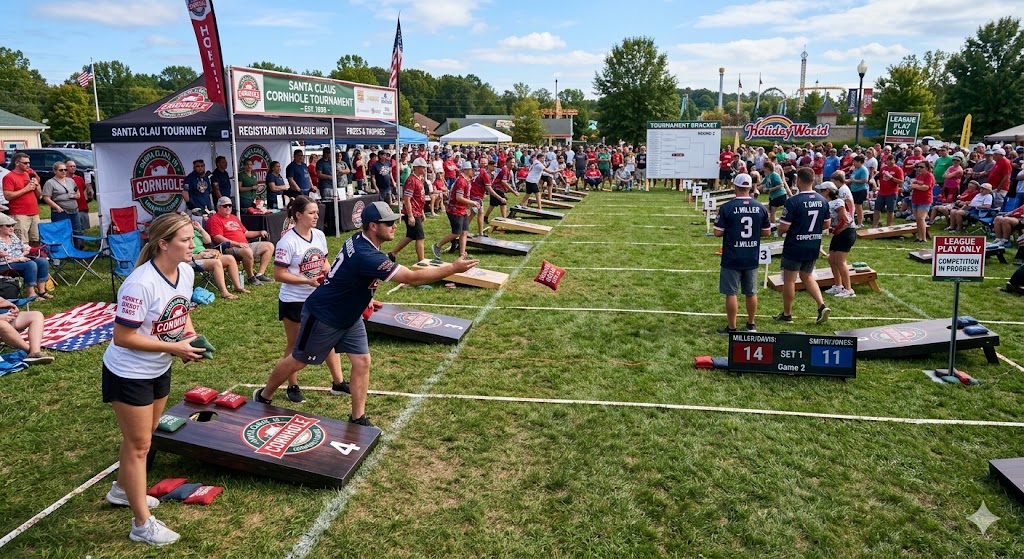
However, the game has evolved dramatically. Today, organized leagues and professional tournaments attract thousands of players across the United States. Competitive cornhole now features televised events, large prize pools, and highly skilled athletes.
Many backyard players eventually discover that they enjoy the competitive side of the sport. After learning the basics, they begin looking for leagues or tournaments where they can test their skills against other players.
If you are new to the sport, begin by reviewing The Ultimate Beginner’s Guide to Cornhole to understand how the game works.
This article explains how competitive cornhole works, including leagues, tournament formats, divisions, and tips for players who want to get involved in organized competition.
The Growth of Competitive Cornhole
Cornhole has grown rapidly over the past two decades. What once seemed like a simple party game now includes structured leagues and professional organizations.
Several factors contributed to this growth.
First, the game is easy to learn. Beginners can start playing within minutes.
Second, the equipment is simple and portable. Players can set up courts almost anywhere.
Finally, the game offers a competitive challenge that rewards skill and consistency.
Because of these factors, cornhole leagues now operate in thousands of communities across the country.
Local bars, recreation centers, and community parks frequently host weekly league nights.
These events provide a fun and social environment for players of all skill levels.
The Role of Professional Organizations
Several organizations help organize competitive cornhole events.
The largest professional governing body is the American Cornhole League (ACL). This organization oversees many major tournaments and professional competitions.
The ACL also sets equipment standards, organizes national championships, and maintains player rankings.
Professional events sometimes feature large prize pools and attract elite players from across the country.
Although most backyard players never reach the professional level, the existence of these organizations has helped legitimize the sport.
Their rules and standards also influence how local leagues operate.
Understanding these standards becomes easier after reviewing Official Cornhole Rules Explained: A Complete Guide for Beginners.
Local Cornhole Leagues
Local leagues provide the most common entry point for competitive cornhole.
These leagues usually operate weekly or seasonally.
Players gather at a specific location, such as a sports bar, park, or recreation center, and compete against other teams.
League play often lasts several weeks, with teams accumulating wins and losses throughout the season.
At the end of the season, the league may host a playoff tournament to determine the champion.
Leagues offer several advantages for beginners.
They provide regular practice opportunities.
They also create a social environment where players can meet others who enjoy the sport.
Most leagues welcome players of all skill levels.
Doubles vs Singles Competition
Cornhole tournaments typically feature two main formats.
Doubles Play
Doubles play involves teams of two players.
Partners stand at opposite boards and alternate throws during each round.
This format requires teamwork and communication.
Partners often develop strategies together, such as blocking shots or setting up push opportunities.
Many leagues focus primarily on doubles competition.
Singles Play
Singles competition features individual players competing head-to-head.
Each player throws from one side of the court and walks to the opposite board between rounds.
Singles play places full responsibility on each player’s skill and strategy.
Both formats offer unique challenges and rewards.
Understanding strategic decisions becomes easier after reading Winning Cornhole Strategies: Offensive and Defensive Tactics That Work.
Tournament Formats
Competitive cornhole tournaments often use structured formats to determine winners.
Several formats appear frequently.
Single Elimination
In a single elimination tournament, a team leaves the competition after one loss.
This format moves quickly but allows little room for mistakes.
Double Elimination
Double elimination tournaments allow teams to lose once and continue competing.
After a second loss, the team is eliminated.
This format gives players a second chance and often produces more exciting finishes.
Round Robin
Round robin tournaments allow every team to play several matches against different opponents.
The teams with the best records advance to the final rounds.
This format ensures that players get multiple games during the event.
How Scoring Works in Tournaments
Competitive cornhole uses the same scoring system as casual games.
However, tournament play often emphasizes strict scorekeeping and rule enforcement.
Players score:
- 3 points for bags that go through the hole
- 1 point for bags that land on the board
However, cornhole uses cancellation scoring.
This means each team’s points cancel out the opponent’s points during the round.
The team with the higher total scores the difference.
For a detailed explanation, review Cornhole Scoring Rules: How Points Work and How to Win Games Faster.
Understanding this scoring method helps players make smarter strategic decisions.
Equipment Standards in Competitive Play
Competitive cornhole requires specific equipment standards.
Regulation boards measure 2 feet wide and 4 feet long.
The hole measures 6 inches in diameter and sits near the top of the board.
Boards must also sit at a specific angle to ensure consistent gameplay.
Cornhole bags must meet specific size and weight requirements as well.
Most tournament bags weigh around 16 ounces.
Understanding equipment standards helps players prepare properly for competition.
You can learn more about these requirements in Cornhole Equipment Guide: Boards, Bags, and Court Setup Explained.
Court Setup for Tournaments
Tournament courts follow strict layout guidelines.
Boards must sit 27 feet apart from front edge to front edge.
Players throw from designated foul lines beside the boards.
Organized events often set up multiple courts in large spaces such as gymnasiums or convention centers.
Spectators and players move between courts as matches progress.
If you want to practice for tournament conditions at home, review How to Build a Backyard Cornhole Court: Layout, Distance, and Setup.
Practicing on a regulation court helps players feel comfortable during competitions.
Skill Development for Competitive Play
Competitive cornhole requires consistent throwing mechanics and strong mental focus.
Successful players practice regularly.
They refine their throwing motion and experiment with different shots.
Many players focus on mastering a few key techniques:
- slide shots
- push shots
- airmail shots
Consistency becomes the most important skill.
Even small improvements in accuracy can significantly increase scoring opportunities.
If you want to refine your throwing mechanics, study How to Throw a Cornhole Bag Like a Pro: Techniques and Form Tips.
That guide explains grip, stance, and release techniques used by experienced players.
Mental Focus During Competition
Competitive environments introduce pressure.
Crowds, scoreboards, and tournament stakes can affect concentration.
Experienced players develop routines that help maintain focus.
For example, they may take a moment before each throw to visualize the shot.
They also focus on repeating the same throwing motion consistently.
Confidence plays an important role as well.
Players who trust their mechanics perform better under pressure.
Avoiding common beginner mistakes also improves consistency.
You can review those issues in Common Cornhole Mistakes Beginners Make and How to Fix Them.
Traveling Cornhole Tournaments
Some players enjoy traveling to larger regional tournaments.
These events attract competitors from multiple states and sometimes feature cash prizes.
Large tournaments may include:
- open divisions
- amateur divisions
- professional divisions
This structure allows players to compete against opponents with similar skill levels.
Travel tournaments also provide opportunities to meet other enthusiasts and experience high-level competition.
The Social Side of Cornhole
Even in competitive environments, cornhole maintains a strong social atmosphere.
Players often gather before and after matches to talk about strategy, share experiences, and enjoy the community surrounding the sport.
This welcoming environment helps new players feel comfortable joining leagues and tournaments.
Unlike many sports, cornhole welcomes players of all ages and physical abilities.
Skill and consistency matter far more than physical strength or speed.
How to Join Your First League
Joining a league usually requires only a few simple steps.
First, search online for cornhole leagues in your area.
Many bars, parks, and recreation departments organize seasonal leagues.
Next, register either as an individual player or as part of a team.
Finally, attend league nights regularly and participate in scheduled matches.
Leagues provide an excellent opportunity to improve your skills and meet other players.
Over time, you may decide to enter larger tournaments as well.
Final Thoughts on Competitive Cornhole
Cornhole has evolved far beyond its backyard origins.
Today, leagues and tournaments allow players to compete in structured and exciting environments.
Whether you join a local league or travel to regional tournaments, competitive cornhole offers a rewarding challenge.
Players improve their throwing mechanics, develop strategic thinking, and enjoy the camaraderie of the cornhole community.
Many players discover that organized competition makes the game even more enjoyable.
With practice, dedication, and smart strategy, anyone can become a strong competitor.
Continue Learning Cornhole
Explore the complete cornhole learning series:
The Ultimate Beginner’s Guide to Cornhole
Official Cornhole Rules Explained: A Complete Guide for Beginners
Cornhole Scoring Rules: How Points Work and How to Win Games Faster
Cornhole Equipment Guide: Boards, Bags, and Court Setup Explained
How to Throw a Cornhole Bag Like a Pro: Techniques and Form Tips
Winning Cornhole Strategies: Offensive and Defensive Tactics That Work
Common Cornhole Mistakes Beginners Make and How to Fix Them
How to Build a Backyard Cornhole Court: Layout, Distance, and Setup